The 2026 automotive supply chain will demand more than competitive pricing. It will demand verified performance, stable production, and transparent sourcing. Automotive Wheel Hub Screws are small components, yet they secure critical wheel and hub connections under vibration, torque, heat, and corrosion.
The International Organization of Motor Vehicle Manufacturers reported approximately 92.5 million vehicles produced worldwide in 2024. That production volume shows the scale of demand for consistent fasteners and dependable supplier networks. However, vehicle output alone does not identify the best supplier. Material certificates, dimensional controls, coating performance, and batch traceability require closer evaluation. Quality is measurable.
Relevant standards include ISO 898-1 for mechanical properties of carbon and alloy steel fasteners. IATF 16949 also remains an important quality framework for automotive manufacturing. Suppliers should demonstrate process capability, laboratory testing, corrective-action discipline, and documented change control. A polished catalogue is not enough. Factory evidence matters.
This 2026 supplier review will examine manufacturers through product quality, production capacity, export experience, customization, lead times, and technical support. It will also consider evidence from recognized industry sources, including OICA production statistics, IATF requirements, and applicable UNECE vehicle safety regulations. These references improve reliability, although they cannot replace an on-site audit or sample validation.
No ranking is perfect. A supplier may appear strong on paper but struggle with urgent replenishment or tooling changes. Buyers should compare torque consistency, thread accuracy, corrosion resistance, and delivery records before signing contracts. Small parts carry large risks. The following overview aims to help purchasing teams identify capable Automotive Wheel Hub Screws suppliers for safer and more resilient vehicle production.
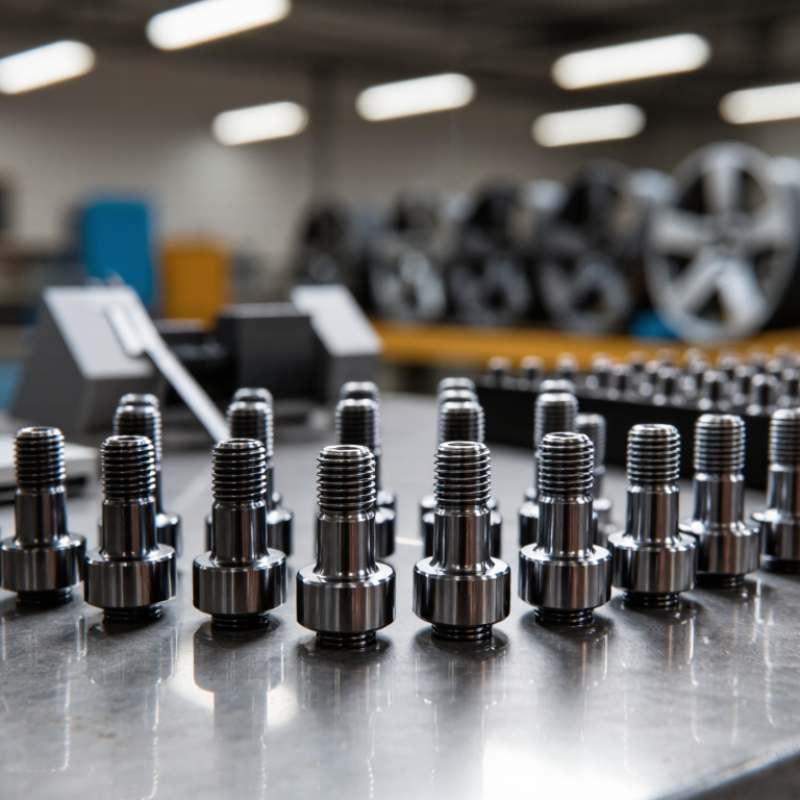
Automotive Wheel Hub Screws: Function, Types, and Key Specifications
Automotive wheel hub screws secure the wheel, rotor, and hub assembly under repeated braking and cornering loads. Their main job is maintaining stable clamp force, not merely filling threaded holes. Wheel bolts combine a threaded shank with an integrated head. Stud-and-nut systems separate wheel alignment from clamping. Flange-head designs spread contact pressure, while tapered or ball seats must match the wheel precisely. A mismatch can create uneven seating and premature loosening.
Key specifications include thread diameter, pitch, under-head length, seat profile, material grade, coating, and tightening torque. Engineers also check tensile strength, proof load, corrosion resistance, and fatigue performance. ISO 898-1 defines mechanical property classes for carbon and alloy steel fasteners. SAE J429 provides comparable strength classifications used in automotive applications. S&P Global Mobility reported that the average US vehicle age reached 12.6 years in 2024. Older vehicles increase demand for reliable replacement hardware, but age alone does not justify reusing damaged screws. That assumption is risky.
Tips: Confirm the vehicle’s exact thread pitch and seat design. Clean rust from mating surfaces. Use a calibrated torque wrench, then recheck after initial driving. Never replace a high-strength fastener with a visually similar lower-grade part. The correct torque depends on thread condition, coating, and lubrication. Published service data should control. One detail is often overlooked: over-tightening can stretch the screw and reduce fatigue life. Specification sheets help, but real installation conditions still require careful judgment.
FAQS
It secures the wheel, rotor, and hub assembly. It maintains stable clamp force during braking and cornering. It does more than fill a threaded hole.
Wheel bolts combine a threaded shank with an integrated head. Stud-and-nut systems separate wheel alignment from clamping. Flange-head designs distribute contact pressure more evenly.
The seat may be tapered or ball-shaped. It must match the wheel precisely. A mismatch can cause uneven seating and loosening. Small differences matter.
Confirm thread diameter, pitch, under-head length, and seat profile. Check material grade, coating, and tightening torque. Strength, hardness, corrosion resistance, and fatigue performance also matter.
Not safely. A lower-grade fastener may fail under repeated loads. Appearance is not enough. Match the approved specification and strength class.
Clean rust from all mating surfaces. Use the correct thread condition and approved service data. Tighten with a calibrated torque wrench. Recheck after initial driving. Over-tightening can stretch the screw.
No, age alone does not justify reuse. Inspect threads, seats, corrosion, and visible deformation. Replace damaged fasteners with correctly specified parts. This judgment is easy to underestimate.
Request material certificates and batch-level traceability. Review dimensional reports for pitch, diameter, head height, and seating surfaces. Ask for recent hardness, fatigue, torque, and corrosion test results. Independent testing adds confidence.
Check storage conditions, inspection equipment, gauge calibration, and final packing. Ask how defective parts are isolated. Review tooling controls and process-change records. A clean factory is helpful, but not conclusive.
A certificate may not reveal a recent tooling problem. An operator change can also affect production. Keep approval samples and repeat checks after process changes. No evaluation is perfect.
Conclusion
This guide to the 2026 automotive fastener market explains how Automotive Wheel Hub Screws support secure wheel assembly, load transfer, and driving safety. It reviews common screw types, thread designs, strength grades, corrosion resistance, dimensional accuracy, and other key specifications that affect performance in passenger vehicles, commercial vehicles, and specialized applications. Readers will also learn how to evaluate suppliers through production capacity, technical expertise, traceability, testing systems, delivery reliability, and customer support.
The article presents a practical framework for comparing leading Automotive Wheel Hub Screws suppliers in 2026 without focusing on specific brands. It discusses manufacturing standards, material control, heat treatment, coating processes, dimensional inspection, fatigue testing, and quality documentation. In addition, it explains how pricing is influenced by materials, order volume, customization, tooling, packaging, and logistics. Global supply considerations, including lead times, communication, export coordination, and long-term supply stability, are also addressed to help buyers make informed sourcing decisions.