0%

Titanium Fasteners are engineered connectors made from titanium alloys, often chosen where low weight, corrosion resistance, and dependable strength matter. They appear in aircraft frames, marine equipment, chemical-processing systems, racing components, and selected medical devices. A titanium bolt may look ordinary, yet its performance depends on alloy grade, heat treatment, thread design, and installation control.

Materials engineer Matthew J. Donachie Jr., author of Titanium: A Technical Guide, stated, “Titanium earns its place when its performance justifies its cost.” This principle remains practical. Titanium fasteners cost more than steel alternatives, but they can reduce weight and resist saltwater, moisture, and many aggressive chemicals. Grade 5 titanium, also called Ti-6Al-4V, is widely used because it balances strength, weight, and availability. Commercially pure grades offer different advantages, including strong corrosion resistance.

The material is not perfect. Titanium can gall when threads rub under pressure, especially during dry installation. Technicians often use suitable lubricants, controlled torque, and compatible nuts to reduce that risk. Small details matter. A poorly selected washer can damage the joint or distort the load path. Engineers must also consider galvanic interaction with aluminum and other metals.

This guide explains what Titanium Fasteners are, how they work, and where they provide real value. It also examines their limitations, installation practices, common grades, and purchasing considerations. The most expensive option is not always the best one. Good engineering begins with the service environment, not the material’s reputation.
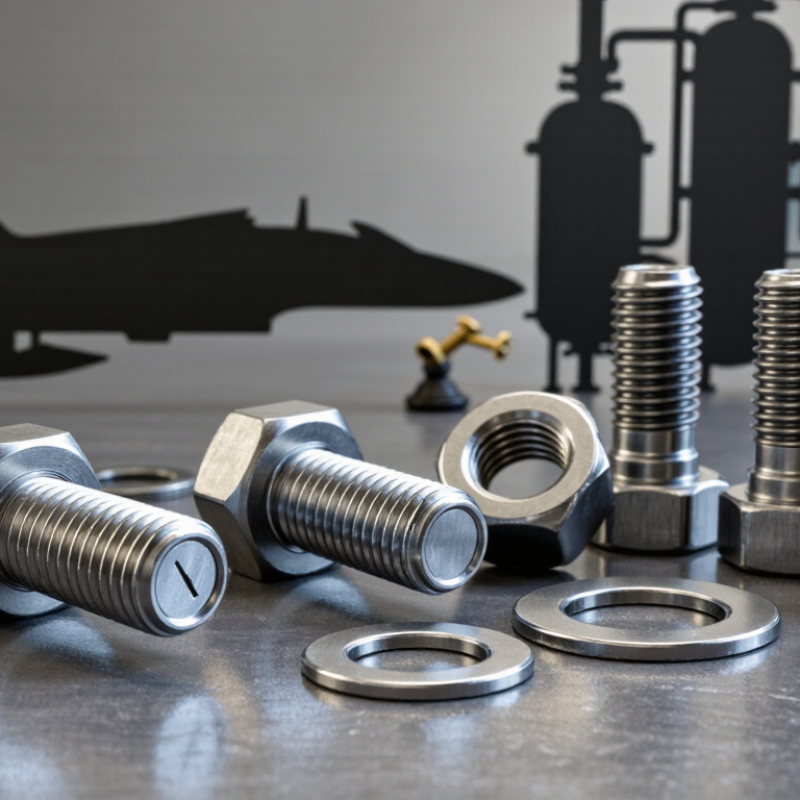
What Are Titanium Fasteners and What Are They Used For?

Titanium Fasteners: Definition and Basic Characteristics

Titanium fasteners are bolts, screws, nuts, and washers made from titanium alloys. They combine low weight with strong mechanical performance. Titanium Grade 5  ·  4.43 g/cm³ Minimum tensile strength  ·  895 MPa ASTM F468 lists a minimum tensile strength of approximately 895 MPa for this grade. These figures explain its value in weight-sensitive assemblies.

Titanium also forms a stable oxide film within milliseconds after exposure to air. This layer supports strong resistance to seawater, chlorides, and many process chemicals.

The U.S. Geological Survey’s 2024 Mineral Commodity Summaries identifies aerospace, chemical processing, and marine applications as important titanium markets.

In practice, engineers specify titanium fasteners for aircraft structures, heat exchangers, racing equipment, and offshore fittings. The material remains useful where corrosion could weaken ordinary steel.

There is a catch. Titanium fasteners can gall during installation, especially under high pressure and low lubrication. Thread damage may appear before the assembly reaches its intended preload.

ASTM F467 and F468 provide dimensional and mechanical requirements, but they do not replace application testing. Engineers often use controlled torque, suitable coatings, or compatible lubricants.

Titanium is not automatically the best choice. Its higher cost, lower stiffness than steel, and possible galvanic interaction with dissimilar metals require careful joint design.

How Titanium Fasteners Are Manufactured

What Are Titanium Fasteners and What Are They Used For?

Titanium fasteners are bolts, nuts, screws, and studs made from corrosion-resistant titanium alloys. They serve aircraft structures, marine equipment, chemical systems, and medical devices. Manufacturing begins with titanium sponge, produced from upgraded mineral feedstock. The U.S. Geological Survey reported about 20,000 metric tons of domestic titanium sponge production in 2023. That figure shows the material’s strategic industrial importance, not unlimited availability.

The sponge is melted, usually through vacuum arc remelting, to reduce contamination. The resulting billet is forged, rolled, or machined into wire and bar stock. Grade 2 titanium often suits chemical and marine service. Grade 5 titanium offers higher strength for demanding structural applications. ASTM F467 and ASTM F468 define requirements for many titanium alloy nuts and fasteners. Manufacturers then form heads by cold heading or machine them from bar. Threads require careful control because titanium can gall during assembly. A thin lubricant layer and controlled installation torque help prevent seizure.

Heat treatment may improve strength, depending on the alloy and product design. Inspection includes chemical analysis, tensile testing, hardness checks, thread gauges, and dimensional measurement. Critical parts may receive dye penetrant or ultrasonic examination. The process is precise, but not perfectly predictable. Tool wear, surface scratches, and residual stress can still affect performance. One overlooked detail is cleanliness. Small iron particles from steel tooling may reduce corrosion resistance at the surface. Reliable production therefore requires material traceability, calibrated equipment, and records that connect each fastener to its melt and inspection results.

Titanium Fasteners: Materials, Uses, and Manufacturing

Titanium fasteners are bolts, screws, nuts, and washers made from commercially pure titanium or titanium alloys. Their low density, high strength-to-weight ratio, and excellent corrosion resistance make them suitable for aerospace structures, marine equipment, chemical-processing systems, medical devices, and high-performance engineering applications.

Density values are typical room-temperature values in g/cm³ for commonly used engineering materials: commercially pure titanium Grade 2, Ti-6Al-4V Grade 5, 316 stainless steel, medium-carbon steel, and 6061-T6 aluminum. Titanium fasteners are generally produced by bar or wire preparation, cold or warm forming when suitable, machining, heat treatment for selected alloys, thread rolling or cutting, surface cleaning, inspection, and final packaging. Thread rolling is often preferred because it can improve thread fatigue performance and avoids cutting across the grain flow.

Major Types of Titanium Fasteners

What Are Titanium Fasteners and What Are They Used For?

Titanium fasteners include bolts, screws, nuts, washers, studs, and rivets. Their value comes from low density, strong corrosion resistance, and reliable strength. Commercially pure titanium suits marine and chemical equipment, where saltwater exposure is severe. Grade 5 titanium, known as Ti-6Al-4V, offers higher strength for aircraft structures, racing equipment, and medical assemblies. ASTM F467 and ASTM F468 define important requirements for titanium and titanium-alloy nuts, bolts, screws, and studs.

Bolts and studs handle structural joints requiring controlled clamping force. Screws work well in compact panels, housings, and instrument assemblies. Nuts and washers distribute load across the joint surface. Threaded inserts can protect softer materials, although designers must check galling risks. Galling means the threads seize during tightening. It happens more easily when titanium contacts titanium without suitable lubrication or surface treatment.

The U.S. Geological Survey’s Mineral Commodity Summaries 2024 estimated global titanium sponge production at roughly 280,000 metric tons in 2023. That supply supports aerospace, energy, chemical processing, and medical manufacturing. However, material selection should not follow weight savings alone. Titanium fasteners can cost more than steel alternatives, and their lower stiffness may affect joint movement. I would still verify torque values, thread fit, and galvanic compatibility for every assembly. A lightweight joint can fail if installation control is poor.

What Are Titanium Fasteners and What Are They Used For? - Major Types of Titanium Fasteners

Fastener Type Typical Design Feature Common Titanium Grades Primary Uses Key Advantages
Hex Bolts Externally threaded shank with a hexagonal head for wrench tightening Grade 5, Grade 2, Grade 7, Grade 12 Structural joints, aerospace assemblies, marine equipment, and industrial frames High strength-to-weight ratio and good corrosion resistance
Socket Head Cap Screws Cylindrical head with an internal hexagonal drive Grade 5 and Grade 2 Compact machinery, bicycle components, robotics, and equipment enclosures Works well where installation space is limited and a flush assembly is preferred
Flat Head Screws Countersunk head designed to sit level with or below the surface Grade 5 and Grade 2 Fairings, panels, covers, and aerodynamic or low-profile assemblies Smooth surface finish and reduced projection above the joint
Button Head Screws Low-profile rounded head, commonly with an internal hex drive Grade 5 and Grade 2 Guards, panels, consumer equipment, and applications requiring a rounded appearance Compact profile with fewer sharp edges than a conventional hex-head fastener
Nuts Internally threaded component used with a bolt or stud Grade 5, Grade 2, Grade 7, Grade 12 Bolted joints exposed to moisture, saltwater, chemicals, or weight restrictions Low density, nonmagnetic behavior, and strong resistance to atmospheric corrosion
Washers Flat or specialized ring placed beneath a bolt head or nut Grade 2 and Grade 5 Load distribution, surface protection, spacing, and corrosion-sensitive joints Helps reduce surface damage and maintains material compatibility with titanium assemblies
Threaded Studs Rod threaded on one or both ends, usually secured with nuts Grade 5, Grade 7, Grade 12 Flanges, engine components, pressure equipment, and frequently serviced joints Useful for repeated assembly and can reduce wear on tapped housings

Common Titanium Fastener Materials

Titanium Grade Material Description Approximate Density Minimum Tensile Strength Typical Selection Reason
Grade 2 Commercially pure titanium About 4.51 g/cm³ About 345 MPa Excellent corrosion resistance and good formability when very high strength is not required
Grade 5 Titanium alloy Ti-6Al-4V About 4.43 g/cm³ About 895 MPa High strength-to-weight ratio for aerospace, motorsport, marine, and demanding industrial applications
Grade 7 Commercially pure titanium with a small palladium addition About 4.51 g/cm³ About 345 MPa Improved resistance to reducing acids and severe chemical environments
Grade 12 Titanium alloy containing molybdenum and nickel About 4.51 g/cm³ About 483 MPa A balance of higher strength, weldability, and corrosion resistance for chemical and industrial equipment
Important installation note: Titanium threads can gall, especially during dry installation or under high tightening loads. Clean threads, controlled torque, suitable lubrication, and compatible washers or coatings should be considered for critical joints.

Key Applications Across Industrial Sectors

Titanium fasteners combine low density, high strength, and strong corrosion resistance. Grade 5 titanium has a density of about 4.43 g/cm³, nearly 40% lighter than steel. The U.S. Geological Survey’s Mineral Commodity Summaries 2024 identifies aerospace, chemical processing, and power generation as major titanium markets. These sectors value hardware that survives heat, saltwater, and aggressive chemicals. The International Titanium Association has estimated that aerospace uses roughly 70% of titanium mill products. Fasteners secure aircraft panels, engine structures, and lightweight interior systems where every saved kilogram matters.

Marine engineers use titanium bolts around seawater pumps, propeller systems, and offshore equipment. Chemical plants also use them near chloride-rich fluids and acidic process lines. Medical device manufacturers select titanium screws because the metal can support biocompatible applications. Renewable-energy projects use titanium fasteners selectively, especially where coastal moisture accelerates corrosion. Yet titanium is not perfect. Its threads can gall during installation, and poor isolation may create galvanic corrosion against dissimilar metals. Cost remains another practical barrier.

Tips: Match the fastener grade, thread design, and coating to the service environment. Use controlled torque and suitable anti-seize compounds. Review ASTM F467 and ASTM F468 requirements before production. Inspect threads carefully; a small burr can damage an expensive assembly. In field maintenance, stainless steel may be adequate, while titanium is justified only where weight or corrosion savings repay its higher price. Industry reports provide useful averages, but real operating conditions still deserve closer testing.

Advantages and Limitations of Titanium Fasteners

Titanium fasteners are threaded components made from commercially pure titanium or titanium alloys. Their main appeal is a high strength-to-weight ratio. They are much lighter than many steel alternatives. That matters in aircraft structures, marine equipment, racing vehicles, and chemical-processing systems. Titanium also resists seawater, moisture, and many corrosive chemicals. It remains nonmagnetic in typical applications. In coastal service, this resistance can extend maintenance intervals and reduce rust-related repairs.

Yet, titanium is not automatically the best choice. Its lower elastic modulus allows more stretching under load than steel. Engineers must check preload carefully. Thread galling is another serious concern. Threads can seize during tightening, especially when surfaces are dry or damaged. Clean threads, controlled torque, and suitable installation compounds help, but they do not remove every risk. Contact with dissimilar metals may also create galvanic corrosion. Isolation washers can reduce that possibility.

Cost remains a practical limitation. Titanium material and machining usually require a larger budget. Its benefits should match the working environment, not merely the specification sheet. For critical joints, engineers should review load calculations, temperature, vibration, and chemical exposure. A torque chart alone may be insufficient. I would not describe titanium fasteners as universally superior. They are a precise solution, and sometimes an unnecessarily expensive one. Careful selection matters.

FAQS

What are titanium fasteners?

They are bolts, screws, nuts, studs, and washers made from titanium alloys. They combine low weight with strong mechanical performance.

Where are titanium fasteners commonly used?

They suit aircraft structures, marine equipment, chemical systems, heat exchangers, and racing equipment. They also serve some medical devices. The environment matters.

Why are titanium fasteners lighter than steel ones?

Titanium has a density near 4.43 g/cm³. That is about 40% lower than steel. Weight savings can matter in aircraft and racing assemblies.

Are titanium fasteners strong enough for demanding joints?

Some high-strength grades provide tensile strength near 895 MPa. Engineers must still check loads, vibration, temperature, and preload. Strength alone does not guarantee a reliable joint.

How well do titanium fasteners resist corrosion?

Titanium quickly forms a stable oxide film in air. This supports resistance to seawater, chlorides, moisture, and many chemicals. Rust reduction can simplify coastal maintenance.

What is thread galling?

Galling occurs when contacting threads seize or tear during tightening. Dry surfaces, high pressure, and damaged threads increase the risk. It can happen before the intended preload is reached.

How can installers reduce galling?

Keep threads clean and use a suitable lubricant or coating. Apply controlled torque during installation. Inspect damaged threads before assembly. Perfect prevention is unlikely.

Can titanium contact other metals safely?

Dissimilar metals may create galvanic corrosion in wet environments. Isolation washers or compatible materials can reduce this risk. Joint design needs more than a torque chart.

What inspections are useful during production?

Manufacturers may check chemistry, tensile strength, hardness, dimensions, and thread accuracy. Critical parts may receive dye penetrant or ultrasonic inspection. Traceability connects each fastener with its material and inspection records.

Are titanium fasteners always the best choice?

No. They cost more and are less stiff than steel. Machining can also be demanding. Use them when corrosion resistance or weight savings justify the expense. Sometimes steel is the wiser answer.

Conclusion

Titanium Fasteners are mechanical components made primarily from titanium or selected titanium alloys, designed to join and secure parts in demanding environments. They are recognized for their low weight, high strength-to-weight ratio, excellent corrosion resistance, and ability to perform reliably across a wide temperature range. Manufacturing may involve cutting, forging, machining, threading, heat treatment, and surface finishing, with each step controlled to achieve the required strength, dimensional accuracy, and durability.

Common types include bolts, screws, nuts, washers, studs, and threaded rods, available in different grades, sizes, and head designs. Titanium Fasteners are widely used in aerospace, marine equipment, chemical processing, energy systems, medical devices, automotive engineering, and high-performance structures. Their main benefits are weight reduction, long service life, resistance to moisture and chemicals, and reduced maintenance needs. However, they can be more expensive than steel alternatives, may require careful installation to prevent galling, and are not always suitable for applications involving extreme wear or direct contact with certain dissimilar metals.

Ethan

Ethan

Ethan is a professional marketing specialist with extensive experience in developing clear, informative, and customer-focused content for innovative product-driven businesses. As a key contributor to the company’s communications team, he combines market insight, product knowledge, and practical......