CE Certified Titanium Fasteners Portfolio
Direct Factory Supply · ISO 9001 & CE Compliant · Grade 5 Titanium Alloy
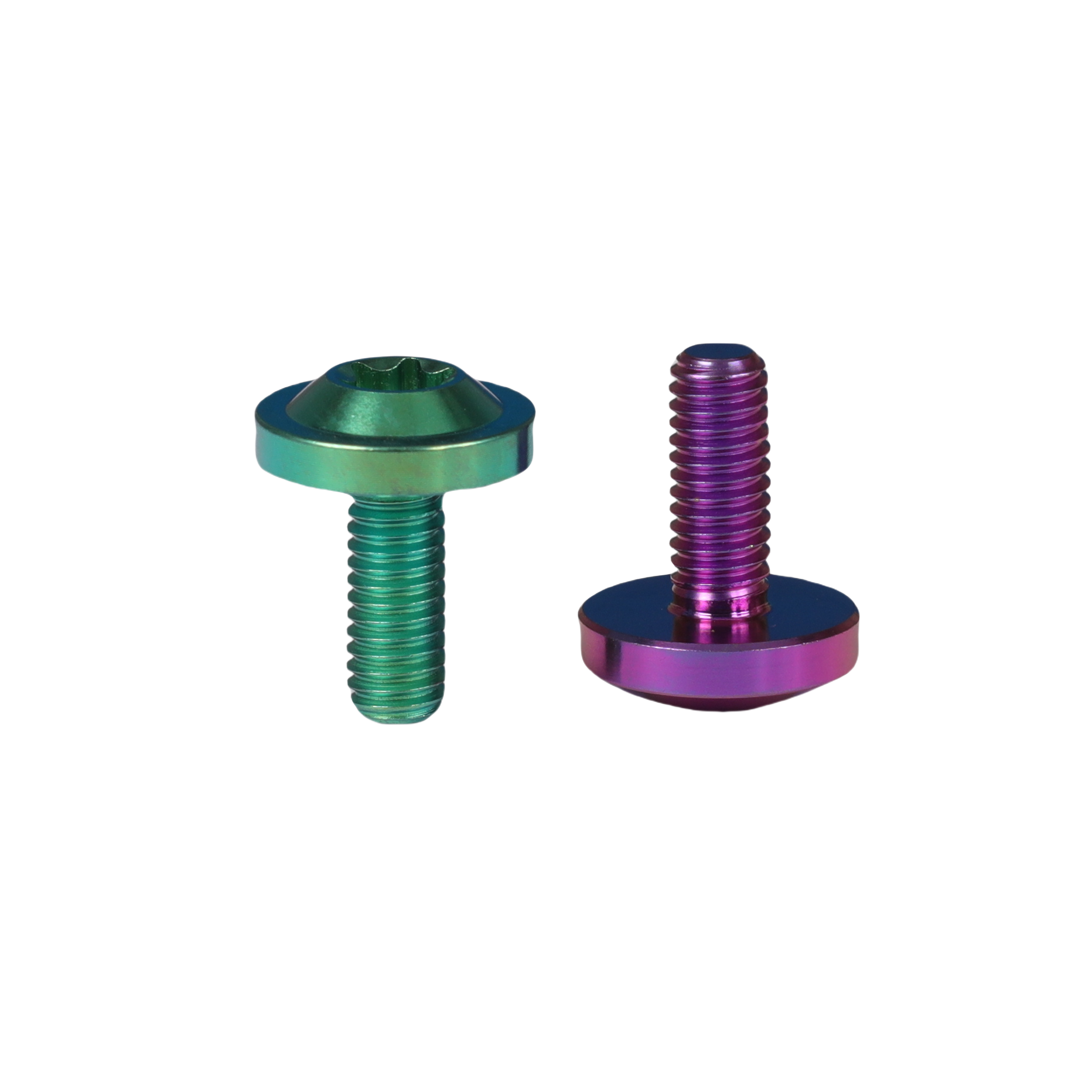
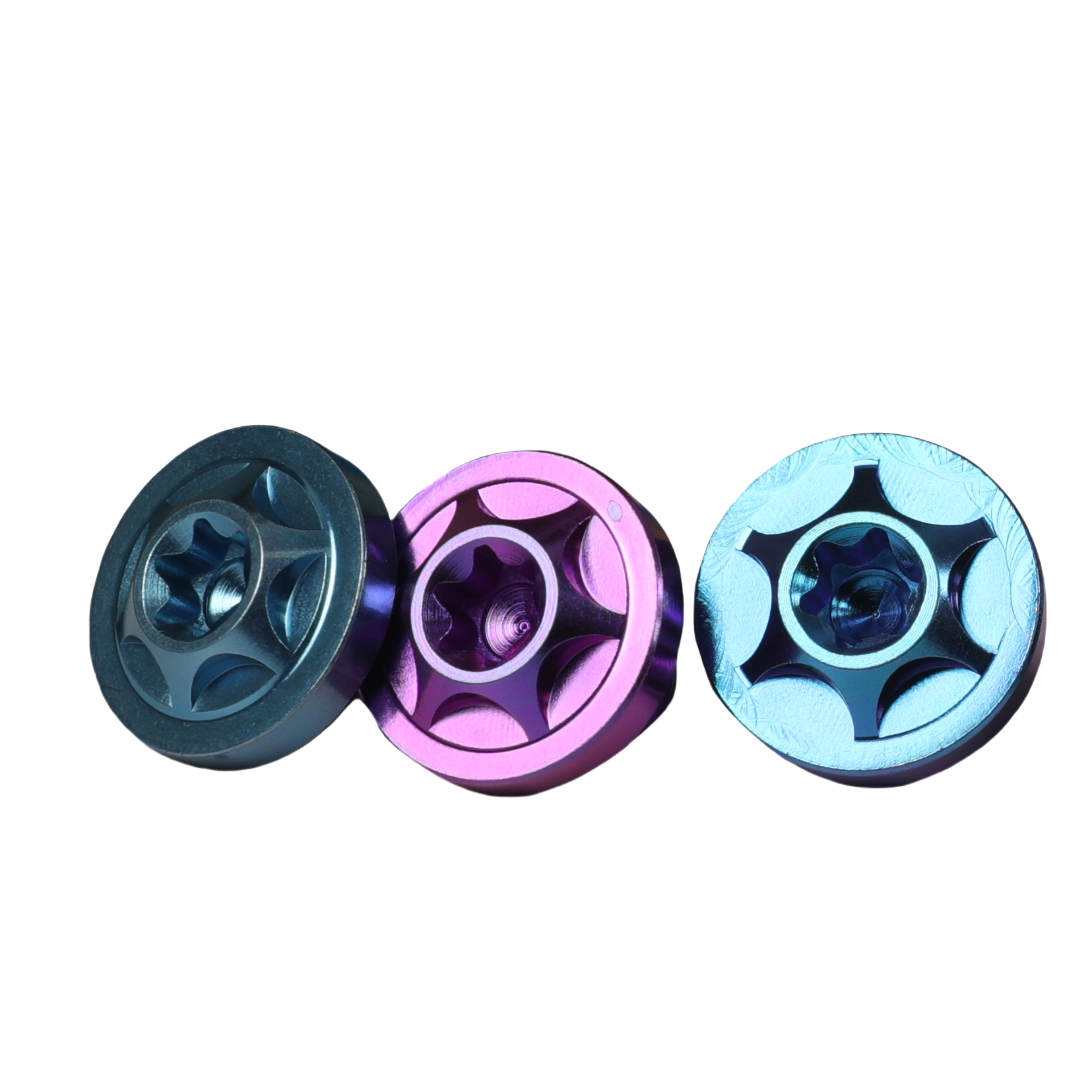
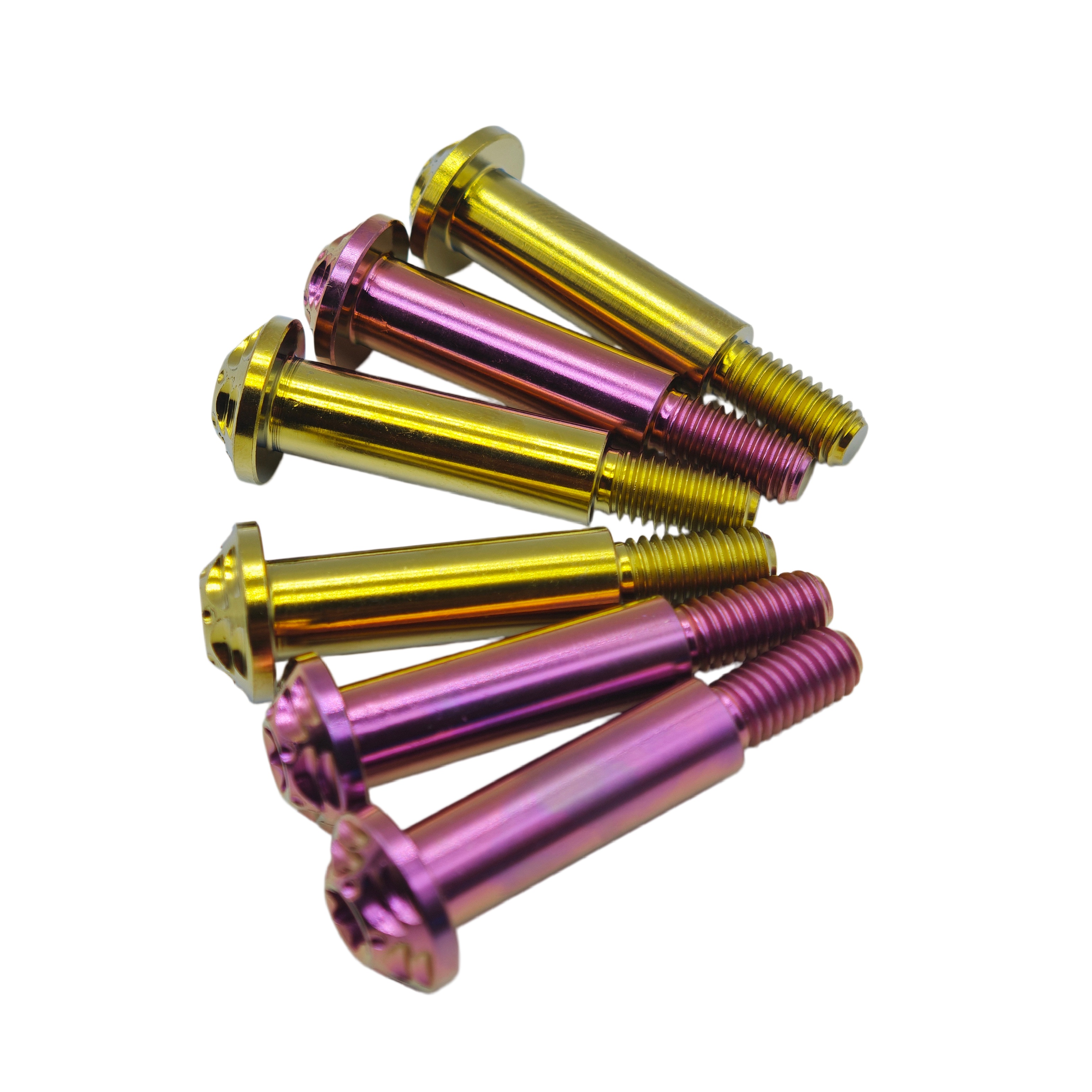
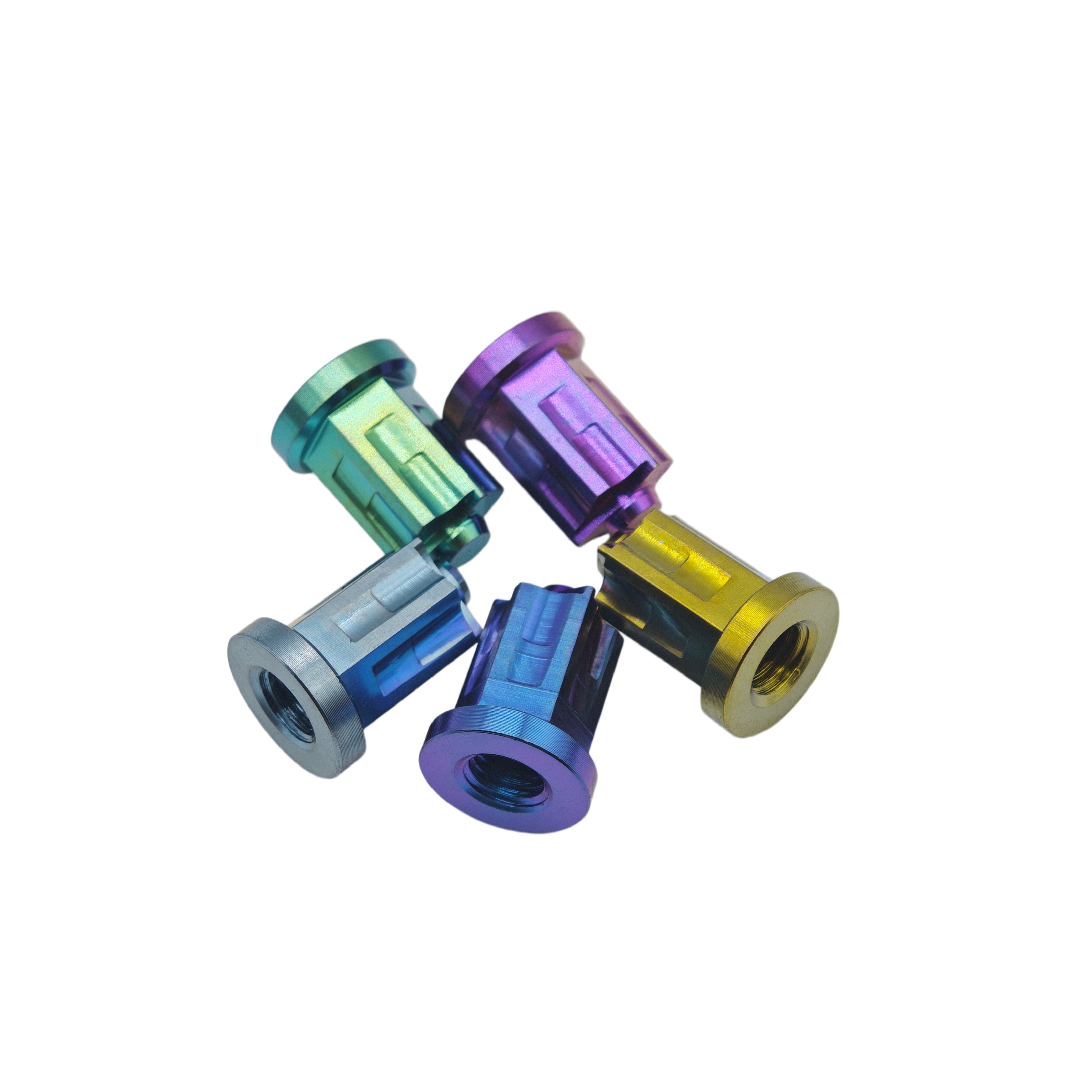
1. Technical Executive Summary: Metallurgical Precision in CE Certified Titanium Flange Nuts
In modern high-stress structural engineering, industrial automation, motorsport powertrain design, and marine architecture, mechanical fasteners serve as critical single-point failure vectors. Among specialized hardware, CE certified titanium flange nuts engineered from Grade 5 Ti-6Al-4V (UNS R56400) represent the pinnacle of load distribution efficiency, mass reduction, and electrochemical inertness. The integration of an integral flange face eliminates the requirement for a separate washer, dispersing clamping force across a expanded surface area while dramatically dampening joint relaxation caused by cyclic thermal expansion and mechanical vibration.
Navigating the global procurement landscape for aerospace-grade titanium hardware requires rigorous technical scrutiny. Procurement directors and engineering teams must evaluate metallurgical integrity, thread form generation techniques (cold thread rolling versus CNC single-point cutting), certification traceability, and compliance with the European Union’s CE mark requirements (under relevant Pressure Equipment Directives or Construction Products Regulations where structural safety is paramount). This whitepaper offers a definitive technical analysis of titanium flange nut manufacturing standards, mechanical properties, global sourcing paradigms, and structural performance criteria.
Information Gain Metric: Standard Grade 5 Titanium (Ti-6Al-4V) yields an ultimate tensile strength exceeding 895 MPa with a density of merely 4.43 g/cm³. When replacing Class 10.9 steel flange nuts, Grade 5 titanium delivers a 44% mass reduction while exhibiting immunity to chloride-induced stress corrosion cracking (SCC).
1.1 Comparative Material Dynamics: Titanium Grade 5 vs. Alternative Fastener Alloys
To quantify the structural ROI of specifying CE certified titanium flange nuts, engineering teams must evaluate key physical and mechanical parameters against traditional fasteners. The material comparison matrix below outlines the performance thresholds of Grade 5 Titanium against Commercially Pure Grade 2 Titanium, A4-80 Stainless Steel, and Class 12.9 Alloy Steel.
| Mechanical / Physical Property | Ti-6Al-4V (Grade 5) | Commercially Pure (Grade 2) | A4-80 Stainless Steel | Class 12.9 Alloy Steel |
|---|---|---|---|---|
| Ultimate Tensile Strength (Rm) | 895 - 1,000 MPa | 345 - 450 MPa | 800 MPa | 1,220 MPa |
| Yield Strength (Rp0.2) | 828 MPa | 275 MPa | 600 MPa | 1,100 MPa |
| Density (g/cm³) | 4.43 | 4.51 | 8.00 | 7.85 |
| Strength-to-Weight Ratio (kN·m/kg) | 202 | 76.5 | 100 | 155 |
| Modulus of Elasticity (GPa) | 114 | 105 | 193 | 210 |
| PREN (Pitting Resistance Equivalent) | Immune (Passive TiO₂) | Immune (Passive TiO₂) | 23 - 25 | N/A (Rust Prone) |
2. Enterprise Advantages & Sourcing Profile: Zunvo Titanium Products Co., Ltd.
Headquartered in the industrial heartland of Baoji, Shaanxi Province—widely recognized globally as "China’s Titanium Valley"—Zunvo Titanium Products Co., Ltd. operates as an onsite-verified manufacturer and exporter specializing in high-performance titanium alloy hardware. Operating across an integrated facility spanning 1,000 to 3,000 square meters and supported by a specialized workforce of over 100 technicians, Zunvo bridges the gap between raw titanium sponge refining and high-precision CNC multi-axis component machining.
100% Raw Material Traceability
Every lot of Grade 5 titanium bar stock is accompanied by original Mill Test Certificates (MTC) conforming to EN 10204 3.1 standards, ensuring verifiable chemical composition and grain size refinement.
3-Day Rapid Prototyping
Utilizing high-speed Swiss-type precision lathes and 5-axis machining centers, custom OEM/ODM drawing-based prototypes are rendered, inspected, and dispatched within 72 hours.
Zero-Defect Quality Control
Features 100% optical sorting, thread pitch micro-gauging, ultrasonic flaw detection, and coordinate measuring machine (CMM) verification prior to vacuum sealing.
Zunvo’s manufacturing ethos centers on resolving the inherent challenges of titanium fastener production: micro-galling, thread shear fatigue, and surface micro-fissuring. By combining hot forge heading with precision cold thread rolling, Zunvo ensures continuous grain flow along the pitch line of every flange nut, resulting in fatigue resistance up to 30% higher than conventional cut-thread alternatives.
3. Future Procurement Trends in Global B2B Fastener Markets
As international supply chains evolve under geopolitical shifts, environmental mandates, and technological advancements, the global enterprise market for titanium fasteners is undergoing structural changes. B2B procurement officers and engineering executives must align their vendor selection criteria with three key macro trends:
3.1 Aggressive Mass Optimization in Electric Mobility and Motorsport
The global transition to Electric Vehicles (EVs) and high-performance urban mobility has shifted weight optimization from an optional luxury to an essential design mandate. Unsprung rotational mass—specifically in wheel hubs, brake caliper mounts, suspension links, and drive-axle assemblies—directly impacts battery range, dynamic handling, and damper response times. Specifying Grade 5 titanium flange nuts reduces unsprung mass at critical joints without sacrificing joint clamping force ($F_k$), enabling manufacturers to meet strict efficiency metrics.
3.2 Supply Chain Risk Mitigation via CE and ISO Certified Tier-2 Manufacturers
Volatile raw material costs and regional trade friction have forced Western buyers away from single-source procurement models. Sourcing directors are actively diversifying into verified Tier-2 manufacturing hubs like Baoji that possess direct supply lines to titanium smelters. Compliance with European CE standards, REACH chemical safety protocols, and ISO 9001 quality frameworks allows global buyers to seamlessly integrate Chinese ODM suppliers into Western production lines while maintaining full regulatory compliance.
3.3 TCO (Total Cost of Ownership) over Initial Purchase Price
While standard zinc-plated carbon steel or 304 stainless steel nuts offer lower upfront unit costs, their life-cycle cost in aggressive environments (such as marine, road-salt, or high-temperature exhaust applications) is significantly higher due to galvanic corrosion, rust-seizure, and maintenance downtime. Grade 5 titanium formulates an instantaneous, self-healing oxide film ($\text{TiO}_2$) when exposed to oxygen, guaranteeing decade-long serviceability without fastener replacement. The Total Cost of Ownership (TCO) calculation heavily favors titanium in mission-critical hardware.
4. Engineering & Development Trends in Precision Fastener Manufacturing
The manufacturing technologies driving titanium fastener production are changing rapidly. Factory floor practices are shifting from manual multi-step machining to unified automated workflows designed to eliminate micro-structural defects.
4.1 Advanced Thread Rolling Technology vs. Thread Cutting
Traditional thread cutting creates stress concentration points by severing the natural grain flow lines of the titanium alloy bar stock. Modern Grade 5 titanium flange nut factories utilize precision CNC hot-heading followed by cold planetary thread rolling. This process compresses the molecular matrix along the thread flanks, introducing beneficial compressive residual stresses that increase fatigue life under high cyclic loading conditions.
4.2 Functional Surface Treatments: PVD Coatings & Electrochemical Anodization
Although titanium natively resists oxidation, unprotected threads can experience cold welding or galling when torqued dry against titanium or stainless male threads. Advanced manufacturing lines integrate specialized surface modifications:
- Type II Technical Anodizing: Increases surface hardness, eliminates galling risks, and provides a uniform matte gray lubricating layer.
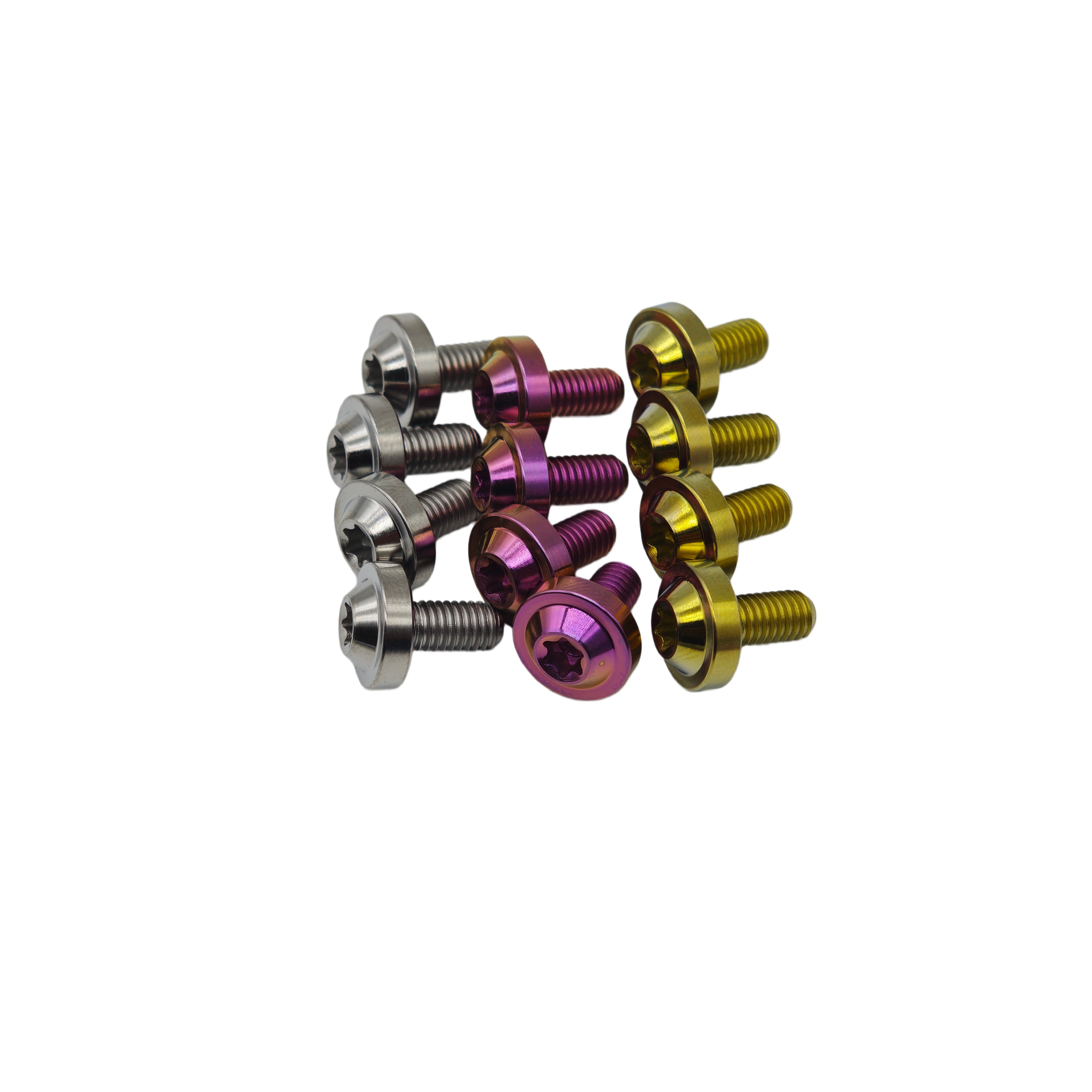
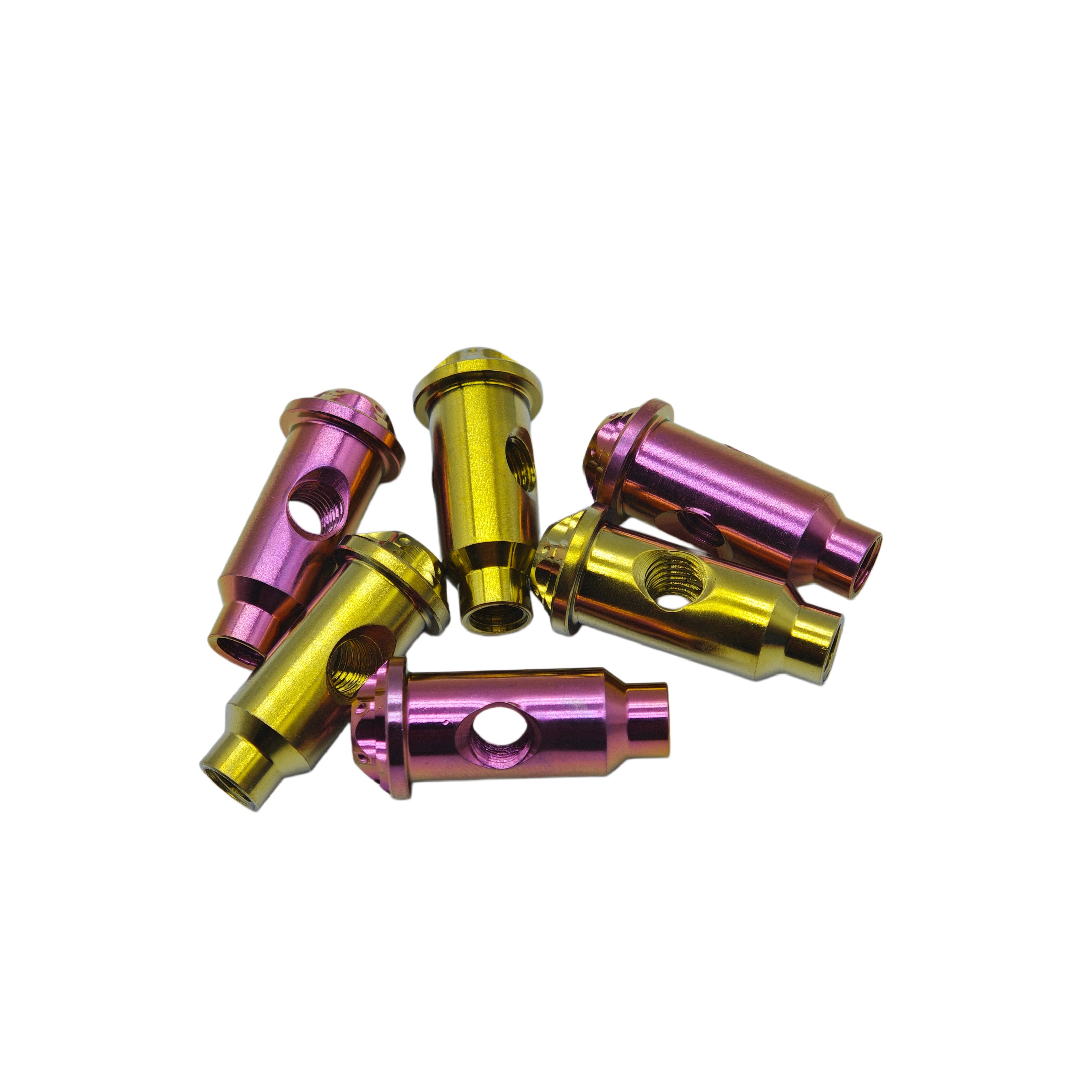
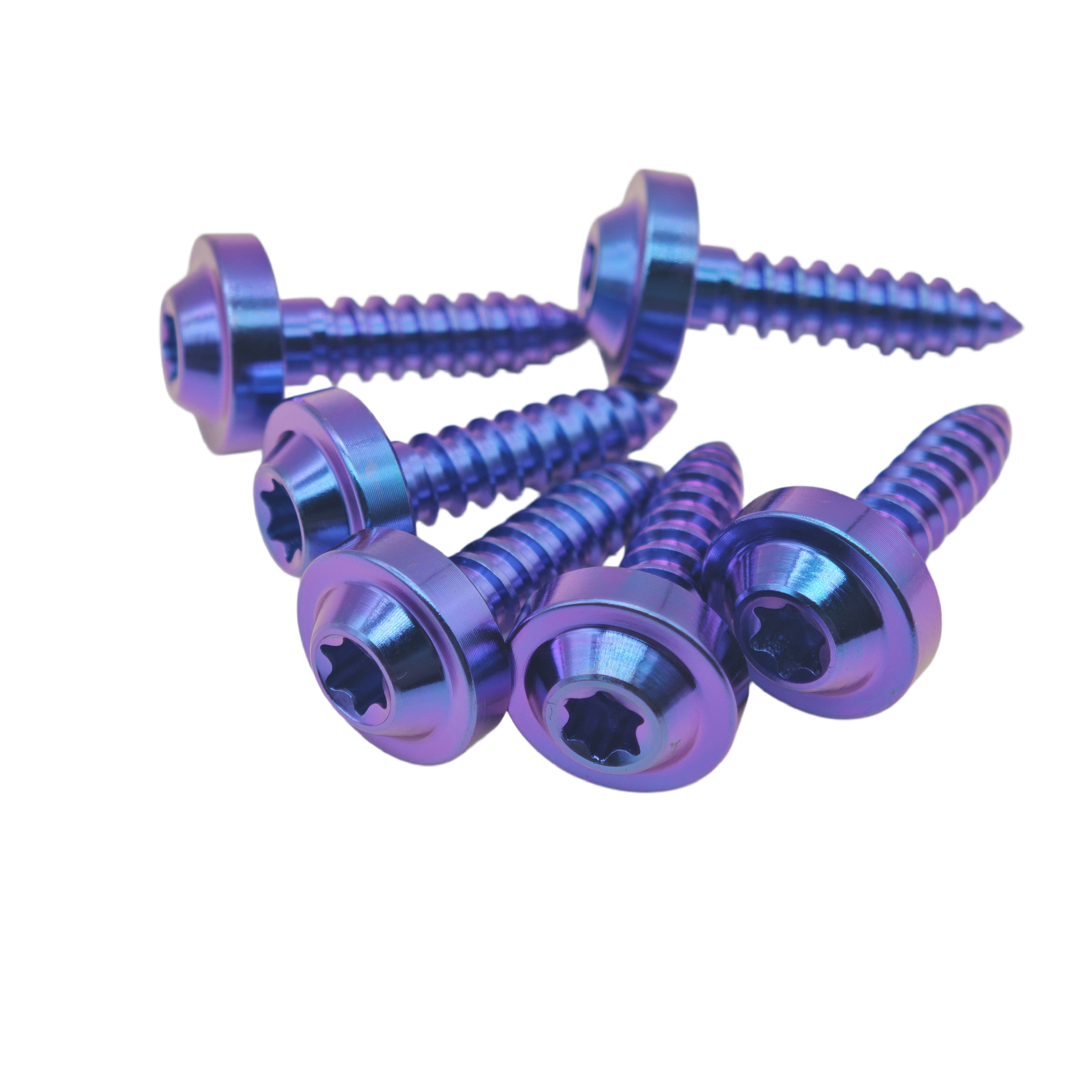
- Type III Color Anodizing: Voltage-controlled electrolytic interference layering producing vivid aesthetic finishes (Gold, Blue, Purple, Burnt Rainbow) without synthetic dyes or toxic chromium.
- PVD (Physical Vapor Deposition) Hard Coatings: Deposition of Titanium Nitride (TiN) or Diamond-Like Carbon (DLC) yielding surface hardnesses exceeding 2,500 HV for extreme friction environments.
