Featured Titanium Fasteners
Precision-engineered Grade 5 (Ti-6Al-4V) titanium fasteners manufactured via cold heading and 5-axis CNC machining, rigorously quality checked for structural integrity.
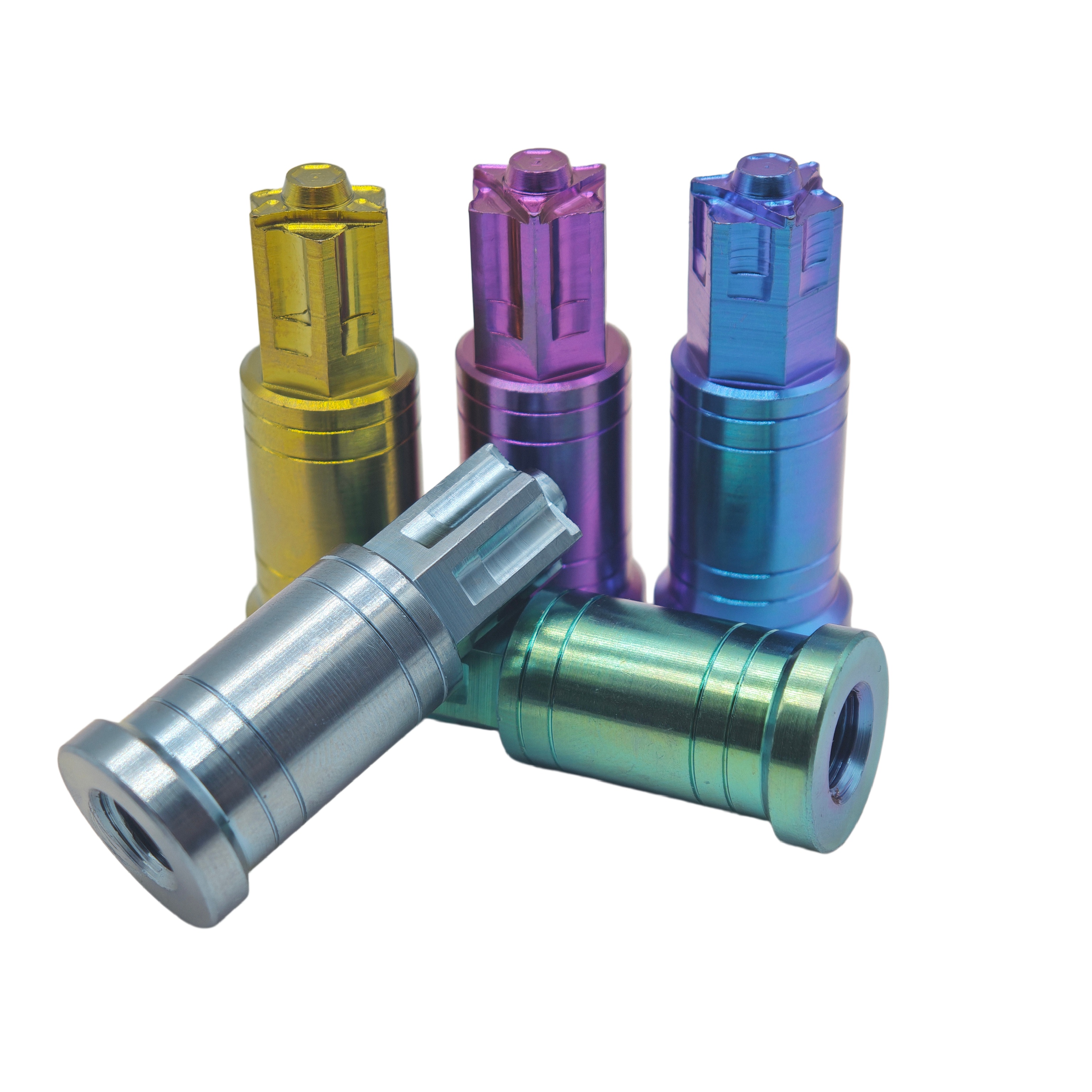
Factory Direct Sale GR5 Custom Titanium Spline Drive Sleeve Nuts Anodized/Plain Finish Flange Head Automotive Application Right
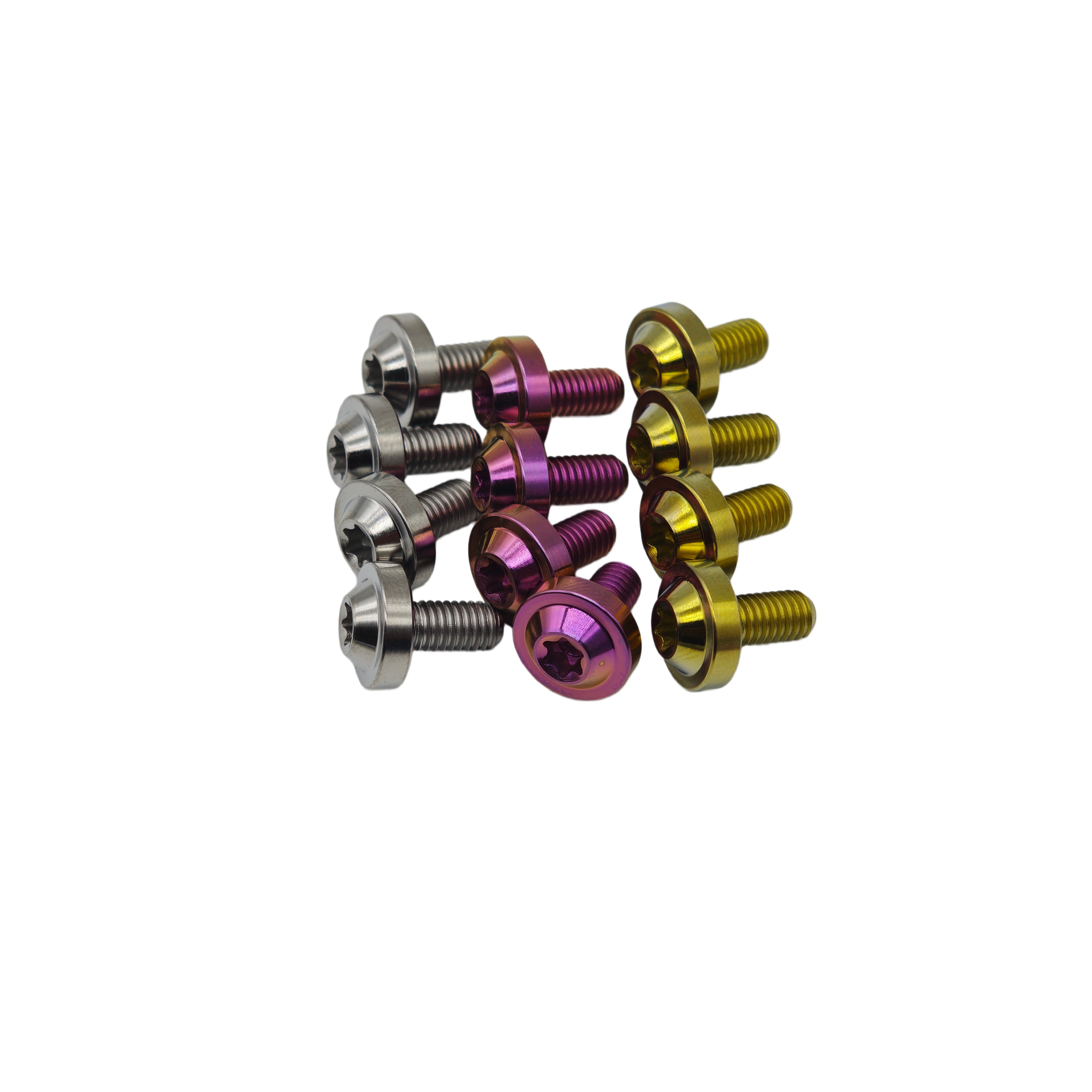
Custom GR5 Titanium M8 Disc Head Bolts with Plain Finish for Bike Motorcycle
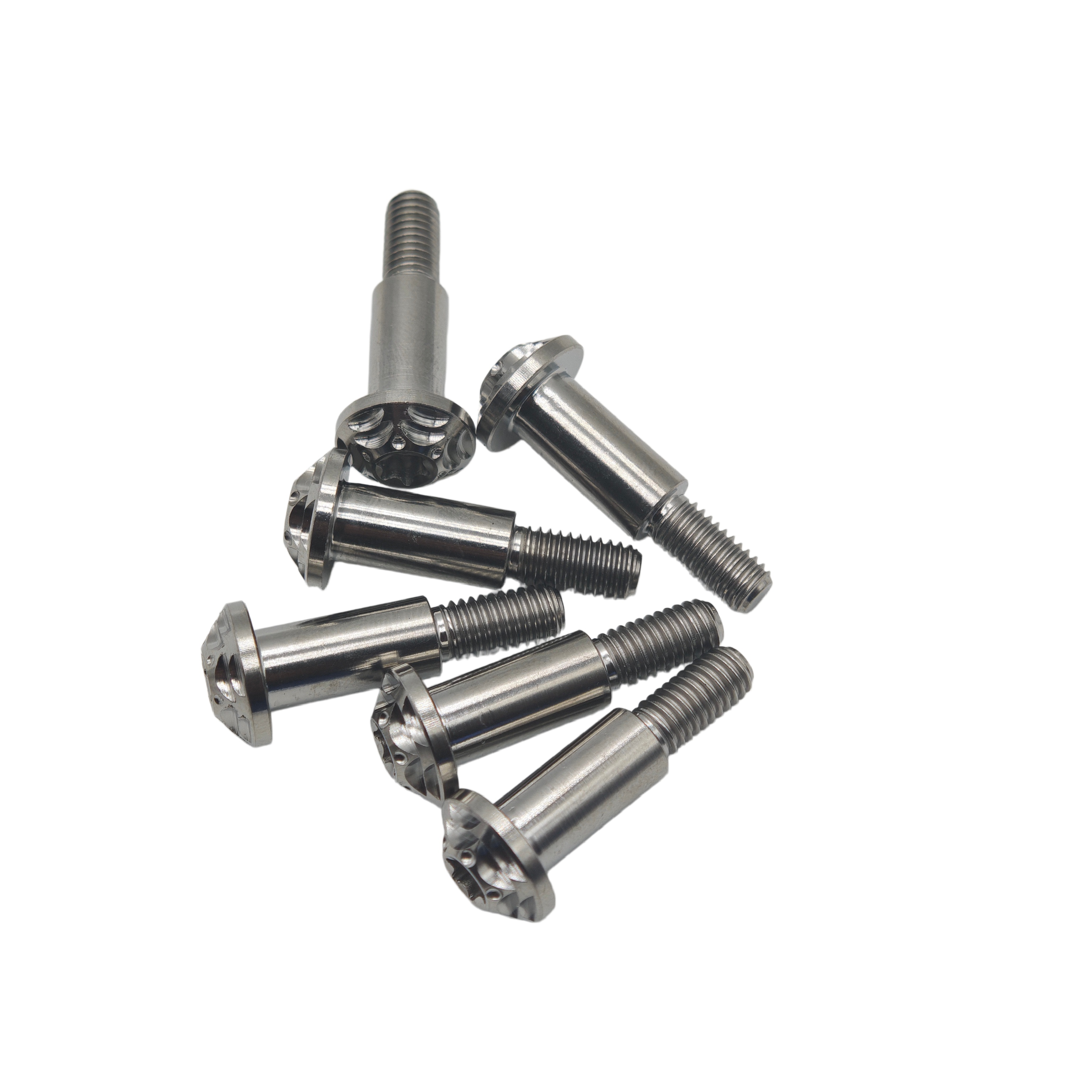
Custom Torx Shoulder Screw CNC Machined GR5 Titanium Socket Head Decorative Bolt for Motorcycle Bicycle Upgrade
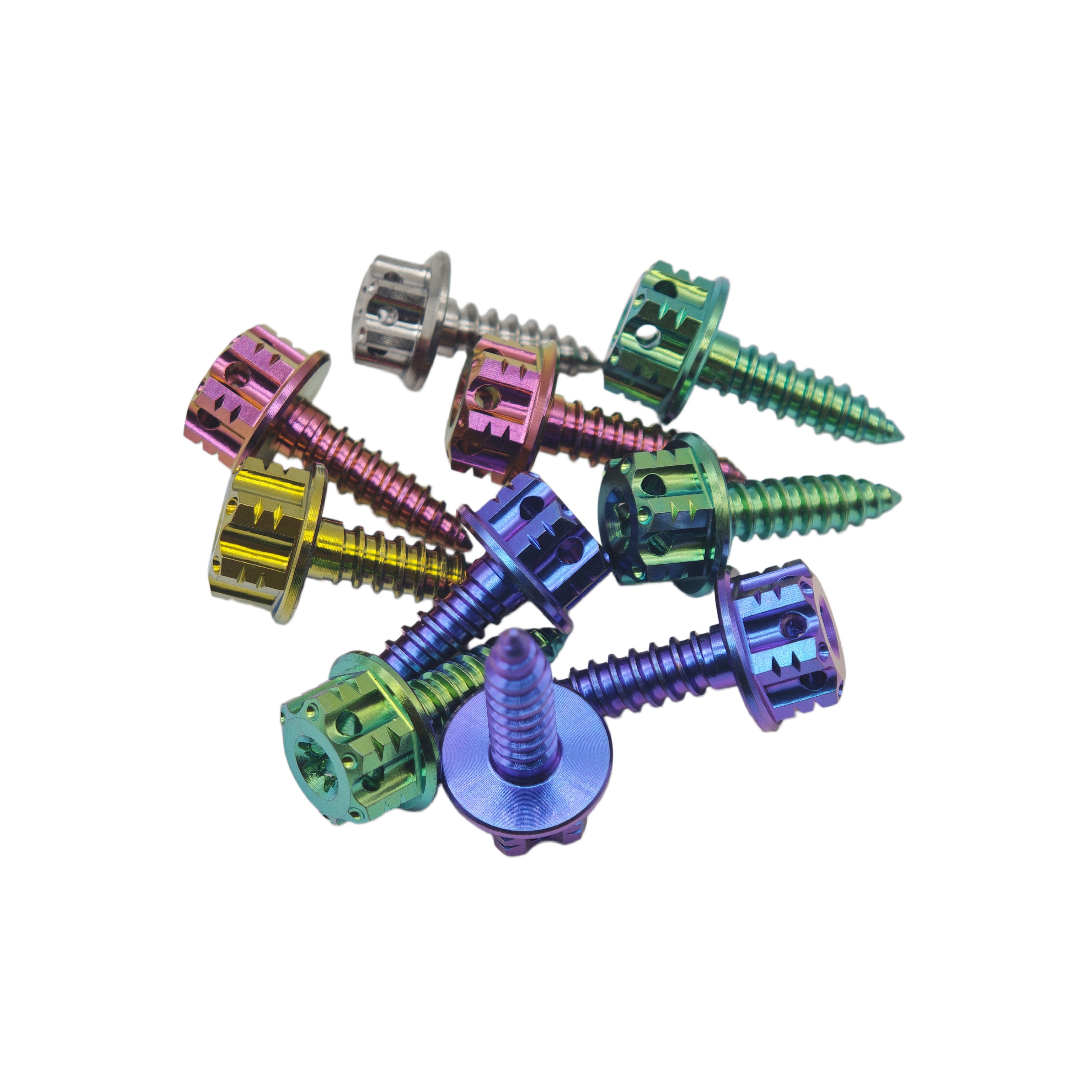
Factory Direct Sales of Metric M5*15 Grade 5 Titanium Alloy Flange Screws with Right Hand Thread for Mining
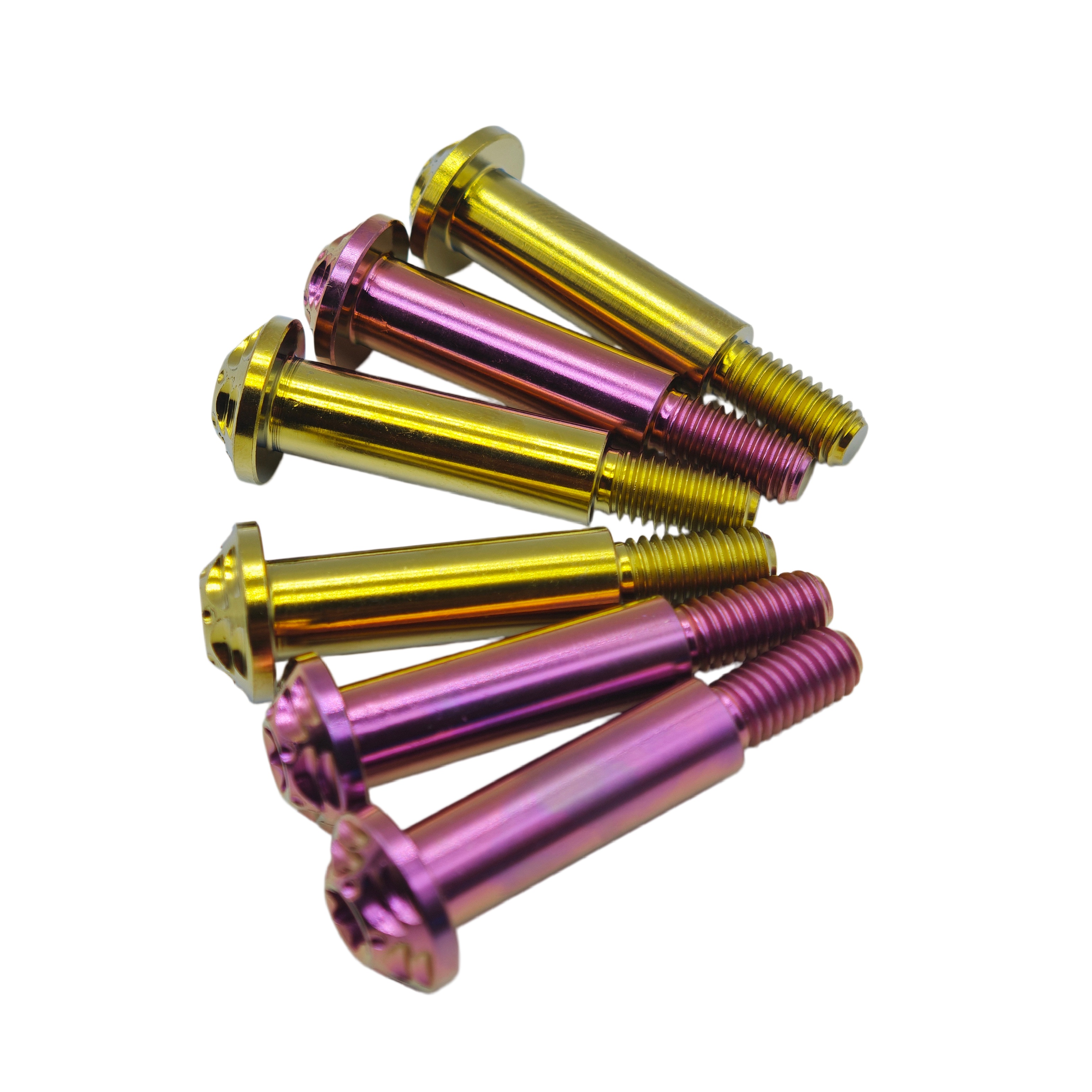
Factory Price GR5 Titanium Alloy Anodized Pan Head M6 Brake Lever Bolt Motorcycle Modification Special
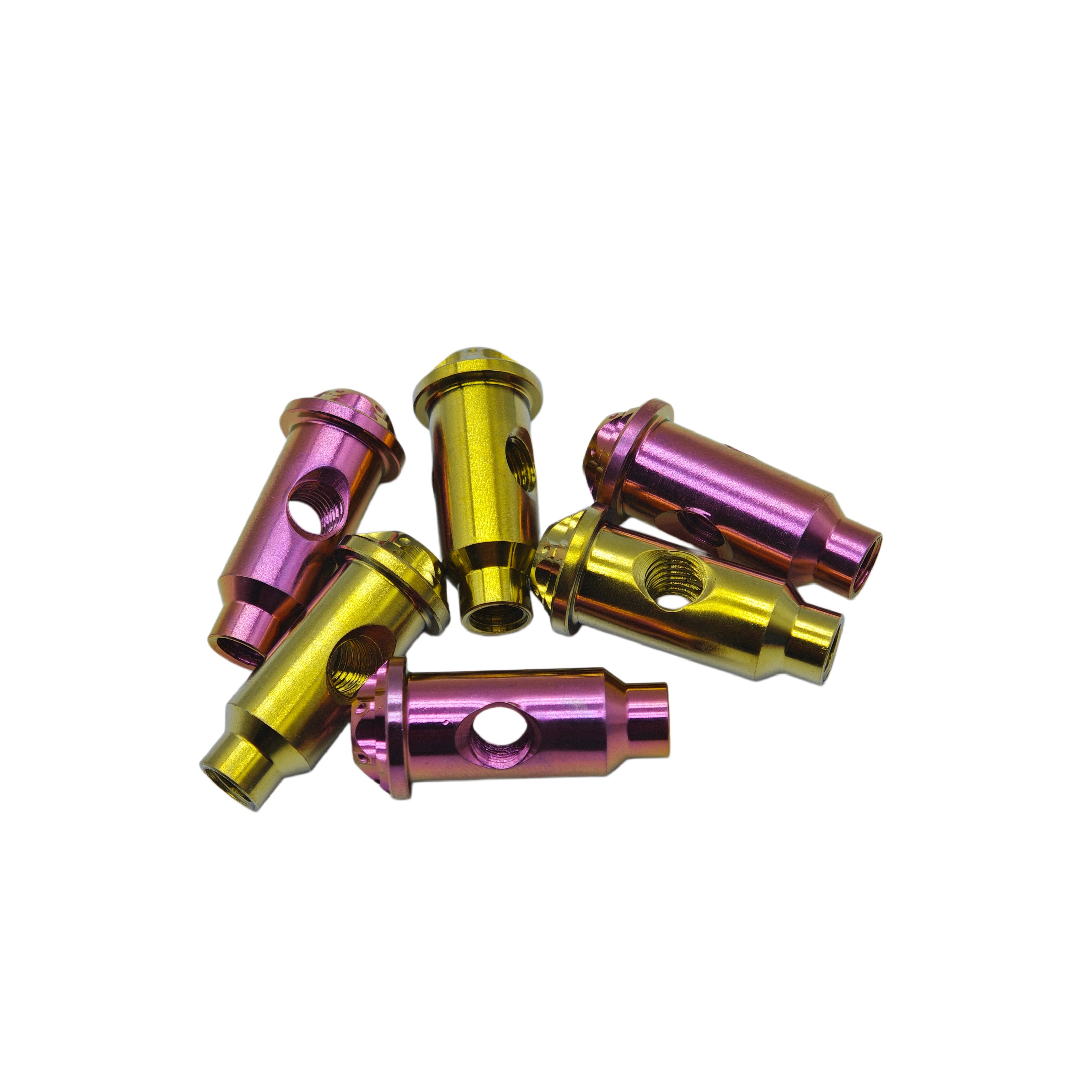
High Quality Gr5 Titanium Cross Dowel Nuts Titanium Adjusters' Knobs Bolt
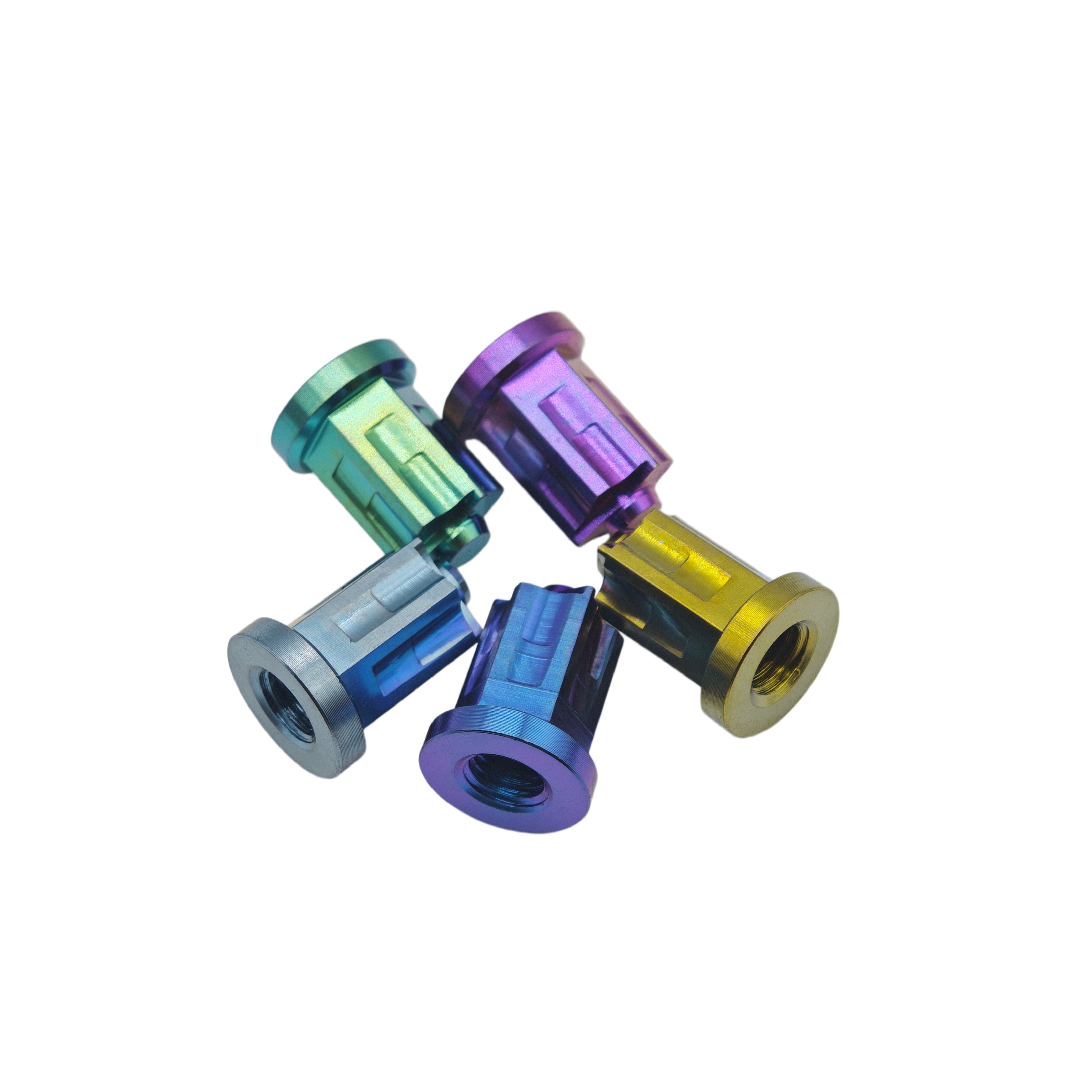
Tecksr Titanium Alloy Hex Head French-style Closed Flower Nuts Class 10 GR5 Motorcycle Modification Parts Nut
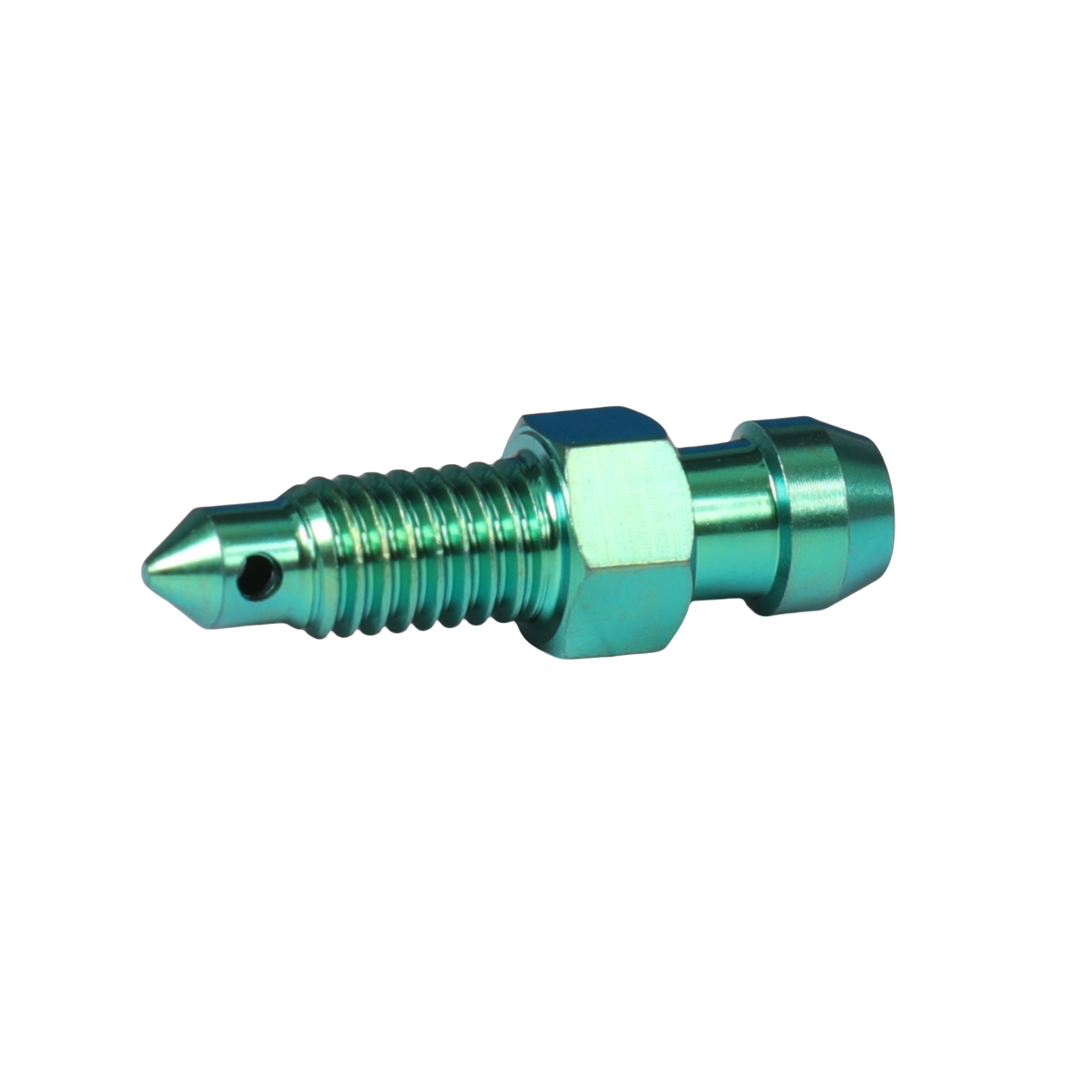
TKS M6 Anodized Gr5 Titanium Hex Motorcycle Caliper Oil Drain Bolt Screw Metric System
Comprehensive Engineering Whitepaper: CE Certified Titanium M6 Fasteners
In modern industrial manufacturing, automotive performance engineering, aerospace design, and marine architecture, the selection of critical mechanical fasteners represents a pivotal trade-off between structural mass, fatigue resistance, and environmental durability. The CE Certified Titanium M6 Bolt stands at the intersection of extreme strength-to-weight efficiency and immunity to chemical degradation. Manufactured from Grade 5 Titanium Alloy (UNS R56400 / Ti-6Al-4V), these fasteners deliver structural mechanical properties comparable to Class 8.8 and Class 10.9 high-tensile carbon steel, while providing a 44% reduction in structural mass and an operating lifespan virtually unaffected by chloride ion stress corrosion cracking or galvanic decay.
Metallurgical Architecture & Phase Dynamics of Ti-6Al-4V
The core advantage of Grade 5 titanium bolts lies in their dual-phase alpha-beta (α+β) crystalline structure. By alloying pure titanium with 6% Aluminum (an alpha stabilizer that increases strength and creep resistance) and 4% Vanadium (a beta stabilizer that enhances ductility and hot workability), the resulting matrix achieves an exceptional balance of mechanical characteristics:
- Ultimate Tensile Strength (UTS): Minimum 895 MPa (frequently exceeding 950 MPa following cold work deformation and stress-relief annealing).
- Yield Strength (0.2% Offset): Minimum 828 MPa, ensuring high resistance to permanent deformation under dynamic preloads.
- Density: 4.43 g/cm³, compared to 7.85 g/cm³ for structural carbon steel and 8.00 g/cm³ for 316L stainless steel.
- Fatigue Endurance Limit: Superior resistance to cyclic loading due to thread rolling technology that generates compressive residual stresses along the thread root radius.
| Mechanical / Physical Property | Ti-6Al-4V (Grade 5 Titanium) | 316L Stainless Steel | Class 10.9 Alloy Steel | 7075-T6 Aluminum |
|---|---|---|---|---|
| Density (g/cm³) | 4.43 | 8.00 | 7.85 | 2.81 |
| Tensile Strength (MPa) | 895 – 1050 | 580 – 620 | 1040 – 1200 | 540 – 570 |
| Yield Strength (MPa) | 828 – 950 | 290 – 320 | 940 – 1000 | 470 – 500 |
| Strength-to-Mass Ratio (kN·m/kg) | 214 | 72.5 | 132.4 | 192 |
| Corrosion Resistance (Chloride/Salt) | Immune (Passivated TiO₂) | Moderate (Pitting Risk) | Severe Corrosion Risk | Anodic Degradation Risk |
| Modulus of Elasticity (GPa) | 114 | 193 | 210 | 72 |
CE Certification, ISO Standards, and Quality Management Compliance
As a premier OEM manufacturer and global exporter situated in Baoji—China's renowned "Titanium Valley"—our facility operates under a fully integrated quality management system compliant with ISO 9001:2015 and aerospace standard EN 9100. Our CE Certification under the Machinery Directive 2006/42/EC and Pressure Equipment Directive (PED 2014/68/EU) guarantees that every M6 titanium bolt lot conforms strictly to European health, safety, and environmental protection requirements.
Traceability is fundamental to our quality protocol. Every batch of Grade 5 titanium wire rod is supplied with EN 10204 3.1 Mill Test Certificates (MTC), detailing chemical composition via Optical Emission Spectrometry (OES) and mechanical validation through hydrostatic, tensile, and microstructural analysis.
Enterprise Capabilities & Factory Strengths
Combining localized material raw material supply chains with state-of-the-art cold heading, CNC turning, and automated optical inspection facilities.
Advanced Cold & Hot Heading Technology
Unlike conventional subtractive machining that cuts grain flow lines, our dual-phase heading processes preserve continuously forged grain lines along the head-to-shank junction. This increases fatigue limit and shear resistance at the M6 bolt head transition zone by over 30%.
Precision Thread Rolling (Class 6g/6H)
M6 threads are produced using high-precision thread rolling dies under controlled pressure. Thread rolling induces plastic deformation, burnishing the thread flank surface finish to Ra < 0.4 μm while eliminating sharp micro-notches that serve as crack initiation sites.
Custom Surface Treatments & PVD Coatings
We provide full-spectrum surface customization including electrolytic color anodizing (Gold, Blue, Purple, Green, Rainbow), Micro-Arc Oxidation (MAO) for severe wear protection, and Physical Vapor Deposition (PVD) Titanium Nitride (TiN) and Diamond-Like Carbon (DLC) black coatings.
Engineering Application Playbook for M6 Titanium Fasteners
The M6 thread pitch (Standard 1.0mm coarse thread or 0.75mm fine thread) is among the most versatile metric fastener dimensions in industrial engineering. Our CE-certified M6 titanium bolts are widely deployed across critical sectors:
1. High-Performance Automotive & Motorsport
Utilized in brake caliper mounting brackets, rotor hats, engine valve covers, intake manifolds, turbocharger heat shields, and suspension linkages. Replacing steel M6 hardware reduces unsprung mass and rotative inertia, yielding measurable gains in vehicle dynamics and thermal dissipation.
2. Aerospace & Unmanned Aerial Vehicles (UAVs)
Employed in drone chassis frames, avionics enclosures, satellite housing assemblies, and internal payload mounts where absolute reliability under high-frequency structural vibration is non-negotiable.
3. Marine, Naval & Subsea Offshore Rigs
Because Grade 5 titanium forms an instantaneous, self-healing passive titanium dioxide (TiO₂) oxide layer when exposed to oxygen or water, M6 titanium bolts remain completely immune to saltwater immersion, pitting corrosion, and biofouling degradation.
4. Medical Devices & Bio-Compatible Robotics
Compliant with ASTM F136 surgical implants baseline standards, Ti-6Al-4V ELI (Extra Low Interstitials) M6 fasteners are non-magnetic, radiolucent, and entirely bio-compatible for specialized surgical robotics, MRI equipment, and prosthetics manufacturing.
Future Procurement Trends in Titanium Fastener Manufacturing (2025–2030)
As global supply chains place an increasing premium on carbon efficiency, lightweighting mandates, and ESG-compliant manufacturing, the global titanium fastener market is undergoing rapid structural evolution. B2B procurement managers and system engineering buyers must navigate several major industry shifts over the coming decade:
1. Shift Toward Additive Manufacturing & Hybrid CNC Production
While cold heading remains the most cost-efficient route for mass-market standard M6 bolts, complex custom geometry fasteners are transitioning toward hybrid manufacturing models. Electron Beam Melting (EBM) and Direct Metal Laser Sinking (DMLS) 3D printing techniques are being paired with final 5-axis CNC thread finishing to create internal lightweight lattice heads that reduce bolt mass by an additional 15–20% without sacrificing clamp load capacity.
2. Stringent Environmental ESG Compliance & Closed-Loop Recycling
European and North American OEMs increasingly demand carbon footprint documentation across the entire metal extraction and forging lifecycle. Our manufacturing facility utilizes 100% recycled titanium turnings and chips within secondary vacuum arc remelting (VAR) loops, slashing total manufacturing energy consumption and assisting tier-1 automotive buyers in fulfilling Scope 3 emission targets.
3. Integration of Smart Fasteners & Integrated Sensor Systems
Next-generation critical joint assemblies in wind turbines, aerospace turbines, and autonomous electric vehicles are prompting the development of smart titanium M6 bolts equipped with micro-piezoelectric strain sensors. These embedded sensors provide real-time telemetry on bolt preload stress loss, thermal expansion cycles, and micro-vibration loosening during operational lifecycles.
4. Near-Net-Shape Cold Heading Overcoming Material Scrappage
Historically, titanium machining suffered from high raw material buy-to-fly ratios due to high scrap rates during bar lathe turning. Modern multi-station automated cold heading machines now allow high-speed plastic deformation of Grade 5 titanium wire at room-to-warm temperatures, reducing raw material waste by up to 60% and stabilizing wholesale unit prices for large-volume procurement contracts.
Frequently Asked Questions (B2B Procurement & Technical FAQ)
Detailed technical responses compiled by our senior metallurgical engineers to address common procurement, engineering, and quality assurance queries.
Partner with a Verified Titanium Fastener Factory
Need custom M6 titanium bolts engineered to your exact CAD specifications, material grades, and anodized finishes? Contact our engineering sales group for immediate DFM feedback and competitive wholesale quotations within 7 hours.
Get a Quote