Featured Titanium Stem & Chassis Fasteners
Thread-rolled, CNC turned, and surface-engineered from certified Grade 5 (Ti-6Al-4V) aerospace bar stock for motorsport, cycling cockpits, and extreme mechanical duty.
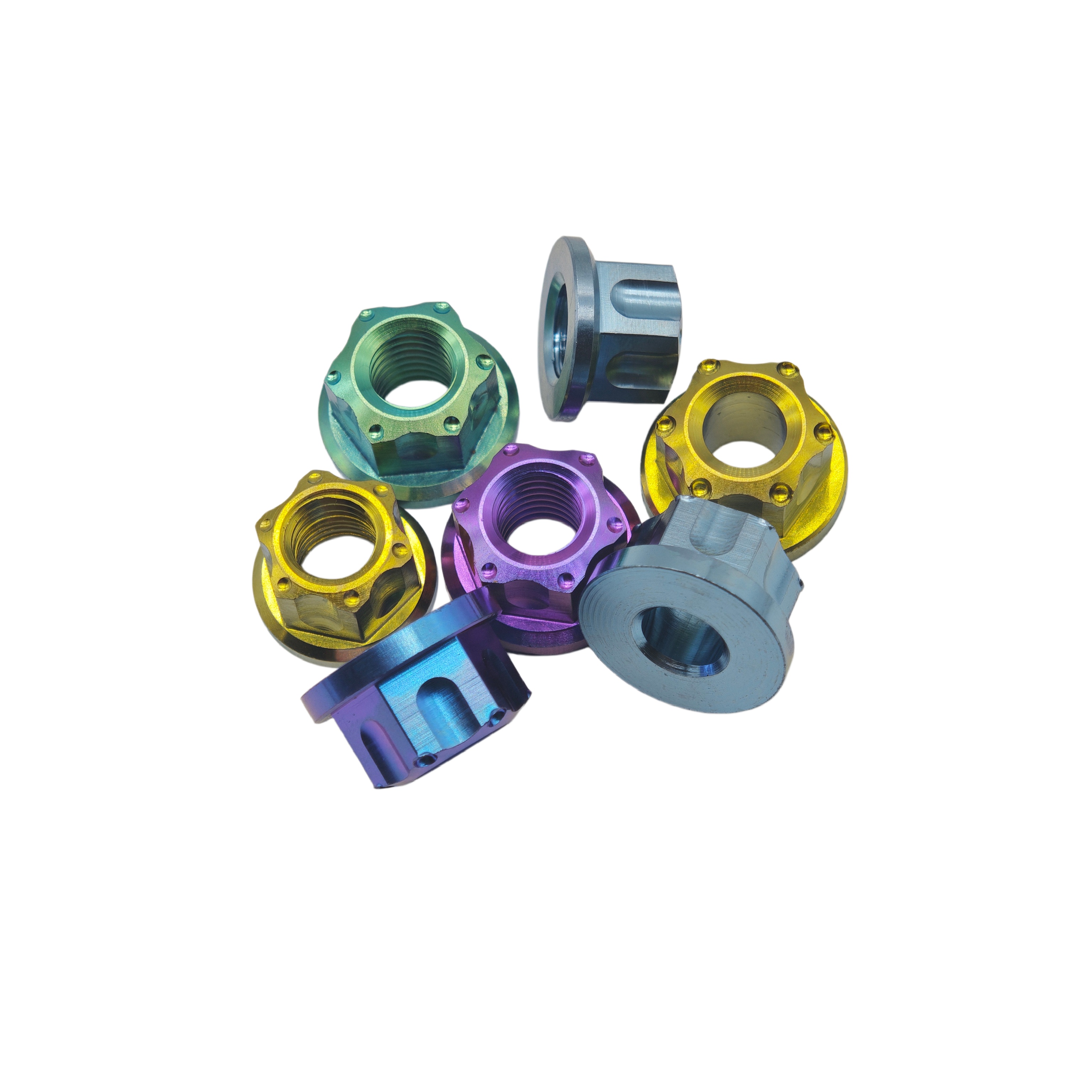
Factory Direct Sales Anodized/Plain Finish Right Hand Thread Gr5 Hexagon Flange Titanium Open Nut M10/M8
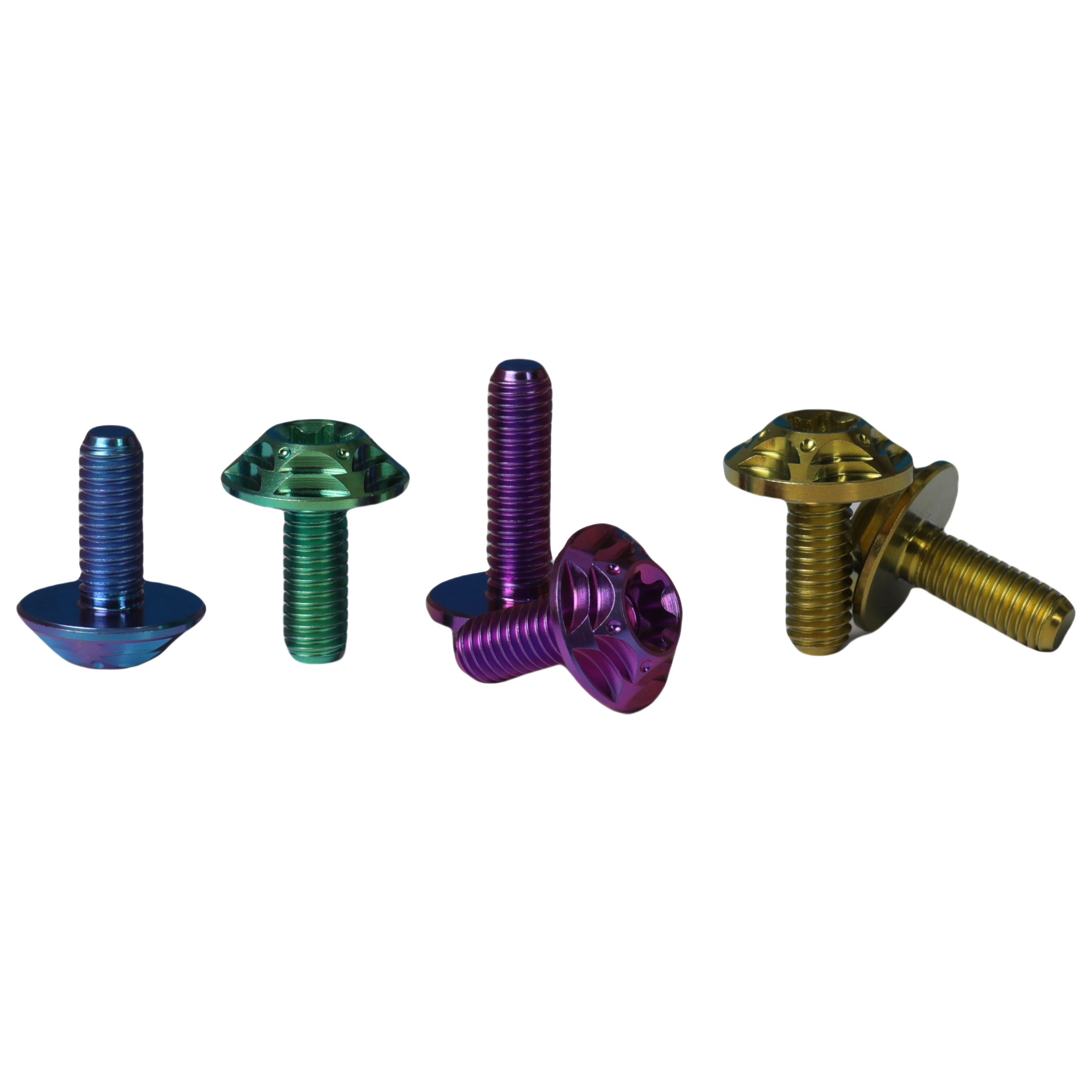
Titanium Alloy CNC Disc Brake Disc Head Bolts Torx Head DIN Thread Anodized/PVD Finish Class 10.9/12.9 Grade TKS Brand Factory
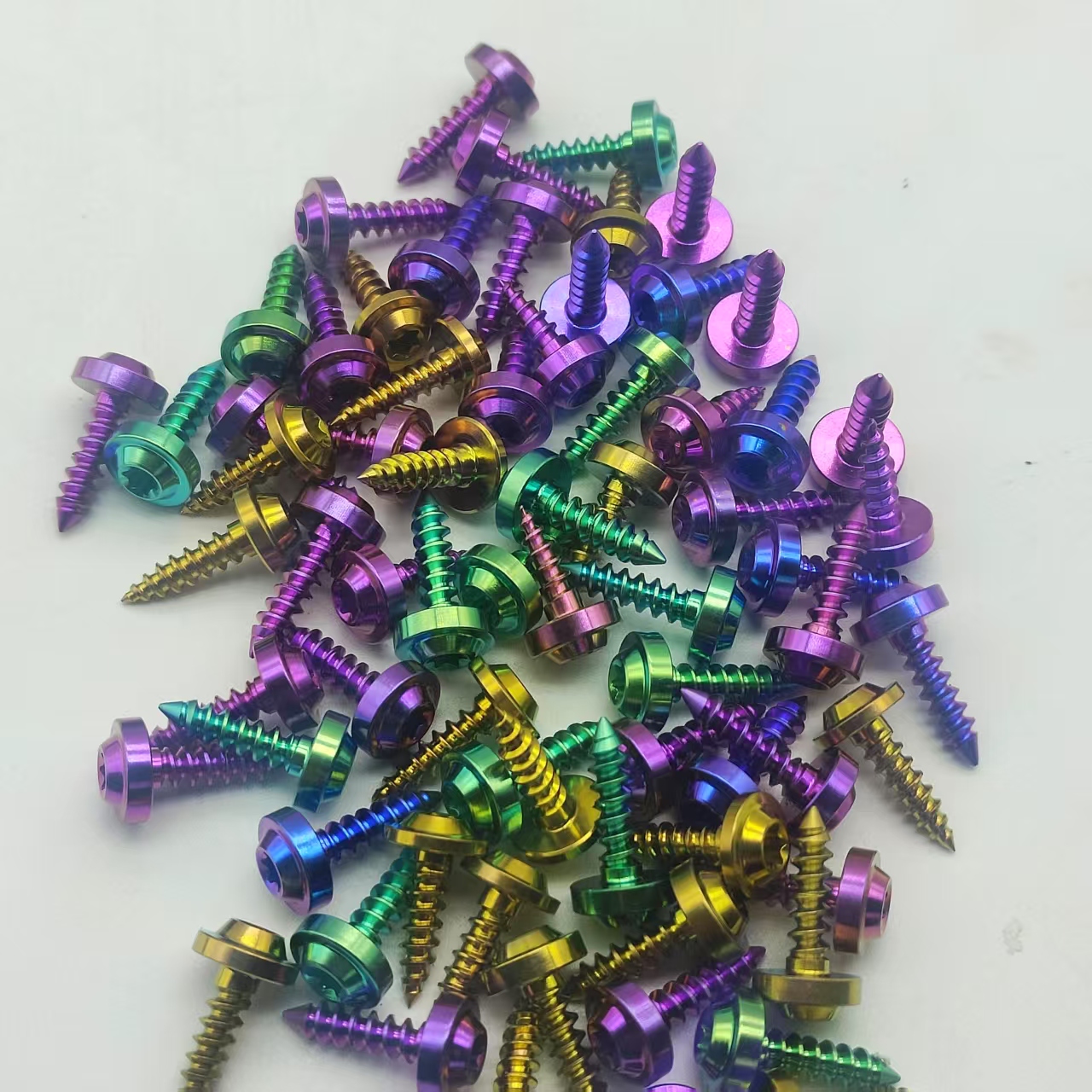
High Strength M4-M5 Titanium Alloy Torx Head Self-Tapping Screws Hex Washer Head Anodizing/PVD Finish DIN Standard Metric
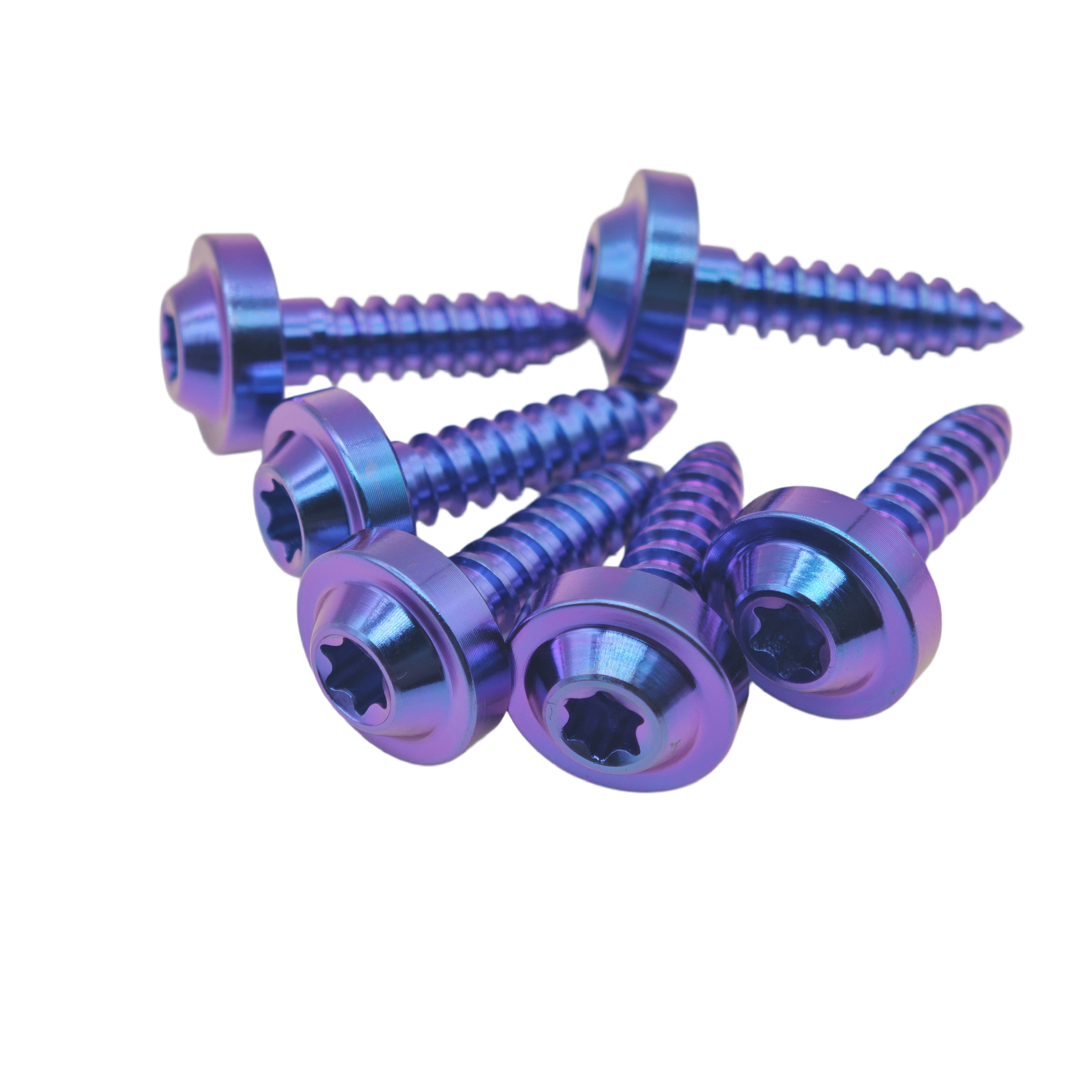
GR5 Anodized Titanium Torx Head Standard Thread Self-Tapping M6 Screw for Motorcycles
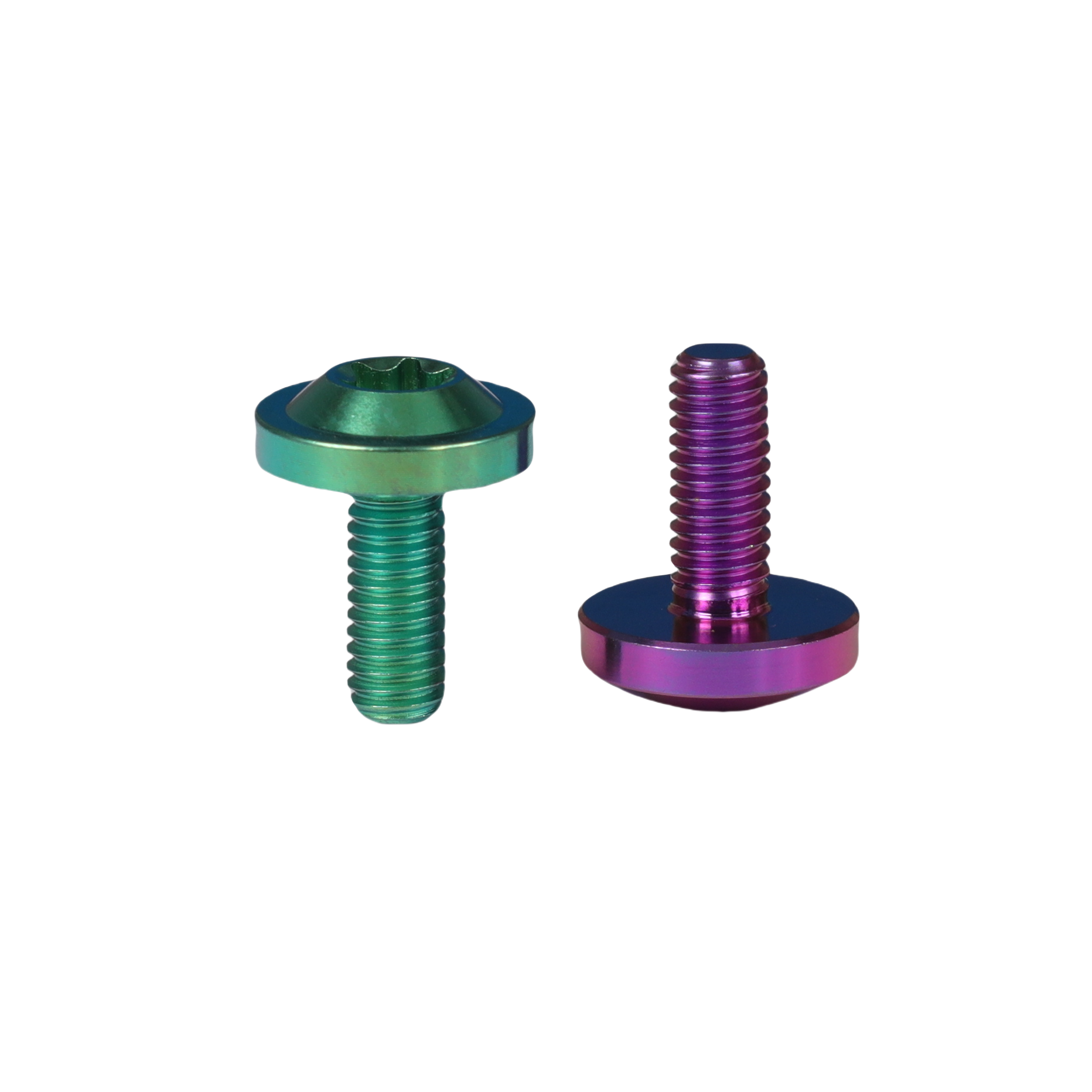
Factory Supply Class 6 M6*15 GR5 Titanium Pan Head Anodized Screw Lightweight & Durable Customizable Metric Measurement System
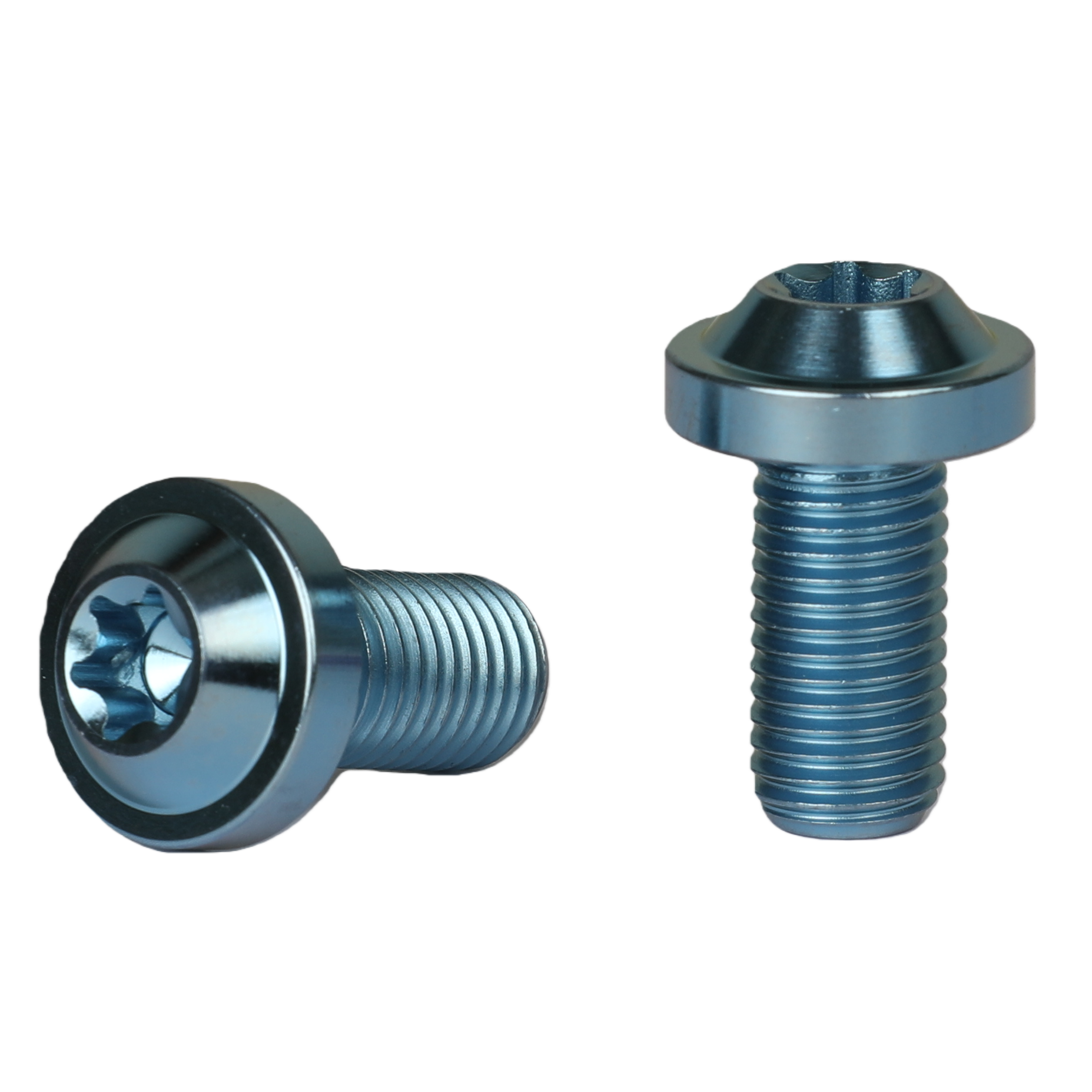
GRX Grade 5 Titanium Pan Head Brake Disc Screws for Race Motorcycle M6/M8/M10 DIN Thread
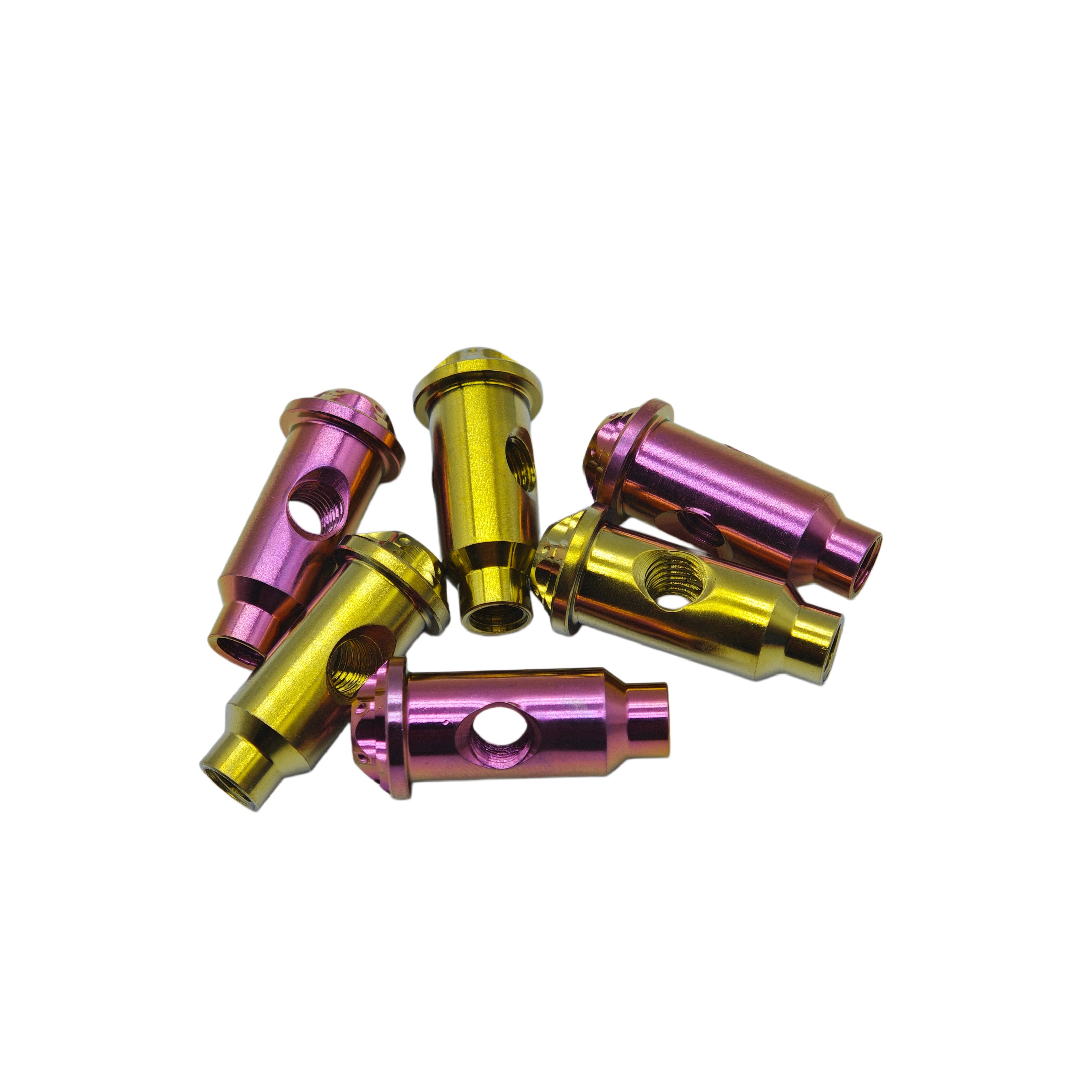
High Quality Gr5 Titanium Cross Dowel Nuts Titanium Adjusters' Knobs Bolt
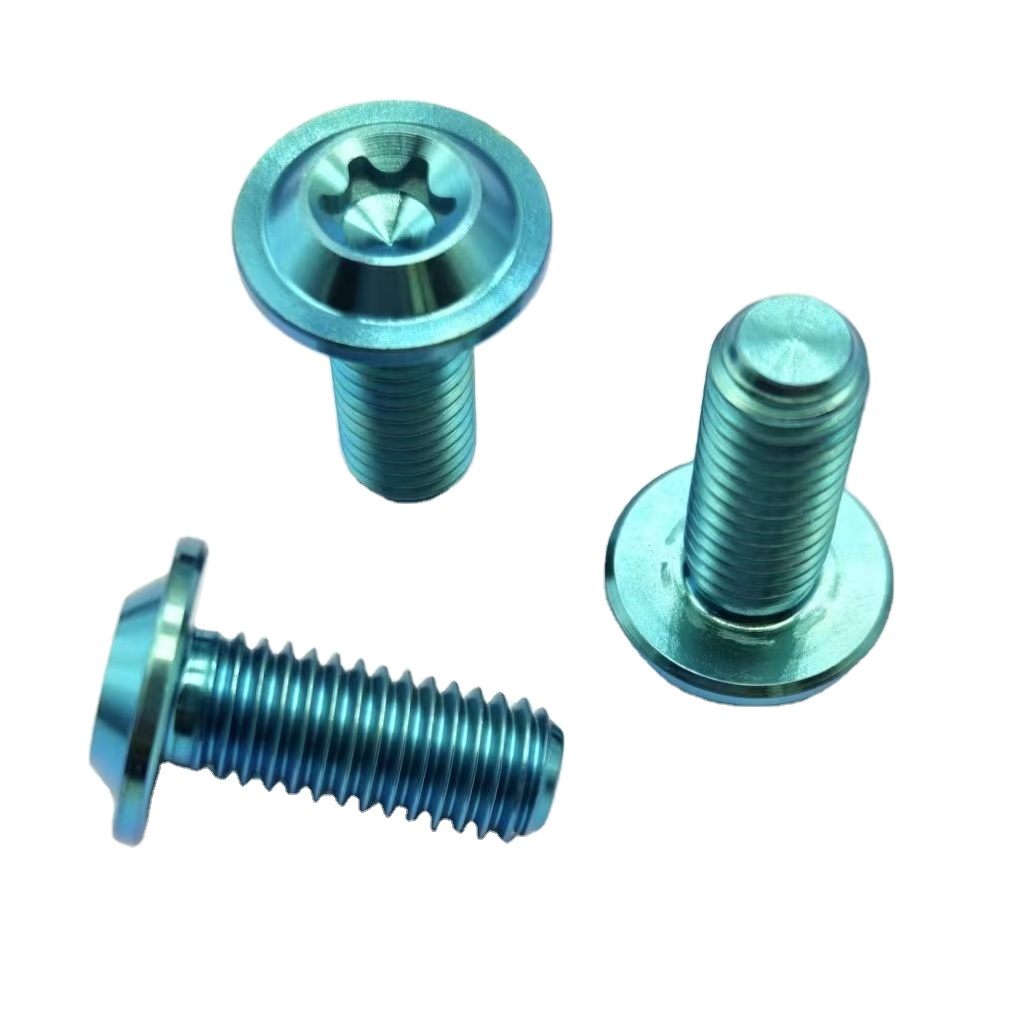
Customized M8 Gr5 Titanium Alloy Pan Head Bolts and Screws for Motorcycles
1. Technical Whitepaper: The Metallurgy and Mechanical Dynamics of Titanium Stem Bolts
Bicycle handlebar stems, motorcycle triple trees, and performance steering brackets operate in a safety-critical mechanical interface subject to multi-axial dynamic stresses. When a rider applies cyclic lateral torque during climbing, sprinting, or aggressive braking, the stem clamp bolts experience continuous fluctuations between tensile pre-load and transverse shear fatigue. Traditional engineering often defaulted to Grade 8.8, 10.9, or 12.9 zinc-plated alloy steels or cold-drawn stainless steel (A2-70/A4-80). However, the aggressive weight minimization demanded by modern performance mobility has elevated Titanium Grade 5 (Ti-6Al-4V, UNS R56400, ASTM B348 / AMS 4928) to the premier material standard.
Grade 5 titanium features an alpha-beta duplex microstructure. The addition of 6% aluminum acts as an alpha-phase stabilizer to boost room and elevated-temperature tensile properties, while 4% vanadium stabilizes the ductile beta phase, optimizing hot workability and fracture toughness. As verified in Baoji metallurgy labs, our hot-headed and precision CNC-machined titanium stem bolts deliver an ultimate tensile strength exceeding 950 MPa with a yield strength over 830 MPa, coupled with an elongation rate greater than 10%. This balances rigidity with the elastic deformation capacity required to prevent catastrophic fatigue notch failure under alternating stem flexure.
| Alloy Specification | Yield Strength (Rp 0.2, MPa) | Tensile Strength (Rm, MPa) | Density (ρ, g/cm³) | Specific Strength (kN·m/kg) | Modulus of Elasticity (E, GPa) | Corrosion Resistance |
|---|---|---|---|---|---|---|
| Gr5 (Ti-6Al-4V) Rolled | ≥ 830 | ≥ 895 – 1020 | 4.43 | 202 – 230 | 110 – 114 | Permanent (TiO&sub2; Passivated) |
| Class 10.9 Alloy Steel (40Cr/SCM435) | 900 – 940 | 1000 – 1040 | 7.85 | 127 – 132 | 205 – 210 | Poor (Subject to Rust / Rust Bleed) |
| Class 12.9 Alloy Steel | 1080 – 1100 | 1200 – 1220 | 7.85 | 153 – 155 | 210 | Vulnerable (Hydrogen Embrittlement Risk) |
| A2-70 Austenitic Stainless Steel | 450 | 700 | 7.90 | 88 | 193 | Moderate (Pitting in Chloride/Sweat) |
| 7075-T6 Aerospace Aluminum | 505 | 572 | 2.81 | 203 | 71.7 | Prone to Stress Corrosion Cracking |
Critical Engineering Note on Fatigue Life: Cold-Rolled vs Cut Threads
Thread fabrication method is the single greatest differentiator in bolt longevity. All premier stem bolts exported by Zunvo utilize cold-rolled threading post-heat treatment rather than single-point CNC lathe chasing. Cold rolling plastically deforms the grain flow lines, forcing continuous crystalline fibers to contour naturally around thread roots and crests. This imparts residual compressive stress of -200 to -350 MPa at the thread root, elevating dynamic fatigue limit by 300% to 450% compared to cut threads, preventing head shear under high-frequency cockpit vibration.
2. Enterprise Manufacturing Prowess: The Baoji "Titanium Valley" Supply Integration
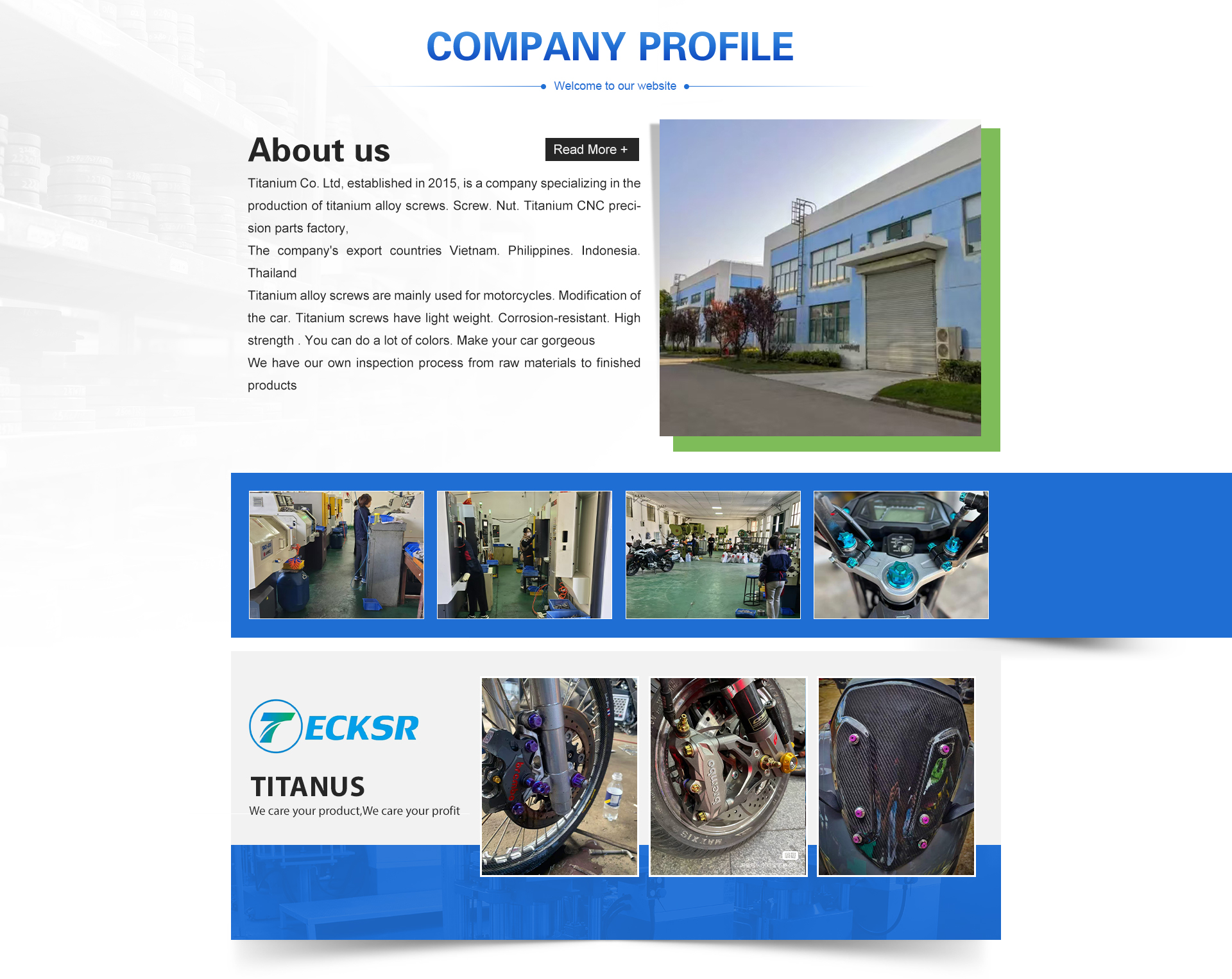
Headquartered in the Shiling Road Industrial Park of Baoji, Shaanxi, Zunvo Titanium operates at the geographic epicenter of China's titanium mining, smelting, and metallurgical refining cluster (responsible for over 60% of domestic national titanium sponge and bar capacity). Operating as an onsite-verified manufacturer established in 2015 with over 100 dedicated technical specialists and a 3,000 m² specialized facility, we bypass intermediary trading houses to ensure uncompromising structural traceability:
Spectrometric Purity Verification
Every inbound lot of Ti-6Al-4V bar undergoes induction-coupled plasma (ICP) atomic emission spectrometry and ultrasonic subsurface flaw scanning (AMS 2631 standard) to guarantee interstitial oxygen [O] ≤ 0.18%, nitrogen [N] ≤ 0.03%, and iron [Fe] ≤ 0.25%.
Multi-Axis Mill-Turn Precision
Our workshop houses high-precision Japanese Tsugami and Star Swiss-type automatic lathes and 5-axis DMG MORI turning centers capable of holding tolerances down to ±0.005 mm on socket concentrics, washer flange planar flatness, and underhead stress-relief radii (DIN 7984 / DIN 912).
Electrochemical & PVD Nanocoatings
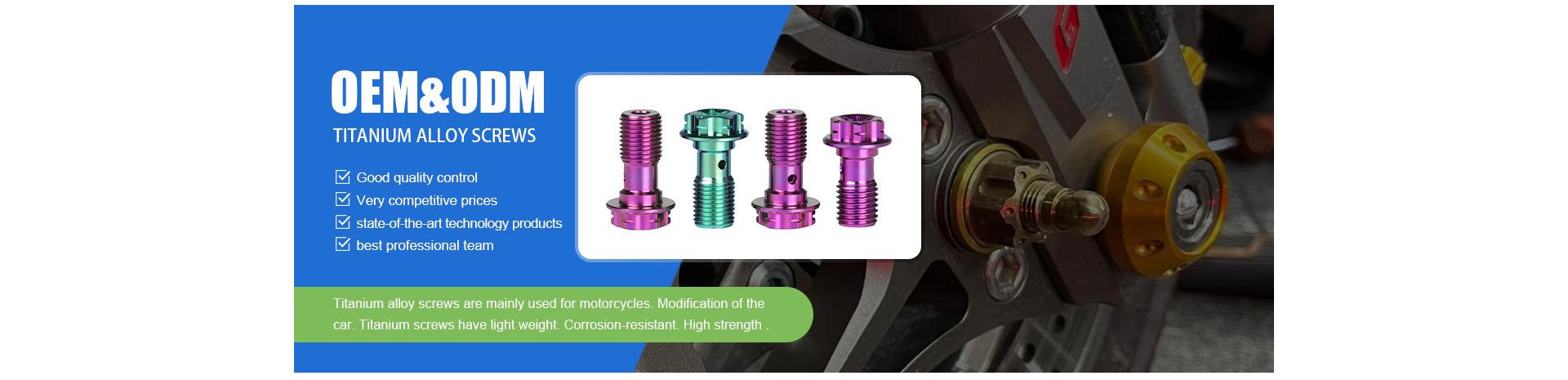
Controlled anodic oxidation generates stable light-interference dielectric oxide films (Burnt Rainbow, Electric Blue, Violet, Sunset Gold). For ultimate abrasion resistance, physical vapor deposition (PVD) applies 2-3 micron TiN (Titanium Nitride) or Diamond-Like Carbon (DLC) achieving microhardness ≥ 2500 HV.

3. Global Procurement Trends: Sourcing Shift in Performance Hardware (2025-2030)
International B2B procurement data across North America, Europe, and Australasia reveals substantial architectural pivots in hardware procurement strategies. Procurement directors for premier bicycle OEMs (road, gravel, and e-MTB), motorcycle racing teams, and motorsport aftermarket brands are moving away from multi-tiered supply brokers directly to onsite-verified Chinese manufacturing plants:
- Consolidation to Integrated Cockpit Cable Routing: Internal headset routing designs require ultra-compact stem bolt head designs (e.g., tapered Torx T25/T30 button heads, countersunk flanged low-profile caps) to avoid interfering with internal hydraulic hoses and electric shifting harnesses.
- E-Mobility Vibration Durability: High-torque electric bikes and electric supermotos experience continuous low-frequency vibrations that induce preload relaxation in inferior steel fasteners. Gr5 titanium provides natural damping capacity (≈ 10 times higher damping than carbon steel) and resists thread loosening under cyclic vibration.
- Supply Chain Decarbonization: Procurement managers are prioritizing suppliers who utilize closed-loop titanium scrap remelting and precision net-shape heading processes that slash machining scrap ratios from 70% to under 22%.
- Standardized Anti-Galling Coatings: Factory-applied dry-film lubricants (MoS&sub2;) and micro-arc oxidation (MAO) are replacing liquid copper paste on assembly lines, cutting assembly cycle time by 18 seconds per handlebar stem unit.
4. Technology Evolution: The Engineering Shift from Hex Sockets to Deep-Engagement Torx Drives
One prominent evolutionary shift visible in modern high-end stem bolts is the displacement of standard DIN 912 Hexagonal (Allen) drive sockets with deep-cut ISO 10664 Torx (hexalobular internal) geometry. Hexagonal drives are notorious for contact stress concentrations: the torque wrench makes contact only at sharp vertices, generating high shear forces that strip or "round out" bolt heads when tightened to the recommended 5.2 to 6.2 N·m stem torque, especially given titanium's lower shear modulus relative to steel.
By contrast, hexalobular Torx interfaces transfer tightening force radially through broad, curved lobes at an angle of approach close to 90 degrees. This eliminates cam-out force, ensures zero wall deformation even after 100+ removal/re-torque cycles, and allows robotic assembly heads on automated OEM production lines to attain instantaneous bolt engagement without slippage.
5. Installation Protocol: Torque-Tension Preload Optimization & Galling Prevention
Titanium alloys exhibit a high friction coefficient against aluminum stem clamps, carbon fiber faceplates, and female threads. When two clean titanium surfaces or titanium-to-aluminum pairings slide under contact load, microscopic local adhesion occurs—a failure mechanism known as tribological galling or cold-welding. If an assembler torques a dry titanium stem bolt to 6 N·m, over 80% of the rotational work is lost to interface friction, yielding insufficient bolt clamping elongation (insufficient clamp tension), resulting in handlebar slippage during ride maneuvers.
Mandatory Assembly Best Practices for Cycling & Motorsport Workshops
1. Anti-Seize Compound: Always apply a nickel-based anti-seize paste, titanium-specific assembly grease, or high-purity PTFE thread lubricant to the external threads and underhead flange radius.
2. Washer Integration: Always use a CNC-machined Grade 5 titanium concave or flat washer between the bolt head and stem body to convert rotating head friction into linear thrust.
3. Calibrated Torque Measurement: Never tighten freehand. Use a calibrated micrometer click-type torque wrench. Cross-torque dual-bolt faceplates incrementally in an "X" sequence (e.g., 2 N·m → 4 N·m → 5.5 N·m) to achieve uniform stress distribution across carbon fiber handlebars.
6. Frequently Asked Questions (FAQ) for Global Buyers & Engineers
Why is Grade 5 (Ti-6Al-4V) mandatory for stem bolts instead of Grade 2 commercially pure titanium? +
How do your prices compare with European or American titanium fastener suppliers? +
What is your standard MOQ, sampling lead time, and bulk delivery schedule? +
Does titanium produce galvanic corrosion when threaded into aluminum alloy stem bodies? +
What quality control documentation and export compliance do you provide? +
Accelerate Your Performance Hardware Supply Chain Today
Send your 2D/3D CAD technical drawings (.STEP, .IGS, .DWG) or part numbers to our senior fastener engineering team in Baoji. Receive a comprehensive DFM (Design for Manufacturability) review and rapid formal quotation within 7 hours.
