Precision Titanium Lug Nuts & Performance Hardware Showcase
Engineered from certified Ti-6Al-4V Grade 5 vacuum-melted billets. Optimized thread fatigue resistance, 45% mass reduction over steel, and zero-corrosion integrity under track conditions.
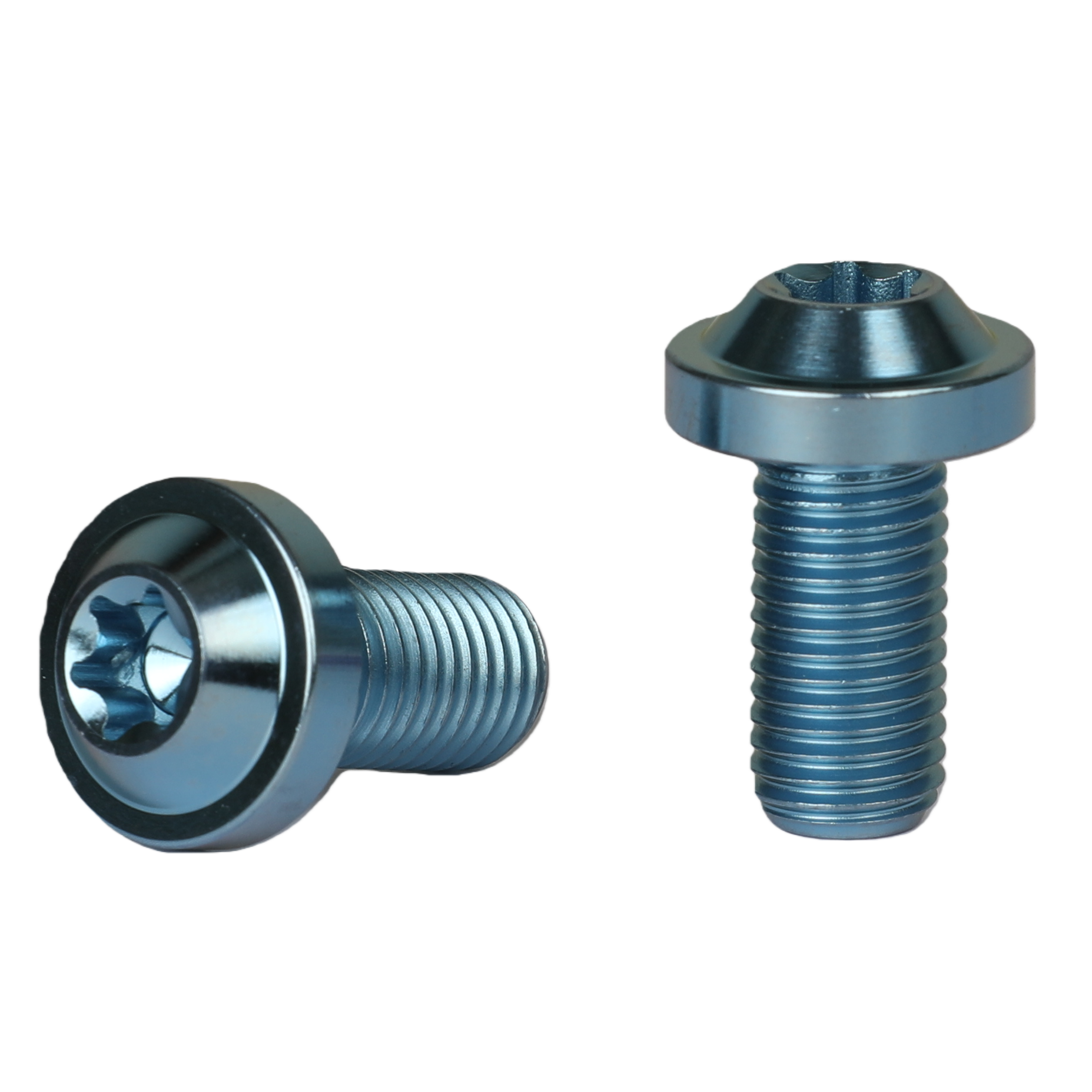
GRX Grade 5 Titanium Pan Head Brake Disc Screws for Race Motorcycle M6/M8/M10 DIN Thread
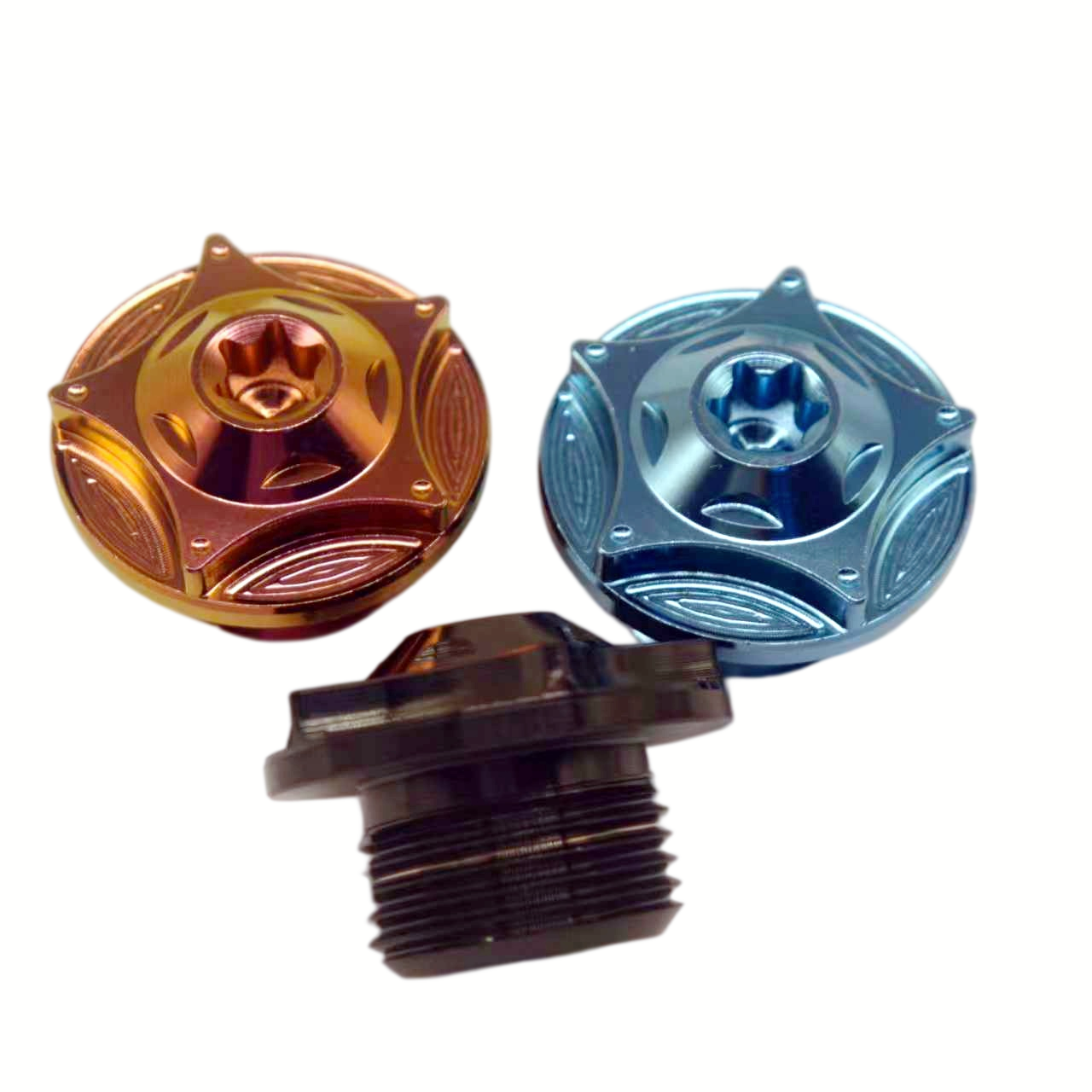
Motorcycle Engine Parts Bolts M14 Titanium Gr5 Nuts Oil Drain Plugs Titanium Nuts
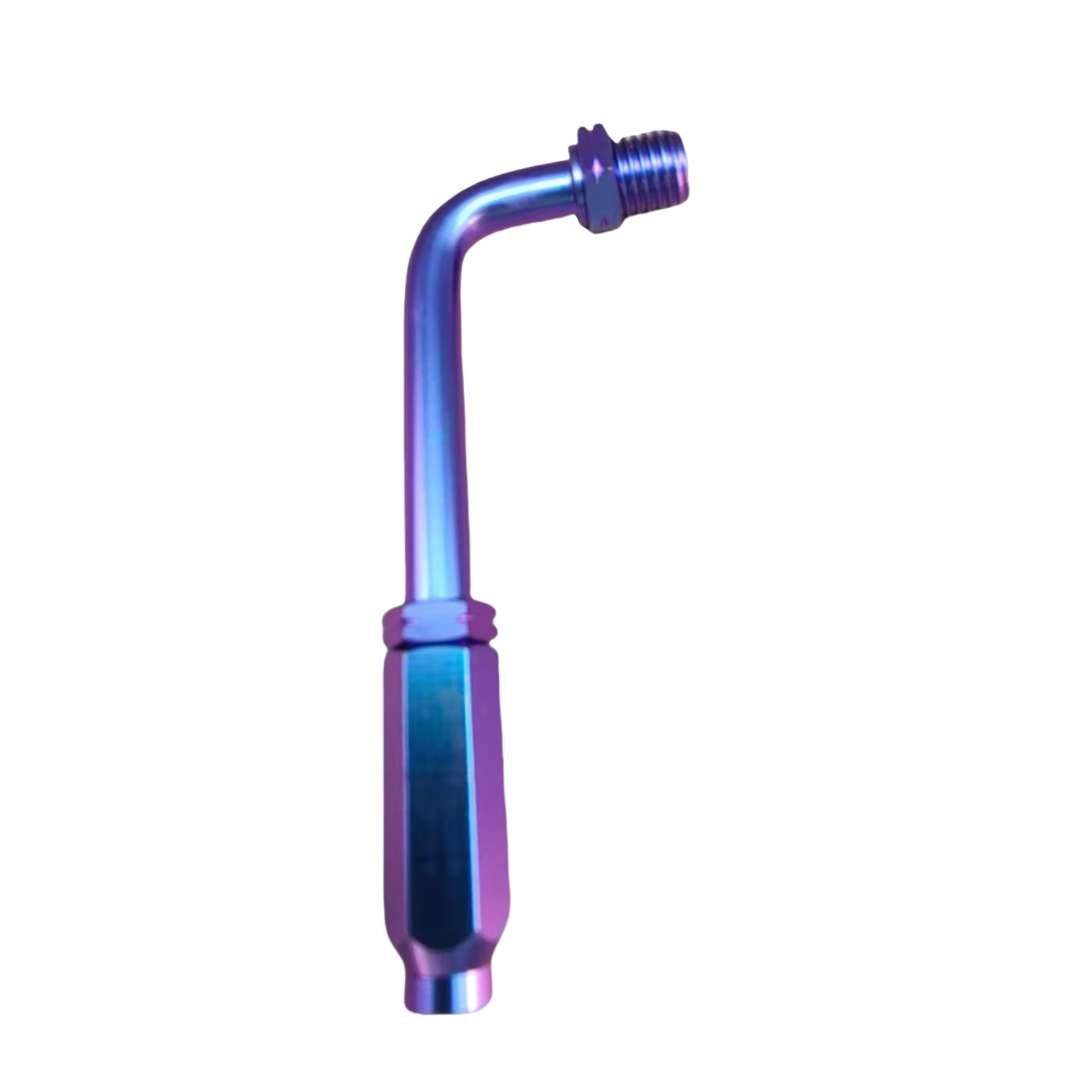
Custom CNC Gr5 Flat Head Titanium Alloy Motorcycle Throttle Line Colorful Refueling Cable Fittings Titanium Valve Parts
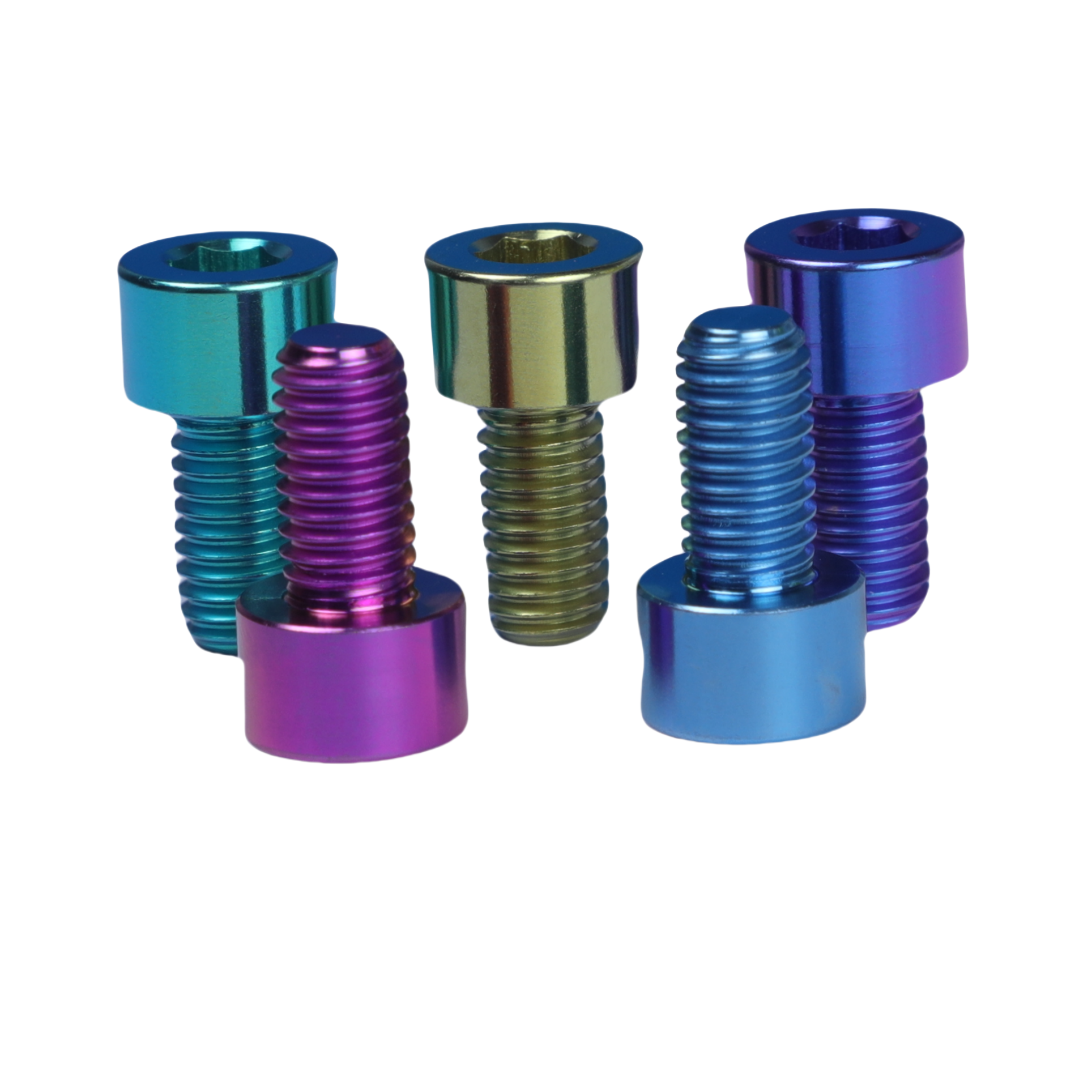
High Quality DIN912 GR5 Titanium Alloy Hexagon Socket Head Bolts Industrial Fastener Machine Made Titanium Screws
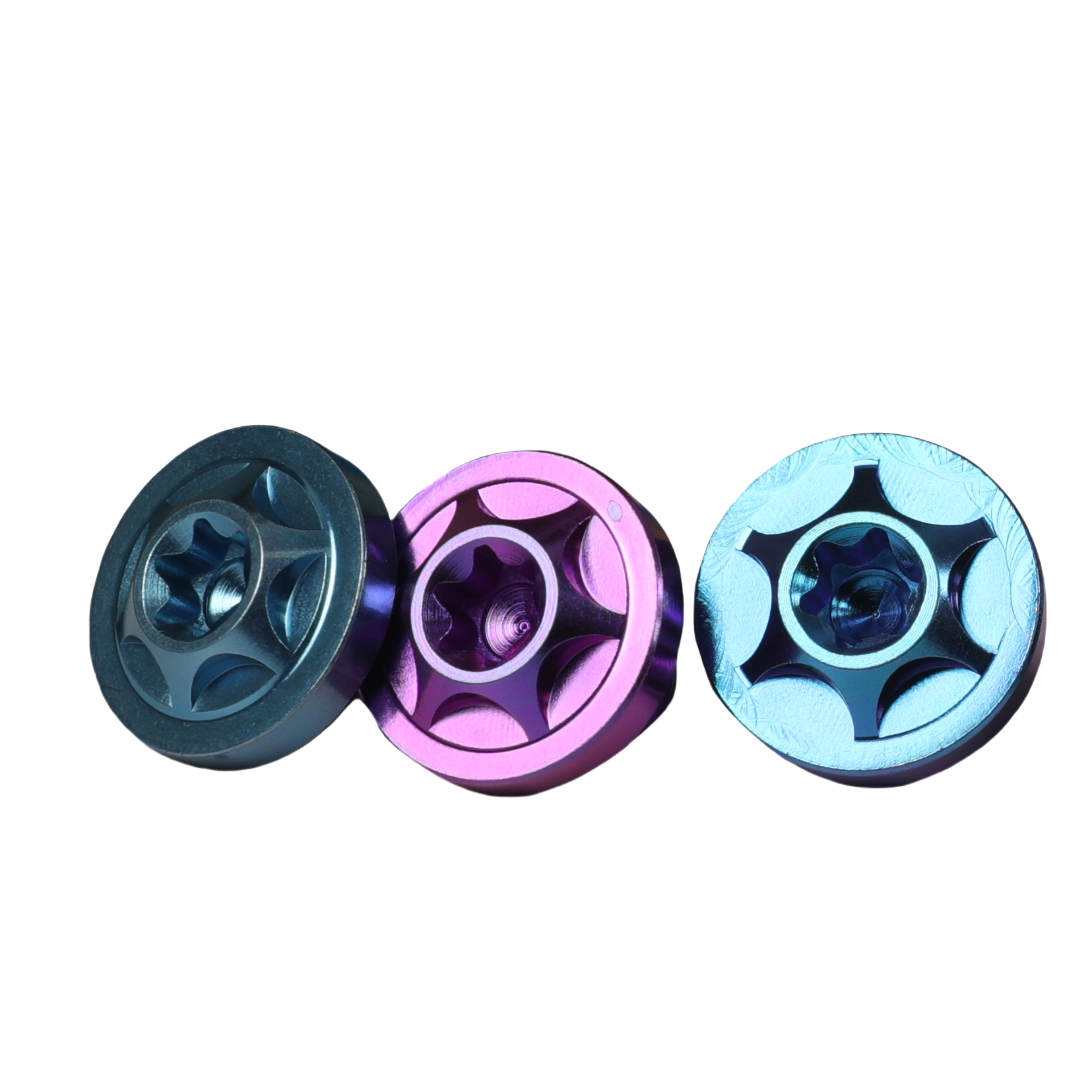
Titanium Alloy Disc Brake Bolts with Torx Head Flange Screws for Bike & Motorcycle Ti Bolts
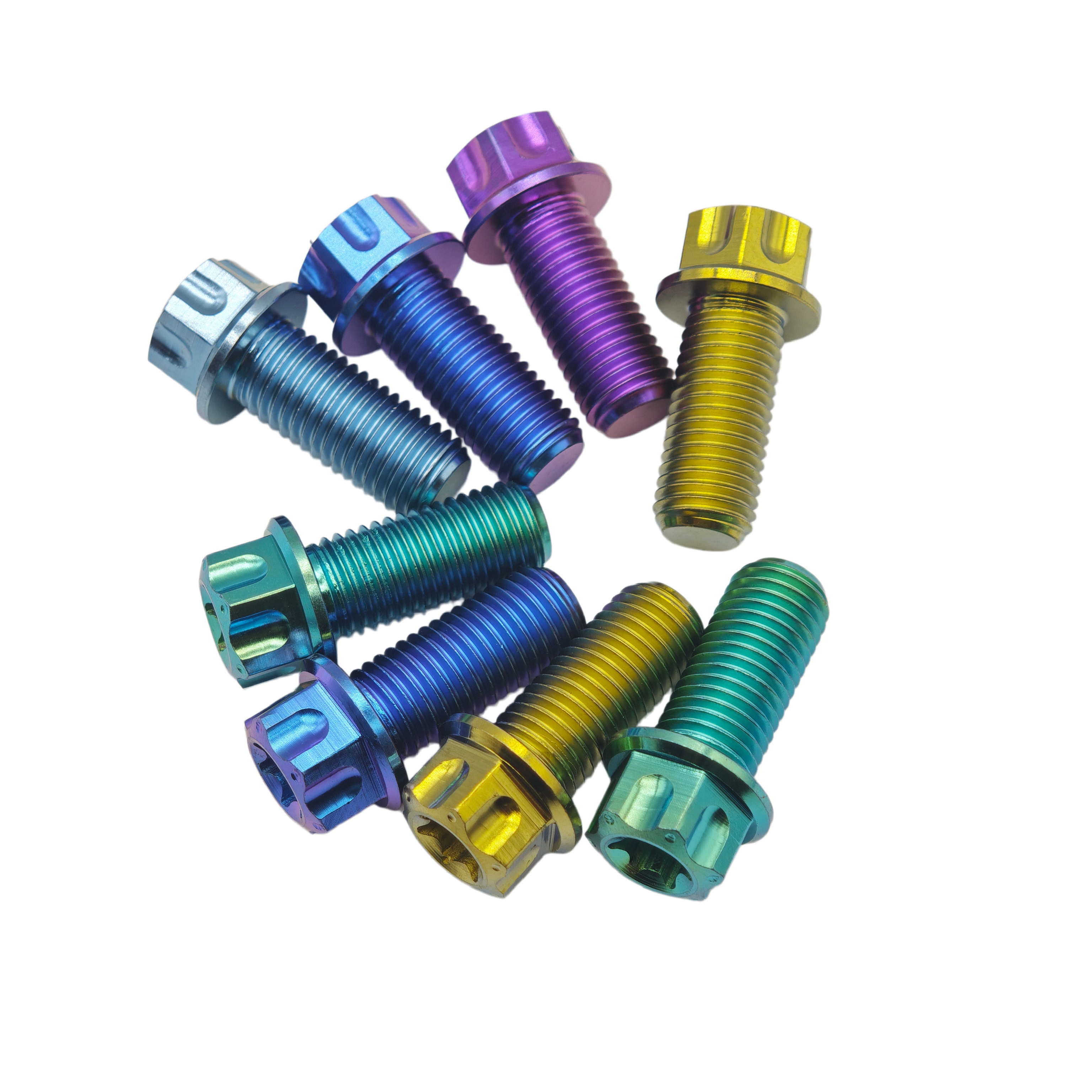
Factory Wholesale Anodized GR5 Titanium Hex Flange Head Bolts M8/M10 UNF Thread Motorcycle Bolts
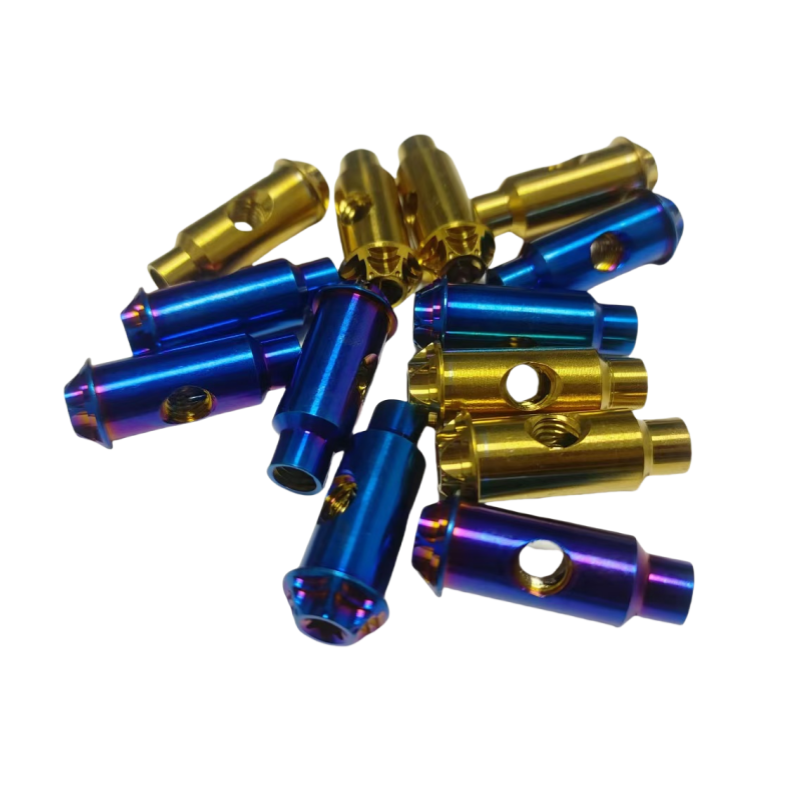
High Performance Gr5 Titanium Cross Dowel Nuts Titanium Adjusters' Knobs Bolt
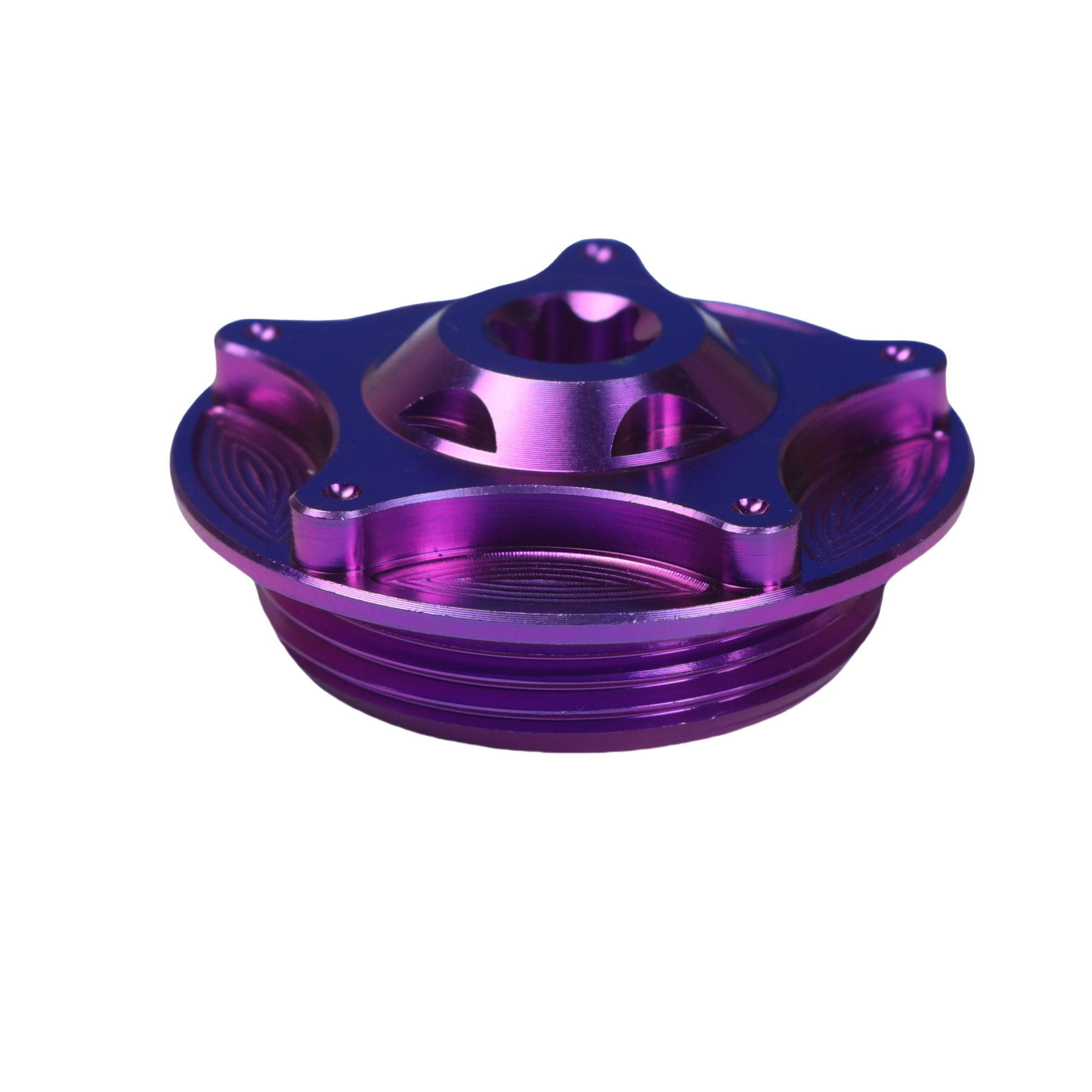
Factory Wholesale Titanium Alloy Motorcycle Modified Custom Workpiece GR5 Bolts Fasteners Oil Cap Nut
Engineering Authority: Ti-6Al-4V Grade 5 Fastener Metallurgy & Wheel Hub Mechanics
Why Tier-1 motorsport teams and hypercar manufacturers transition from Class 10.9/12.9 chromoly steel to Baoji-forged Grade 5 titanium lug systems.
In precision automotive wheel hub design, the lug nut is subject to violent multidirectional mechanical stresses: cyclic tensile preload, dynamic shear loading during cornering, and rapid thermal cycling induced by friction braking (exceeding 600°C in competition environments). Selecting Ti-6Al-4V (Grade 5, UNS R56400) provides a density of 4.43 g/cm³—delivering an immediate 44% to 47% unsprung rotational mass reduction compared to standard AISI 4140 alloy steels while retaining an ultimate tensile strength exceeding 950 MPa.
| Fastener Material Metric | Ti-6Al-4V (Gr5 Annealed) | Grade 5 Cold-Forged (Zunvo Spec) | AISI 4140 Class 10.9 Steel | 7075-T6 Billet Aluminum |
|---|---|---|---|---|
| Density (g/cm³) | 4.43 | 4.43 (Optimized Grain) | 7.85 | 2.81 |
| Yield Strength (Rp 0.2, MPa) | 830 - 880 | 910 - 980 | 900 - 940 | 505 |
| Tensile Strength (Rm, MPa) | ≥ 895 | 980 - 1,080 | 1,000 - 1,040 | 570 |
| Elastic Modulus (GPa) | 114 | 114 (Flex Fatigue Damping) | 210 | 72 |
| Salt Spray Corrosion (ASTM B117) | > 2,000 Hours (Passivated) | Immune to Road De-icers / Salt | Fails < 96 Hours (Rusts) | Pitting at > 250 Hours |
| Thread Forming Methodology | Machined Lathe Cut | Thread Rolled (Continuous Grain) | Rolled / Cut | Machined Cut |
| Typical Clamping Efficiency | Standard Preload | Superior Clamping / Anti-Loosening | Standard Preload | Risk of Yield under Heavy Torque |
*Data Note: Thread integrity is the paramount failure point under high-torque wheel impacts. Cut threads interrupt the titanium bar's microstructural grain flow lines, reducing dynamic fatigue life by up to 35%. Zunvo implements hot-heading blank formation followed by hydraulic CNC thread rolling, which cold-works the thread root radius, work-hardens the flank surfaces, and induces beneficial compressive residual stresses that prevent stress corrosion cracking (SCC).
Global Titanium Lug Nut Procurement Trends (2025–2030)
Strategic market analysis for distributors, tier-1 performance brands, and private label procurement directors navigating supply chain modernization.
Direct-from-Source Baoji Clustering
Western buyers are moving away from multi-tier trading brokers. Sourcing directly from Baoji—China's “Titanium Valley,” which produces 65% of China’s and 25% of the world’s titanium mill products—guarantees mill-certified vacuum arc remelting (VAR) stock, eliminating counterfeit sponge titanium scrap and guaranteeing full traceability from ingots to finished fasteners.
Electric Vehicle Unsprung Mass Optimization
With electric performance vehicles carrying severe battery weight penalties, OEMs and high-end aftermarket tuners focus intensely on rotational inertia. Reducing 1 kg of rotational unsprung mass at the wheel hub equates to an apparent chassis dynamic weight saving of approximately 4 kg during acceleration, braking, and damper rebound cycles.
Transition from Anodizing to PVD Physical Coatings
While electrochemical anodizing provides vibrant hues, performance buyers demand Physical Vapor Deposition (PVD) Titanium Nitride (TiN), Diamond-Like Carbon (DLC), and Titanium Carbo-Nitride (TiCN) coatings. PVD increases surface hardness to >2500 HV, resisting impact-gun scuffing and wheel-cleaner chemical acid etching.
Technological Frontiers in Titanium Wheel Lug Engineering
How state-of-the-art cold-heading, precision multi-axis Swiss CNC turning, and tribological innovations eliminate past structural vulnerabilities.
Two-Piece Floating Seat Mechanics
Traditional one-piece lug nuts cause galling along the wheel seat taper when torqued down. Modern high-torque engineering utilizes a separate 60-degree conical or spherical floating seat washer in 7075-T6 or Grade 5 titanium. This decouples rotational friction from linear clamping preload, guaranteeing 100% accurate torque readings.
Advanced Anti-Galling Thread Geometries
Titanium-to-steel contact pairs naturally exhibit high coefficients of dry friction, predisposing threads to micro-welding or galling. Leading manufacturers now apply proprietary dry-film solid lubricant coatings (molybdenum disulfide / PTFE infusions) and radius-relieved lead-in threads that eliminate burr accumulation during high-speed pneumatic assembly.
100% Automated Optical Eddy-Current Sorting
High-reliability aftermarket applications require zero-defect shipments. Modern production replaces manual spot checks with automated laser profiling and eddy-current inspection, verifying 100% pitch diameter, lead deviation, seat concentricity, and internal micro-voids at rates of up to 120 parts per minute.
Enterprise Strengths & Factory Infrastructure: Zunvo Titanium
Direct manufacturing transparency from the heart of Baoji's titanium corridor. Certified quality management, custom private-label branding, and rapid delivery.
Established Heritage
Over a decade of singular concentration in high-tensile titanium alloy fasteners, racing motorcycle bolts, automotive lug sets, and precision aerospace hardware.
Engineering Response
Rapid drawing feasibility reviews, DFMA feedback, and technical pricing quotes provided within 7 business hours by veteran fastener engineers.
Rapid Prototyping
High-speed CNC sampling in 72 hours for custom pitch, spline, or open-ended competition wheel hardware before volume production commitment.
Reorder Rate
Verified international buyer retention across North America, Europe, Japan, and the Middle East powered by 100% heat-number raw material traceability.
Titanium Lug Nut Procurement & Engineering FAQ
Detailed technical, commercial, and metallurgical answers addressing the core questions of automotive component procurement managers.
Q1: What exact titanium alloy grade is required for automotive wheel lugs?
Answer: Only Ti-6Al-4V Grade 5 (UNS R56400 / ASTM B348 / AMS 4928) should ever be utilized for automotive structural load-bearing wheel hardware. Commercially pure titanium (Grade 1 or Grade 2) possesses yield strengths below 350 MPa, making it completely inadequate and dangerously ductile for wheel clamping. Grade 5 offers yield strength exceeding 880 MPa, perfectly matching or outperforming ISO Grade 10.9 steel fasteners.
Q2: How do you prevent thread galling between titanium lug nuts and steel wheel studs?
Answer: Galling occurs when bare titanium rubs against steel under extreme pressure without lubrication, causing adhesive friction wear. We recommend a high-grade nickel or copper-based anti-seize paste, or our factory-applied dry-film MoS2 lubricant coating. When using anti-seize, nominal OEM torque specifications must be adjusted (typically reduced by 10%–15%) to account for the lowered friction coefficient and ensure target clamping force.
Q3: Can titanium lug nuts be installed using standard pneumatic impact guns?
Answer: While our cold-forged Grade 5 titanium lug nuts possess the tensile resilience to withstand heavy impact tools, industry best practice for all racing and premium wheel hardware mandates hand-threading first, followed by controlled cross-pattern torquing using a calibrated torque wrench. Rapid hammering from unregulated shop air impacts can cause cosmetic damage to PVD/anodized finishes and lead to erratic clamp-load spiking.
Q4: Which wheel seat configurations can you manufacture to custom CAD drawings?
Answer: We manufacture all international wheel seat profiles: standard 60-degree conical (acorn) seats, European spherical radius (ball) seats (R12, R13, R14 radius), flat mag-shank seats with integrated washers (common on Toyota/Lexus), and specialized multi-piece floating taper designs for aftermarket forged wheels. Tolerances on seat runout and concentricity are maintained within ±0.01 mm.
Q5: What are the Minimum Order Quantities (MOQ) for catalog vs. custom OEM projects?
Answer: For standard catalog inventory items (e.g., M12x1.25, M12x1.5, M14x1.25, M14x1.5 in raw polish or burnt blue), our MOQ starts at just 100 to 200 pieces, enabling boutique wheel brands to stock tailored sets. For custom CNC designs, specialized thread lengths, bespoke anti-theft drive sockets, or private-label laser-engraved packaging, production batches typically begin at 500 pieces.
Q6: How is material purity and chemical authenticity certified?
Answer: Every production heat is matched to an official Mill Test Certificate (MTC) conforming to EN 10204 3.1. This documentation includes detailed chemical analysis (measuring titanium balance, aluminum, vanadium, iron, oxygen, and carbon content) alongside destructive mechanical testing metrics (tensile strength, yield point, elongation, and charpy impact values).
Q7: How does PVD coating compare to conventional electrochemical anodizing?
Answer: Anodizing relies on thin oxide film light-refraction to create colors (rainbow, gold, blue, purple). While visually striking and resistant to atmospheric corrosion, it measures only a few microns in thickness and can wear under aggressive socket contact. Physical Vapor Deposition (PVD) deposits hard ceramic compounds (TiN, DLC, TiCN) that physically bond to the surface, reaching up to 2500+ Vickers hardness for scratch-proof endurance.
Q8: What are typical production lead times and logistics capabilities?
Answer: In-stock catalog configurations ship within 24 hours of payment verification. Bespoke prototypes and custom sample orders are manufactured within 3 to 5 business days. Mass production runs of 2,000 to 20,000 units require approximately 12 to 18 business days. We provide global DTD air express (DHL, FedEx, UPS) and full container sea freight with export customs clearance managed in-house.
Accelerate Your Titanium Fastener Supply Chain
Partner directly with an onsite-verified Baoji manufacturer. Whether you require standard Grade 5 racing lug nuts or custom CAD/3D blueprint fabrication, our engineering team delivers precision tolerances, competitive factory pricing, and unyielding reliability.
