Precision Titanium Fastener Series
Engineered for extreme strength-to-weight ratios, corrosion resistance, and flawless cosmetic finish. Sourced directly from our Baoji manufacturing facilities.
Metallurgical Dynamics & Anodization Technology in Titanium Fastener Manufacturing
An authoritative technical guide on raw material selection, thread rolling mechanics, electrochemical passivation, and performance benchmarks for global OEM procurement teams.
1. Material Science: Ti-6Al-4V (Grade 5) vs. Commercially Pure (CP) Grades
In high-load dynamic applications such as automotive brake calipers, aerospace structural joints, and motorsport suspension linkages, fastener reliability is non-negotiable. Standard industrial fasteners typically utilize Grade 2 Commercially Pure (CP) titanium, which provides excellent chemical resistance but yields an ultimate tensile strength of roughly 345 to 480 MPa. For structural and high-fatigue environments, Grade 5 Titanium (Ti-6Al-4V, UNS R56400) represents the gold standard.
Ti-6Al-4V is an alpha-beta alloy containing 6% Aluminum (alpha stabilizer) and 4% Vanadium (beta stabilizer). This precise alloy formulation increases tensile strength beyond 895 MPa (up to 1100 MPa after heat treatment and thread rolling) while maintaining a density of just 4.43 g/cm³. As a result, Grade 5 titanium fasteners achieve an unmatched strength-to-weight ratio, allowing engineers to trim un-sprung mass in high-performance assemblies without sacrificing structural margin.
| Material Grade | Yield Strength (MPa) | Tensile Strength (MPa) | Density (g/cm³) | Fatigue Limit (10&sup7; cycles) | Primary Industrial Use |
|---|---|---|---|---|---|
| Gr5 Titanium (Ti-6Al-4V) | 828 - 910 | 895 - 1100 | 4.43 | 510 MPa | Motorsport, Aerospace, OEM Brake & Frame Hardware |
| Gr2 Titanium (CP) | 275 - 450 | 345 - 480 | 4.51 | 240 MPa | Chemical Processing, Marine Non-Structural Hardware |
| Class 10.9 Alloy Steel | 940 | 1040 | 7.85 | 420 MPa | Standard High-Strength Automotive Fasteners |
| 316 Stainless Steel | 290 | 580 | 8.00 | 260 MPa | General Corrosion Resistance, Marine Fasteners |
2. Advanced Electrochemical Anodizing & PVD Nitride Thin-Film Technology
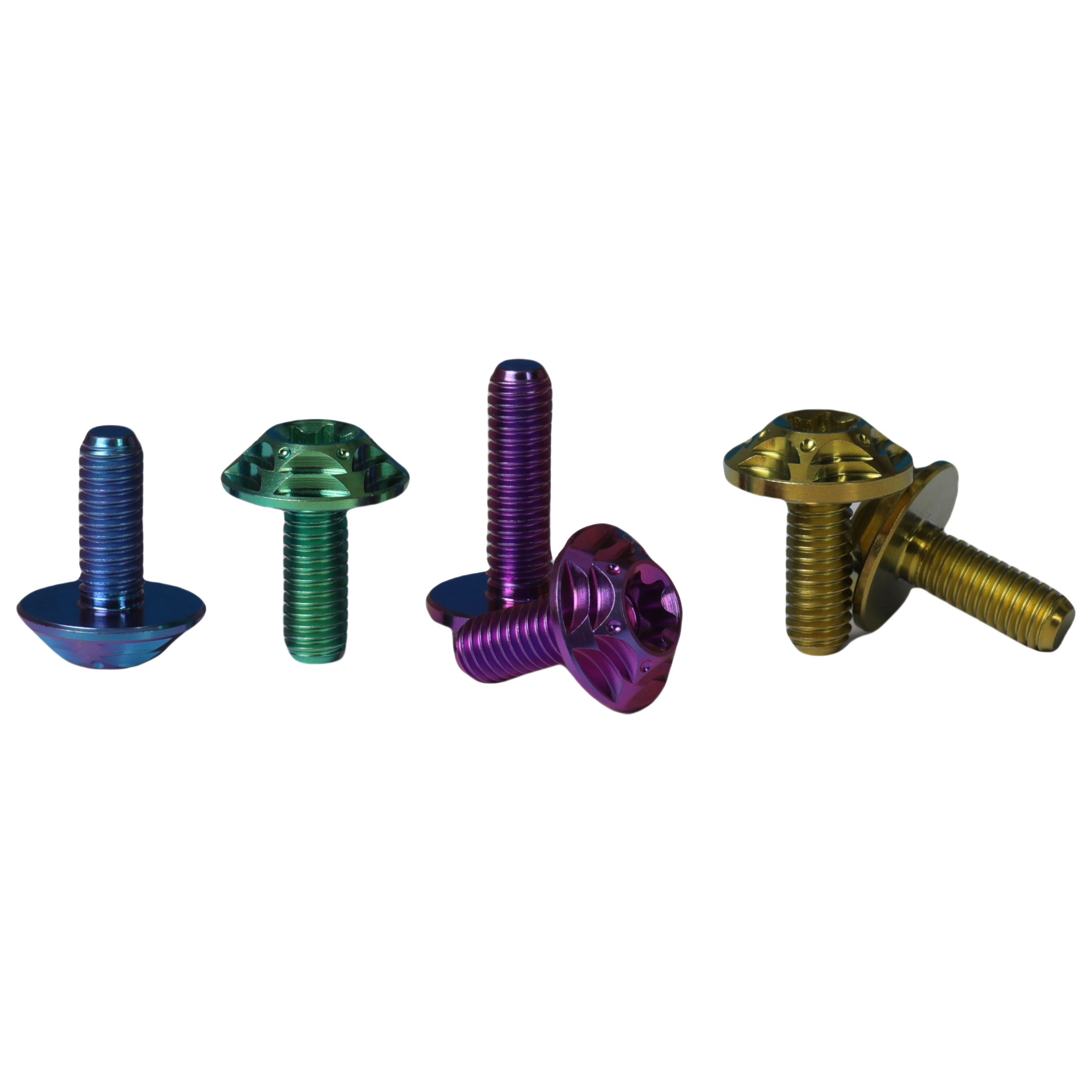
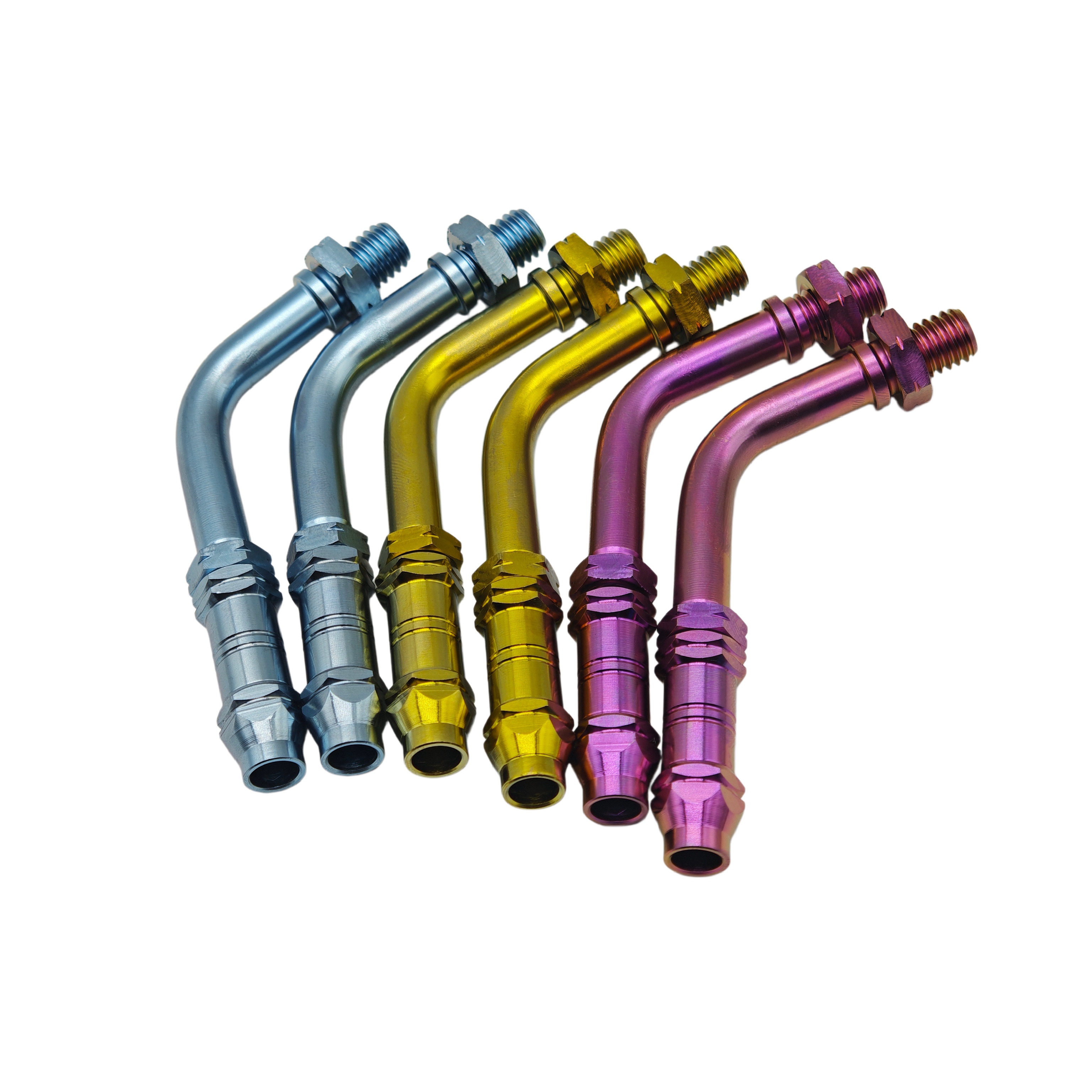
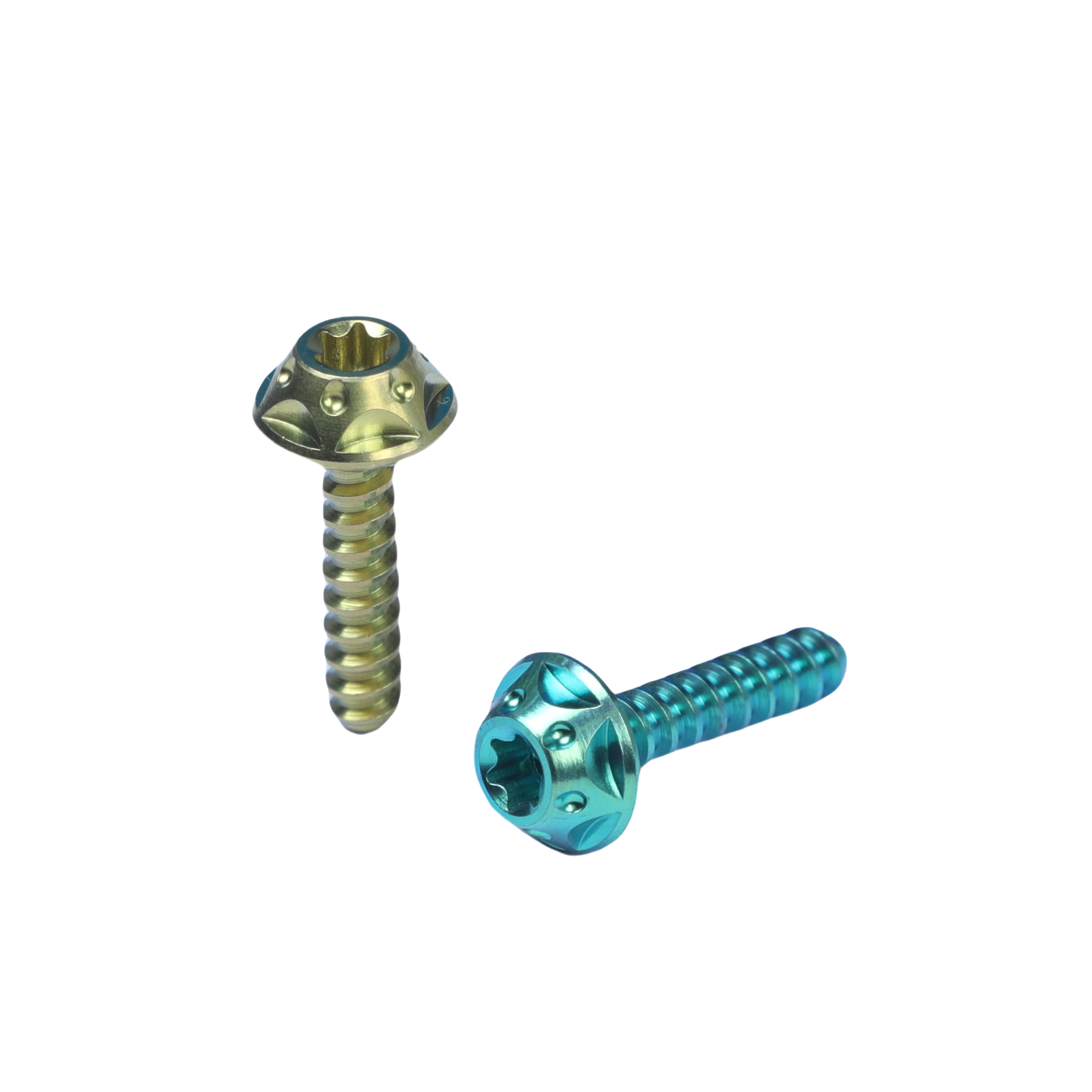
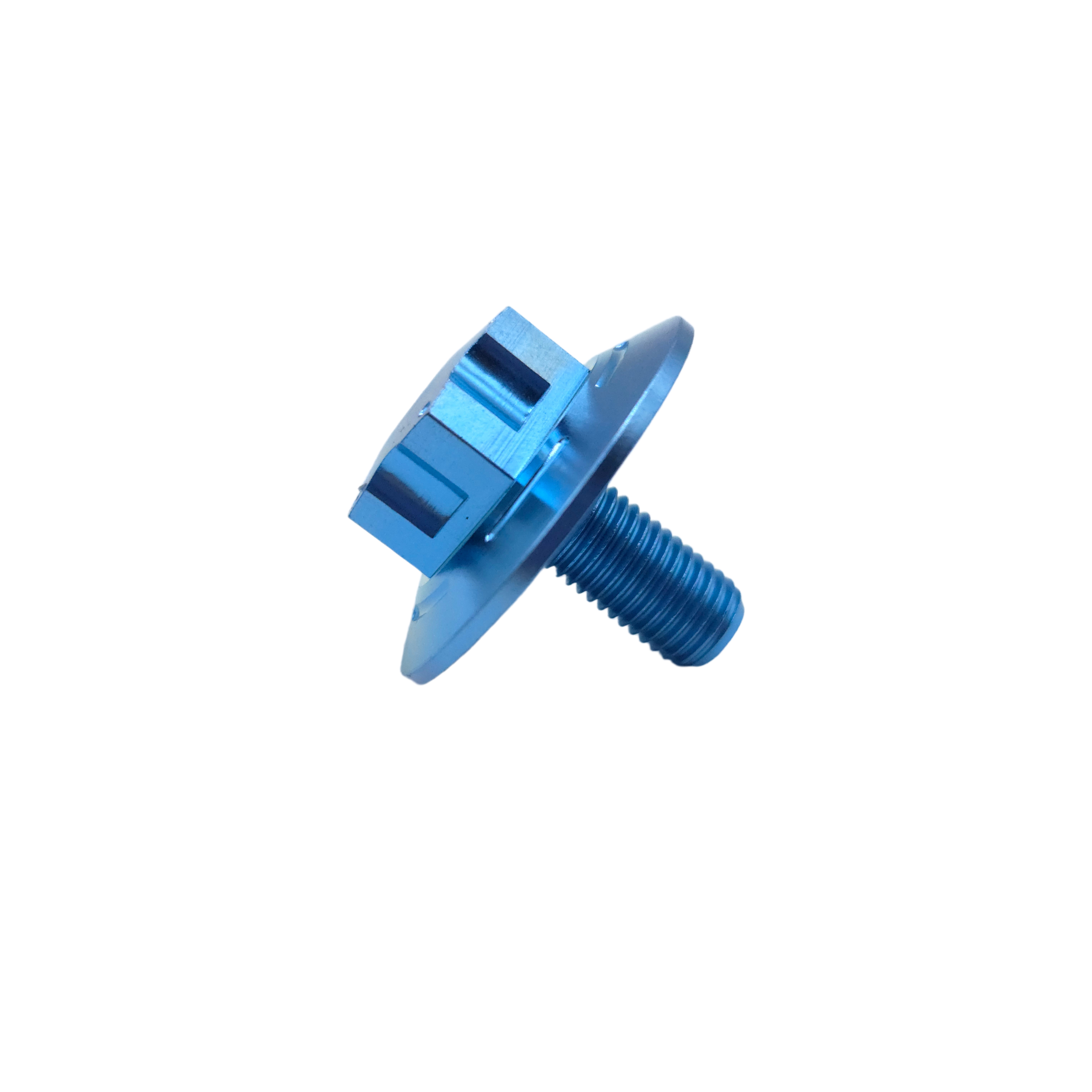
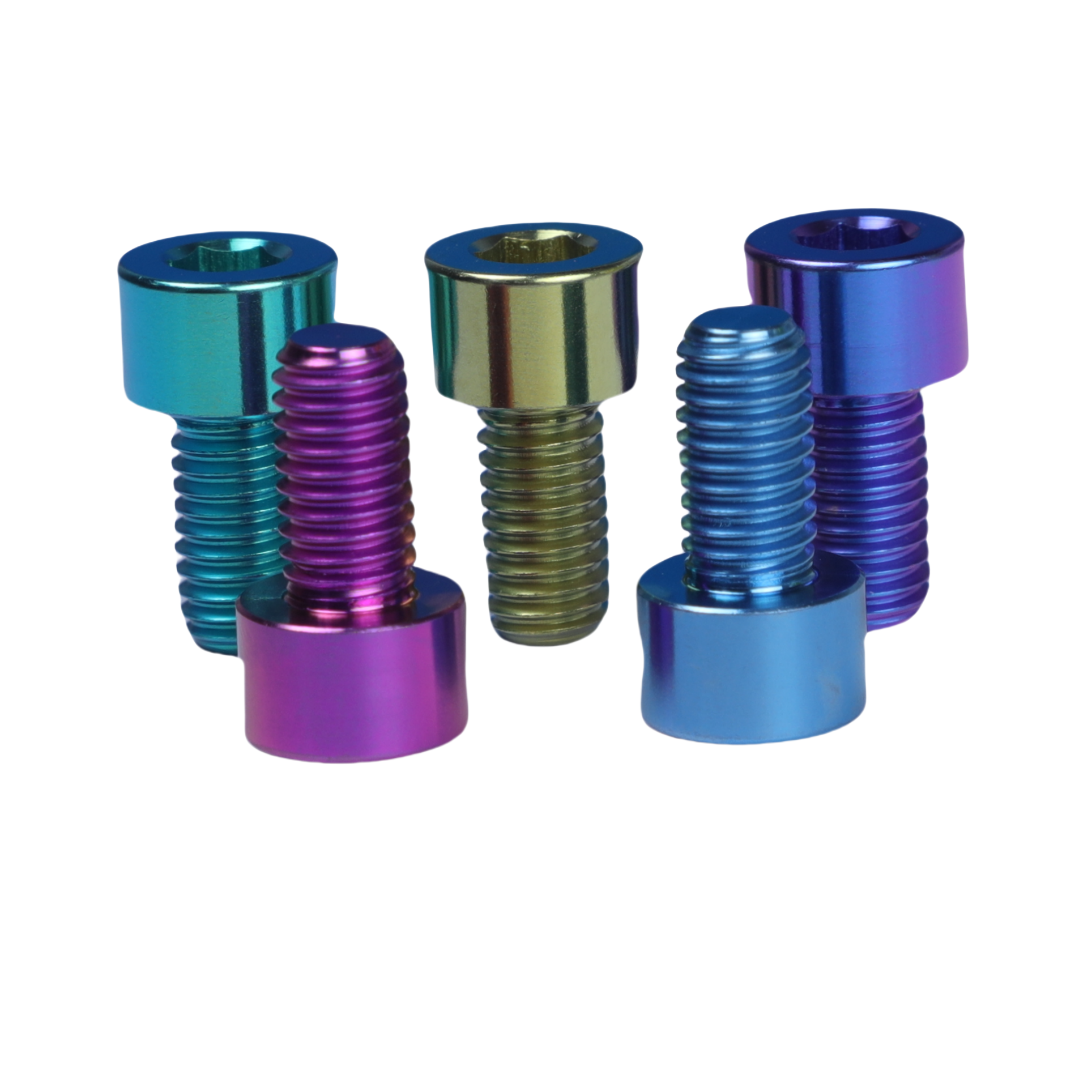
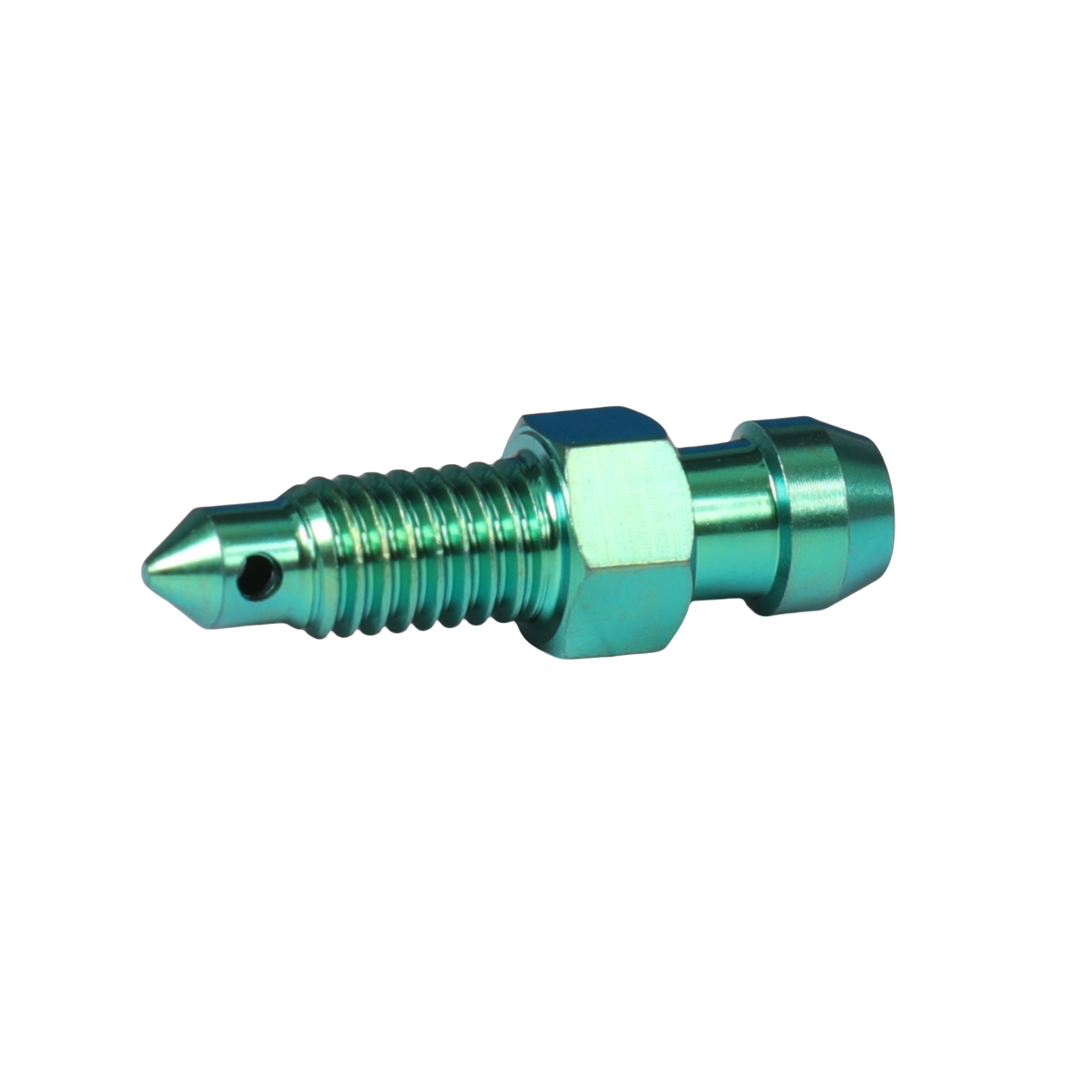
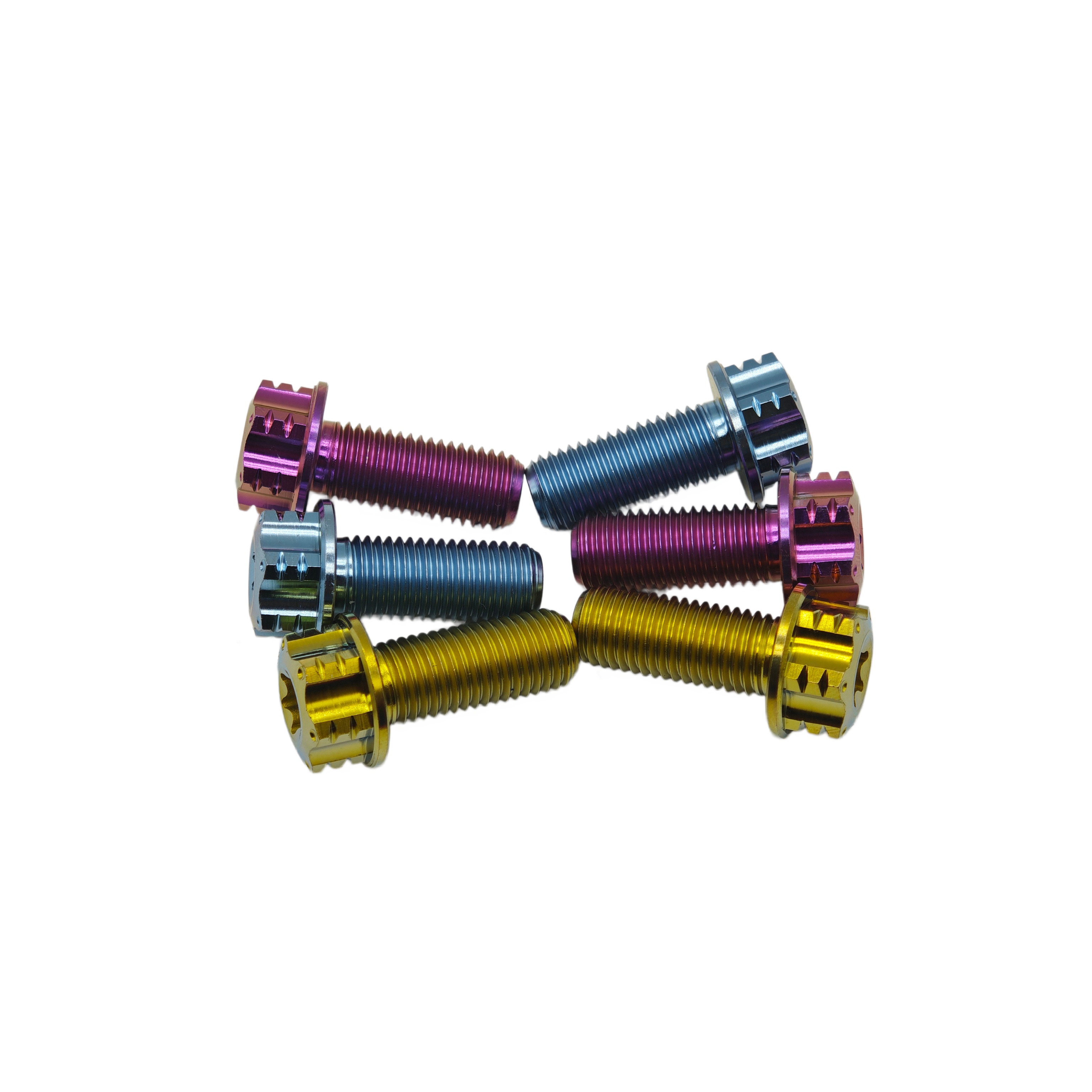
Unlike surface plating on steel or aluminum—which relies on external metal deposition prone to flaking or micro-delamination—titanium anodizing is an electrochemical process that grows a controlled titanium oxide (TiO²) dielectric layer directly out of the base metal. The striking visual colors (Gold, Electric Blue, Burnt Rainbow, Purple, Green) are generated entirely by thin-film optical interference rather than synthetic dyes.
By strictly controlling the anodizing voltage (typically ranging from 15V to 110V DC in a precise electrolyte solution), our automated anodizing lines control the titanium dioxide film thickness between 20 nanometers and 350 nanometers. Light waves reflecting off the outer oxide surface interfere constructively with waves reflecting off the underlying titanium metal, filtering specific wavelengths to yield vivid, light-stable hues.
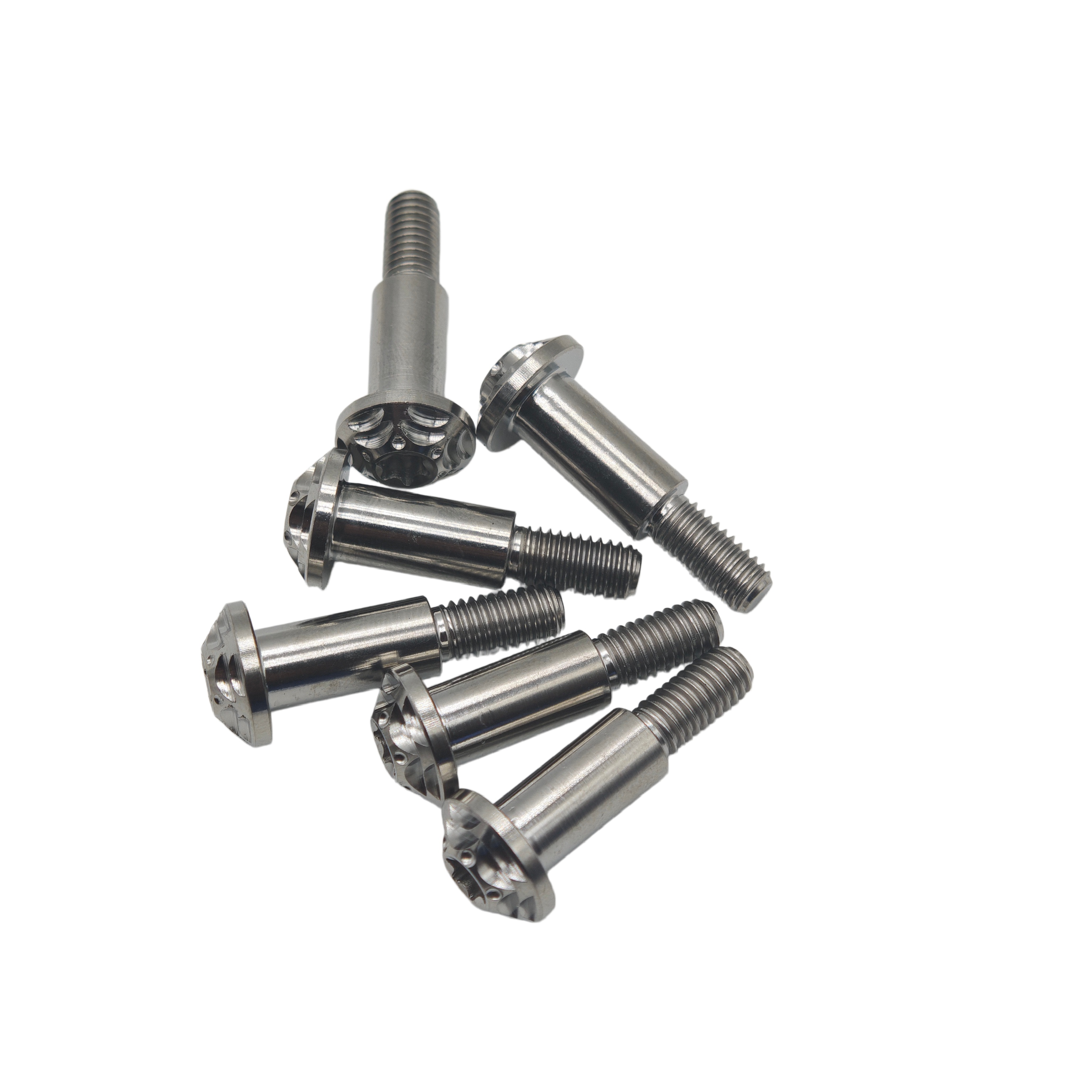
For high-wear applications subject to extreme tool engagement (e.g., external drive Torx shoulder screws and wheel lug bolts), our factory utilizes Physical Vapor Deposition (PVD) Coating. PVD applies micro-thin layers of Titanium Nitride (TiN) or Diamond-Like Carbon (DLC), pushing surface hardness above 2500 HV (Vickers) while reducing the coefficient of friction to under 0.2.
3. Thread Rolling vs. Thread Cutting: Preserving Grain Flow for Extreme Fatigue Life
The manufacturing method utilized for thread formation dictates fastener fatigue resistance. Cut threads, produced on traditional lathes or thread-chasing dies, physically shear through the metallurgical grain structure of the titanium bar stock. This creates sharp internal stress raisers at the thread roots, significantly reducing dynamic fatigue life under cyclic vibration.
At our Baoji factory, all OEM/ODM fasteners undergo cold/hot heading for head formation followed by precision cold thread rolling. Thread rolling plastically deforms the Grade 5 alloy under intense hydraulic die pressure, compressing the grain boundary flow along smooth, continuous contours that follow the thread profile. This induces compressive residual stresses in the thread roots, improving fatigue strength by over 300% and virtually eliminating micro-crack initiation during high-torque cycling.
Why Global Tier-1 Buyers Choose Our Manufacturing Facility
Located in Shiling Road Industrial Park, Baoji (China's Titanium Valley), we deliver full vertical integration from raw ingot selection to custom packaging.
100% Traceability & Material Certs
Every single batch of titanium wire or bar stock is delivered with Mill Test Reports (MTR) according to EN 10204 3.1. We verify chemical composition via spectral analysis and confirm mechanical properties prior to machining.
Multi-Axis CNC Precision Machining
Our workshop houses high-speed 5-axis CNC turning-milling centers, multi-station automatic cold headers, and Swiss-type automatic lathes capable of holding ultra-tight tolerance limits within ±0.005 mm.
Strict Metrology & Quality Inspection
Quality assurance includes Hexagon CMM coordinate measurement, optical profile projectors, digital pitch gauge inspection, tension-torsion testing, and salt-spray corrosion chamber validation.
Future Industry Sourcing Trends for Titanium Hardware (2026–2030)
Strategic market forces shaping OEM/ODM titanium fastener demand across automotive, electric mobility, aerospace, and medical sectors.
1. EV Range Optimization & Unsprung Weight Reduction
As Electric Vehicle (EV) manufacturers strive for longer battery ranges, powertrain and chassis weight reduction has moved from a luxury feature to a core engineering metric. Converting steel wheel hub bolts, brake rotor mounting pins, and subframe fasteners to Grade 5 titanium offers an immediate 44% weight reduction in critical unsprung rotational mass, directly improving motor efficiency and suspension response times.
2. Demand for Environmentally Compliant Anodizing Process
Global REACH and RoHS regulations are restricting traditional hexavalent chromium passivations and toxic chemical plating. Electro-anodizing on titanium requires no hazardous heavy metals, emitting zero harmful VOCs. B2B purchasing departments are increasingly prioritizing titanium suppliers who utilize closed-loop electrolyte recycling and eco-friendly oxide coloring lines.
3. Direct OEM Customization & Rapid Digital Prototyping
Modern procurement workflows demand short development cycles. Supply chains are shifting away from off-the-shelf standard catalogs toward tailor-made shoulder screws, flower-head decorative profiles, and hollowed-out weight-saving bolts. Our factory bridges this gap by providing 3-day rapid CNC prototyping directly from STEP/CAD files prior to mass production tooling.
Frequently Asked Technical Questions
Answers to essential engineering and procurement queries regarding OEM titanium fastener design, material specs, and ordering protocols.
Partner with a Verified Titanium Fastener Factory
Need custom CNC titanium shoulder bolts, ultra-light motorcycle modification screws, or bulk anodized industrial hardware? Our engineering team provides free DFM reviews, instant quotation, and rapid 3-day prototyping.
