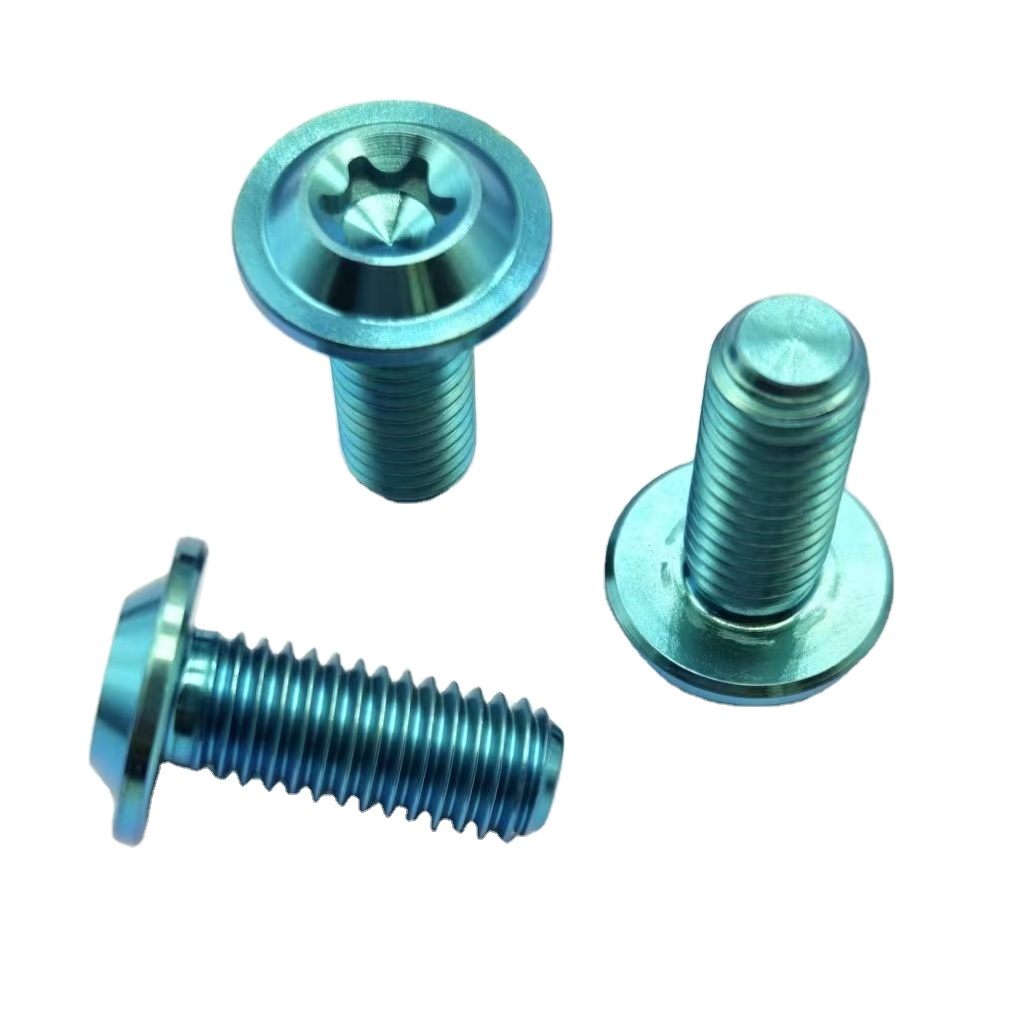
Factory Direct Catalog
Featured Titanium Dome & Flange Fastener Series
Engineered from mill-certified Ti-6Al-4V Grade 5 titanium bar stock. Featuring cold-rolled metric threads, CNC high-precision drive sockets, and advanced electrochemical surface finishes.
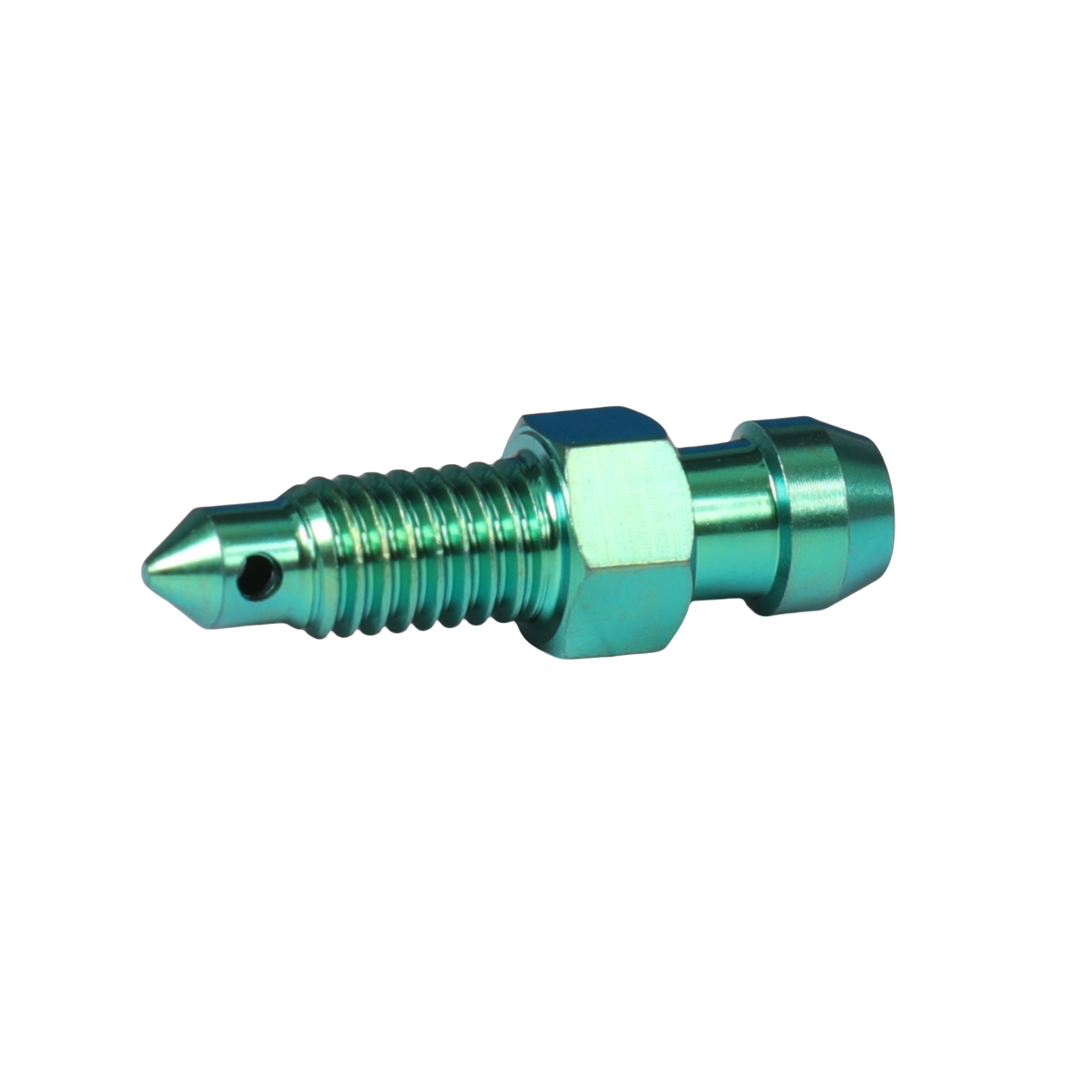
TKS M6 Anodized Gr5 Titanium Hex Caliper Oil Drain Bolt Screw
View Details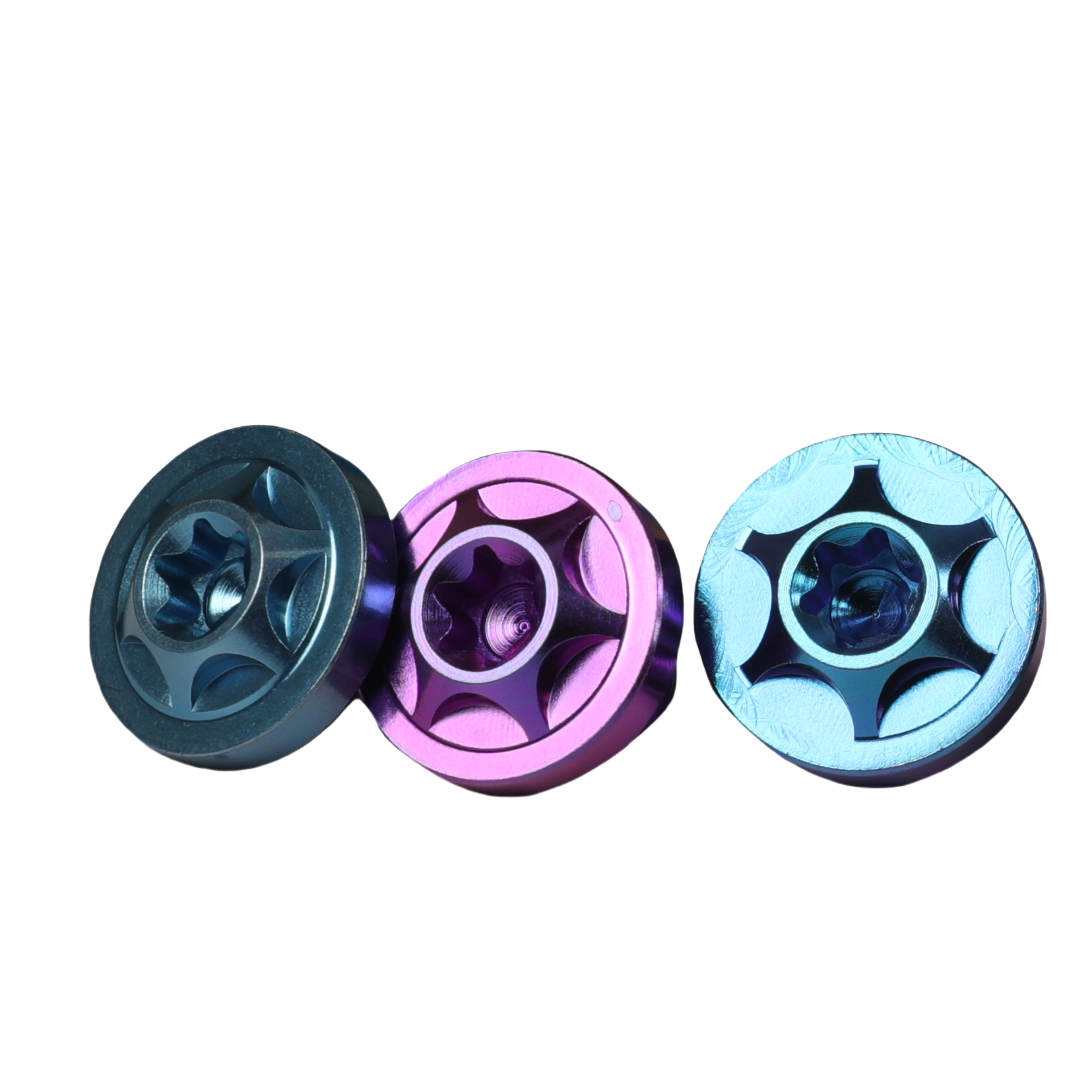
Titanium Alloy Disc Brake Bolts with Torx Head Flange Screws
View Details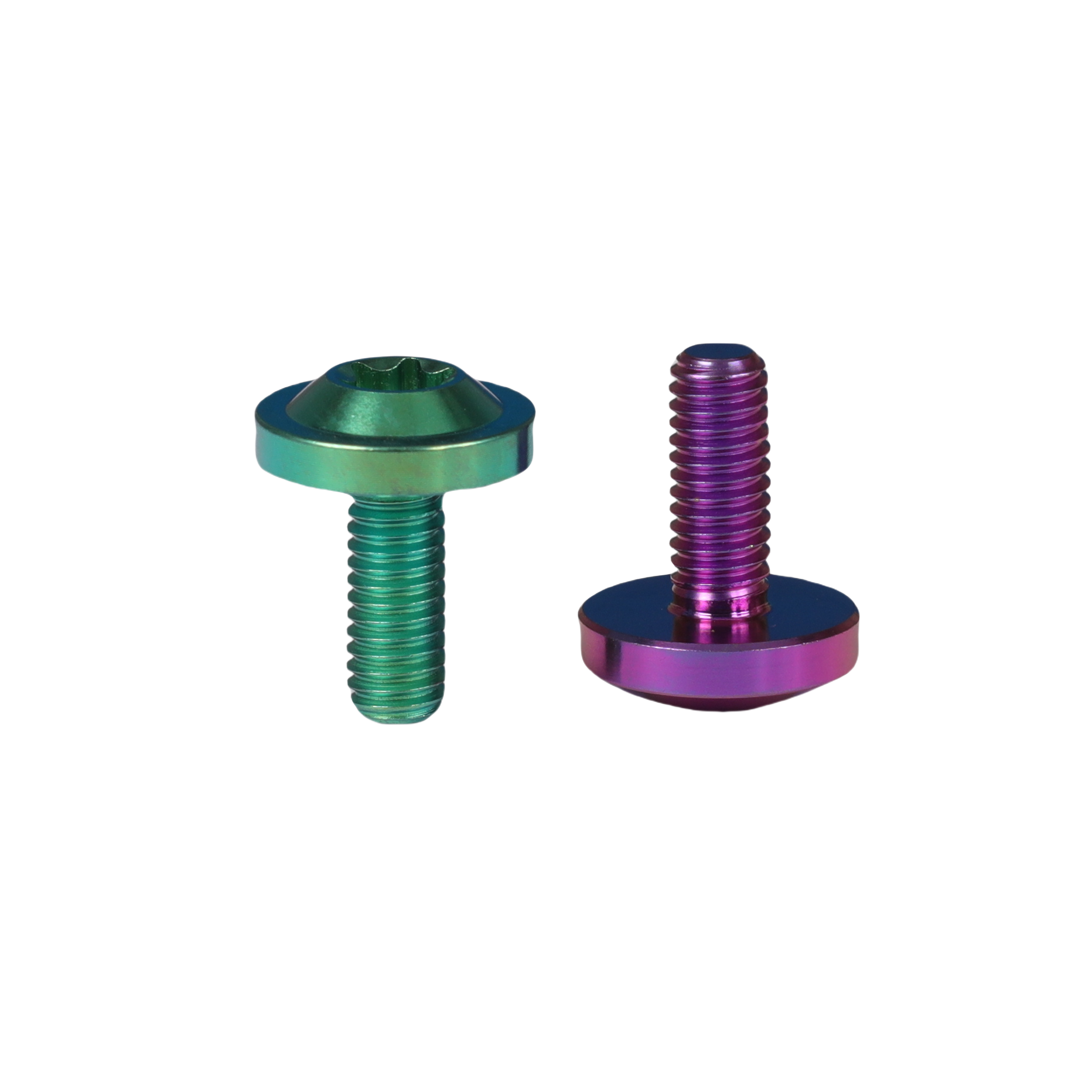
Corrosion-Resistant GR5 M6 Titanium Engine & Body Modification Screws
View Details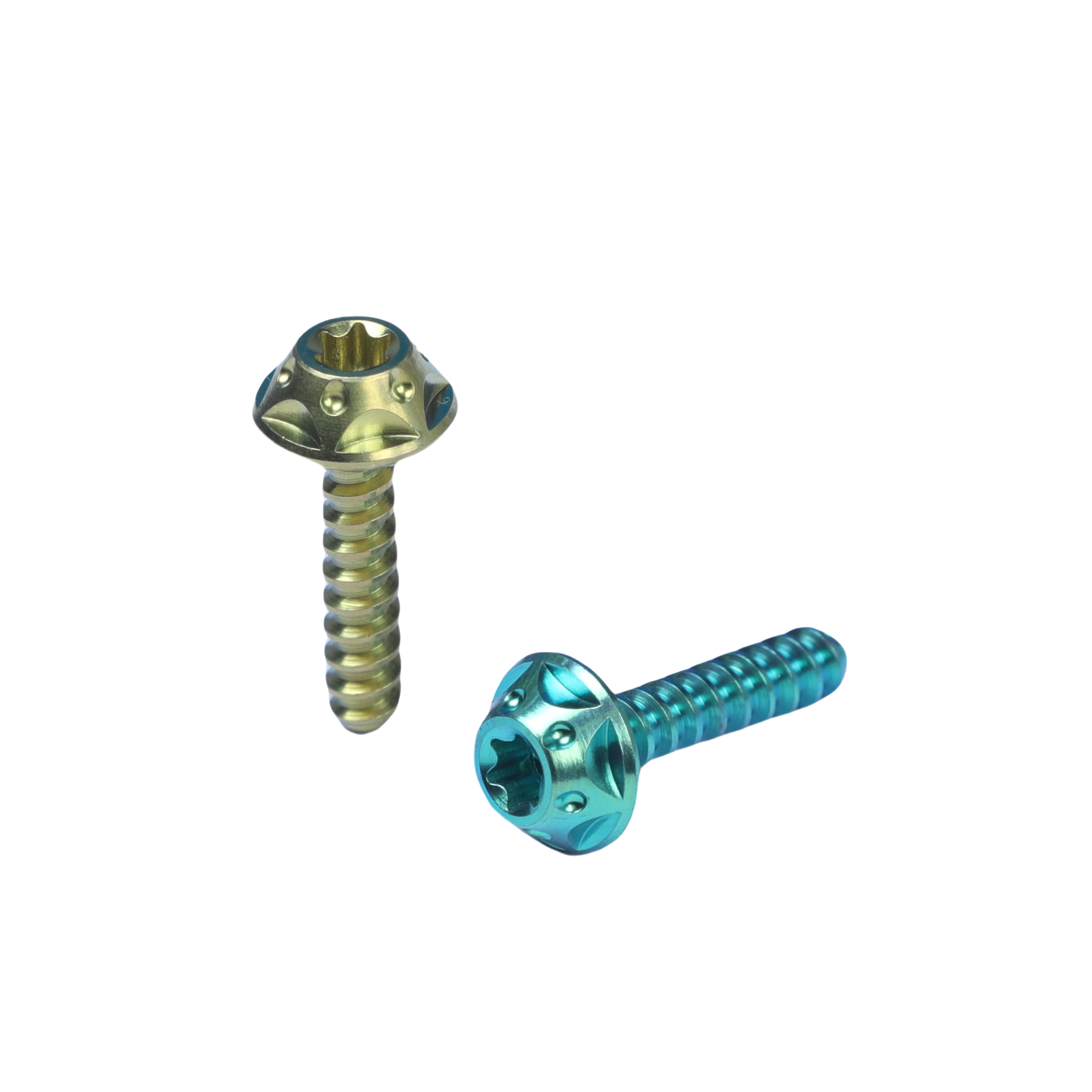
GR5 Titanium M5 CNC Flower Head Self-Tapping Fairing Screws
View Details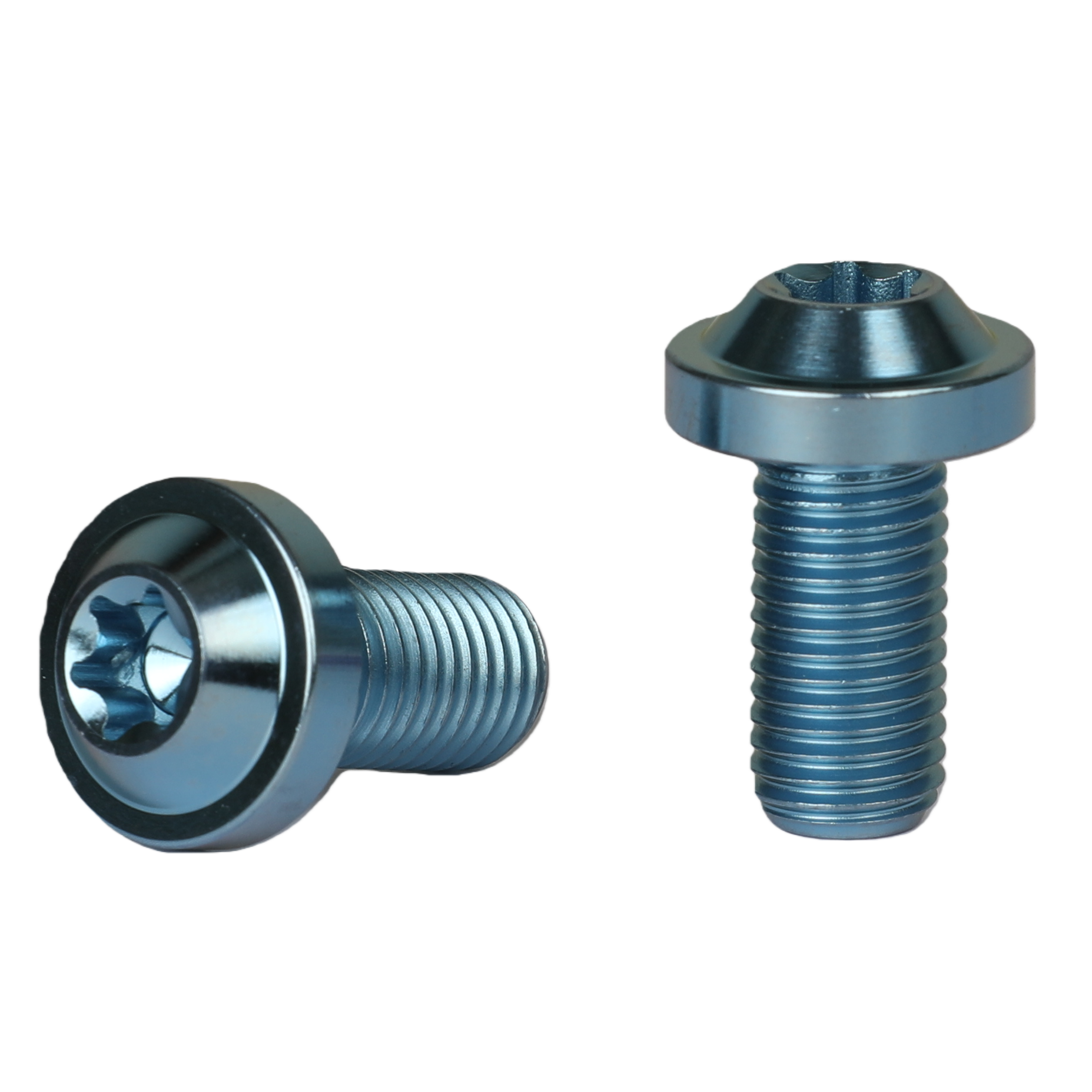
GRX Grade 5 Titanium Pan Head Brake Disc Screws (M6/M8/M10)
View Details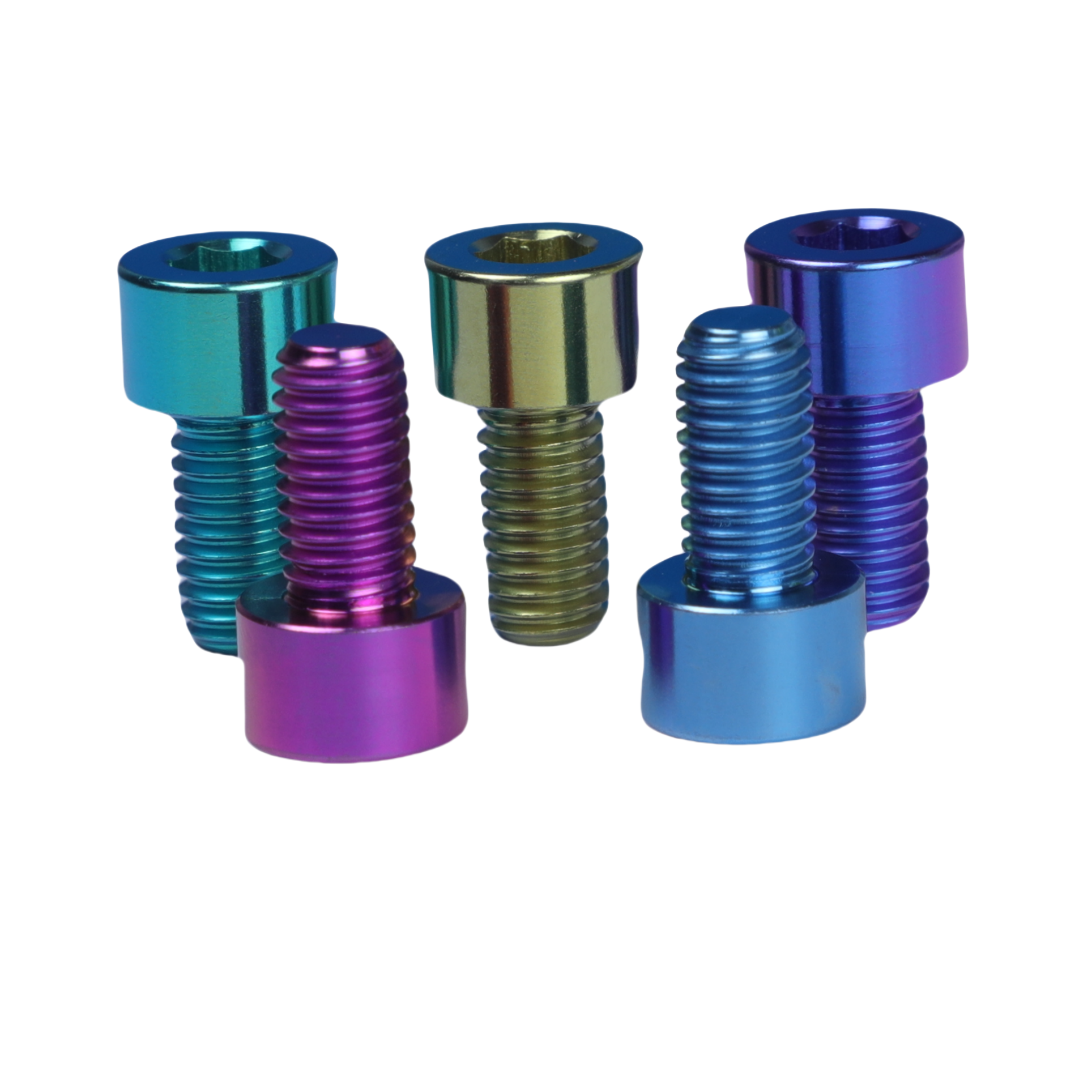
DIN912 Grade 5 Titanium Alloy Hexagon Socket Head Machine Cap Screws
View Details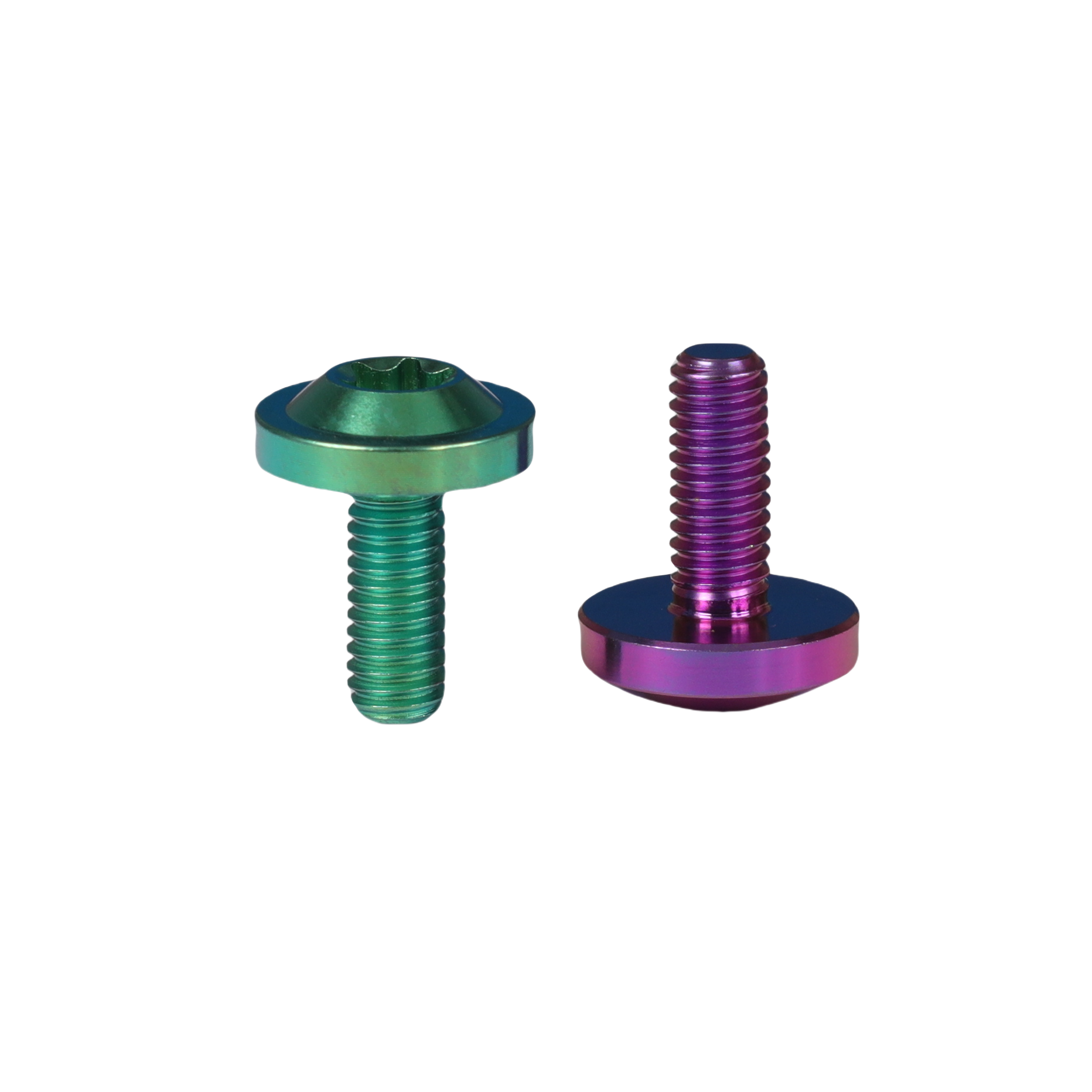
Factory Class 6 M6x15 GR5 Titanium Pan Head Anodized Screws
View Details
Technical Engineering Whitepaper
Metallurgical Superiority & Structural Mechanics of Titanium Dome Bolts
An engineering analysis of Grade 5 (Ti-6Al-4V) titanium dome head fasteners, thread rolling dynamics, and stress dissipation profiles in high-vibration automotive and aerospace applications.
When engineering high-performance dynamic assemblies—ranging from race motorcycle braking systems to lightweight aerospace fairings and chassis components—fastener geometry and material science dictate total operational structural integrity. Domed head titanium bolts (frequently specified as Pan Head, Button Head, or Radius Flange Dome bolts) present a precise compromise between low aerodynamic drag, low-profile clearance, and maximized bearing surface load distribution.
Unlike standard cylindrical socket cap screws (DIN 912) which present sharp right-angle shoulders susceptible to stress concentration vectors under heavy transverse shearing loads, a dome bolt features a continuous radial transition from the smooth head crown to the clamping shoulder. When manufactured from certified Grade 5 Titanium (Ti-6Al-4V), these fasteners yield an exceptional strength-to-weight ratio that outperforms structural grade stainless steels (A2-70/A4-80) and rivals carbon alloy steels (Class 8.8 and Class 10.9) while reducing absolute component mass by 44.3%.
| Mechanical / Physical Property | Ti-6Al-4V Grade 5 Titanium | Commercial Pure (CP Gr2) | 316 Stainless Steel (A4-80) | Grade 10.9 Carbon Steel |
|---|---|---|---|---|
| Ultimate Tensile Strength (MPa) | 895 – 1100 MPa | ≥ 345 MPa | ≥ 800 MPa | ≥ 1040 MPa |
| 0.2% Yield Strength (MPa) | ≥ 828 MPa | ≥ 275 MPa | ≥ 600 MPa | ≥ 940 MPa |
| Density (g/cm³) | 4.43 g/cm³ | 4.51 g/cm³ | 8.00 g/cm³ | 7.85 g/cm³ |
| Strength-to-Weight Ratio (kN·m/kg) | 214 (Extreme) | 76 (Moderate) | 100 (Low) | 132 (Medium) |
| Corrosion Resistance (Chloride/Salt) | Immune (Passivated) | Immune (Passivated) | Pitting Susceptible | Oxidizes / Rusts |
| Fatigue Endurance Limit (10&sup7; cycles) | 510 MPa | 180 MPa | 240 MPa | 420 MPa |
Critical Manufacturing Insight: Cold Thread Rolling vs. Machined Cutting
In high-vibration applications such as motorcycle brake disc mounts and wheel hubs, cut threads act as fatigue failure initiation sites due to severed grain flow lines. Zunvo Titanium Products Co., Ltd. utilizes 100% cold thread rolling process after CNC heading. Thread rolling compresses the Ti-6Al-4V crystal matrix along the thread flanks, inducing compressive residual stress that boosts fatigue cycle survival life by over 300% compared to lathe-cut threads.
Factory Capabilities & E-E-A-T Assurance
Why Direct Sourcing from Baoji Manufacturing Hub Matters
Rooted in Shiling Road Industrial Park, Baoji, Shaanxi ("China's Titanium Valley"), Zunvo integrates primary alloy raw material traceability with multi-axis CNC micro-machining mastery.
Spectrometer Raw Material Verification
Every single production batch of Gr5 titanium bar stock undergoes X-Ray Fluorescence (XRF) spectral chemical analysis to guarantee exact elemental breakdown: Aluminum (5.5%–6.75%), Vanadium (3.5%–4.5%), Iron (≤0.30%), and Oxygen (≤0.20%). Mill Test Certificates (EN 10204 3.1) are dispatched with every consignment.
Multi-Axis Precision CNC Machining
Our workshop houses state-of-the-art Swiss-type automatic lathes and 5-axis CNC machining centers. We achieve ultra-tight dimensional tolerances down to ±0.005mm, ensuring flawless engagement for metric (M2–M24) threads, internal Torx drives (T10–T50), and custom spline head geometry.
Advanced Surface Electrochemistry & PVD
We provide voltage-controlled anodic oxidation resulting in durable, non-fading decorative and functional colors (Burnt Rainbow, Electric Blue, Gold, Purple, Green) alongside Physical Vapor Deposition (PVD) vacuum coating for Diamond-Like Carbon (DLC Black) micro-hardness (>2500 HV).
Strategic Industry Outlook
Future Sourcing & Procurement Trends in Titanium Fasteners (2025–2030)
As global OEMs push the boundaries of energy efficiency, electrification, and structural longevity, the market for titanium fasteners is undergoing a paradigm shift driven by four core technical developments.
1. Acceleration of Automotive Electrification & Sprung Weight Reduction
Electric vehicle (EV) manufacturers and high-performance motorcycle engineering teams are under extreme pressure to optimize vehicle energy density. Unsprung mass—specifically brake rotor mounts, axle nuts, suspension linkages, and caliper bolts—directly influences suspension acceleration response and battery range efficiency.
Over the next decade, global procurement strategies are rapidly migrating from stainless steel to titanium fasteners. Replacing traditional Class 10.9 steel wheel and brake bolts with Grade 5 Titanium reduces rotational inertia by up to 45%, offering tangible improvements in handling dynamics, thermal dissipation, and instantaneous power delivery.
2. Adoption of Torx & Custom Anti-Strip Drive Profiles
Legacy Phillips and internal Hex (Allen) socket drive heads are increasingly viewed as obsolete in high-torque industrial and racing applications. Hex sockets suffer from point-loading stress concentrations that lead to rounded internal socket walls at torque limits above 15 Nm.
The industry standard is shifting aggressively toward Torx (Star) and customized internal spline drives. Torx geometry offers an almost vertical drive angle (15° drive angle vs 60° on Hex), distributing applied tool torque evenly along six radial contact points. This enables higher tightening torques without tool cam-out, prolonging fastener reusable life under race-service maintenance cycles.
3. Integration of Anti-Galling & Micro-Layer Dry Film Lubricants
Historically, a major obstacle to titanium fastener integration was thread galling (cold welding) under dry high-speed insertion. Modern manufacturing advances resolved this challenge through integrated physical surface engineering.
Future global procurement specifications increasingly demand pre-applied solid lubricant coatings—such as MoS² micro-encapsulated dry films or ion-implanted nitrided surface layers. These treatments stabilize thread friction coefficients (K-factor = 0.12–0.15), ensuring predictable bolt tension preloads during automated pneumatic assembly without requiring wet anti-seize paste pastes.
4. Stringent Environmental & Traceability Directives
Industrial procurement departments in Europe, North America, and East Asia now enforce strict compliance metrics regarding ESG, Conflict Minerals, RoHS 3, and REACH frameworks. Manufacturers must provide full origin verification from raw sponge titanium smelting to final CNC machining.
Zunvo Titanium Products Co., Ltd. maintains strict digital material lot tracking, offering direct verification of raw chemical heat lots, mechanical destructive tensile testing logs, and dimensional CMM inspection reports for complete global compliance assurance.
Procurement & Technical Support
Frequently Asked Questions (FAQ) for Global Buyers
Comprehensive technical answers on Grade 5 titanium fastener selection, torque values, anti-galling protocol, OEM drawing requirements, and factory lead times.
What specific titanium grade does Zunvo use for dome head bolts and nuts?
Our standard structural titanium fasteners are manufactured from Grade 5 Ti-6Al-4V (UNS R56400), an alpha-beta alloy engineered for maximum tensile strength (≥895 MPa) and yield strength (≥828 MPa). For low-load decorative trim or chemical exposure applications requiring extreme ductility, we also process Commercial Pure Grade 2 (CP Gr2) titanium upon custom order request. All shipments include official EN 10204 3.1 Mill Test Certificates verifying alloy chemistry and mechanical test values.
Can a Grade 5 Titanium Dome Bolt directly replace a 10.9 or 12.9 Grade Steel Bolt?
A Grade 5 Titanium bolt is roughly equivalent in tensile strength (~950–1050 MPa) to a Class 8.8 or 9.8 steel bolt, while weighing roughly 44% less. For applications calling for Class 10.9 steel (1040 MPa tensile), Grade 5 Titanium serves as an exceptional drop-in functional replacement in 95% of operational scenarios, provided the design takes into account titanium's lower modulus of elasticity (~114 GPa vs ~210 GPa for steel). For safety-critical 12.9 grade positions (such as high-load engine cylinder head studs), consult our engineering team for sizing adjustments or customized heat-treatment options.
How do you prevent thread galling during titanium fastener installation?
Titanium naturally forms an oxide film that can cause surface friction and cold-welding (galling) when mated against another titanium component or aluminum under high speed and dry pressure. To completely eliminate galling: (1) Always apply a high-grade copper or molybdenum disulfide (MoS²) anti-seize grease to the thread flanks prior to installation; (2) Use calibrated manual torque wrenches rather than high-speed impact guns; and (3) Utilize our PVD coated or micro-anodized fasteners which significantly lower the coefficient of friction.
Will anodized titanium surface colors fade, peel, or corrode over time?
Unlike painted or electroplated aluminum components, titanium anodization is an electrochemical passivation process that grows a transparent titanium dioxide (TiO²) oxide layer on the metal surface. The perceived color is produced by light wave interference reflecting off the oxide boundaries (thin-film optics). Because it contains no organic dyes or chemical pigments, titanium anodizing will never chip, flake, or peel. While surface abrasion from metal tools can wear down the micron-thin oxide layer over time, the underlying metal remains completely corrosion-immune.
What are the Minimum Order Quantities (MOQ) and sample lead times for custom OEM drawings?
For standard catalog inventory items (e.g., DIN 912, standard M6/M8 motorcycle brake disc bolts), our MOQ starts from as low as 100 to 200 pieces (or 10–20 dozens). For fully customized OEM parts based on customer CAD/PDF drawings, we provide rapid prototype samples within 3 to 5 business days. Full bulk production lead times generally range between 7 and 15 days depending on the complexity of CNC turning, thread rolling, and specialized surface finishing (PVD/Anodizing).
How does Zunvo handle global quality control and export logistics?
Zunvo enforces a zero-defect quality policy. 100% of finished fasteners pass through optical sorting, pitch diameter ring/plug thread gauge verification, and visual surface check. We export directly to North America, Europe, Southeast Asia, and the Middle East via door-to-door express air carriers (DHL, FedEx, UPS) as well as consolidated sea freight. Customs documentation, commercial invoices, packing lists, and certificate of origin (CO) are provided seamlessly.
