Featured Fasteners & Precision Components
Manufactured from ultra-pure Baoji Grade 5 Titanium bar stock, CNC thread-rolled to class 6g/6H tolerances, and rigorously tested against severe vibrational fatigue.
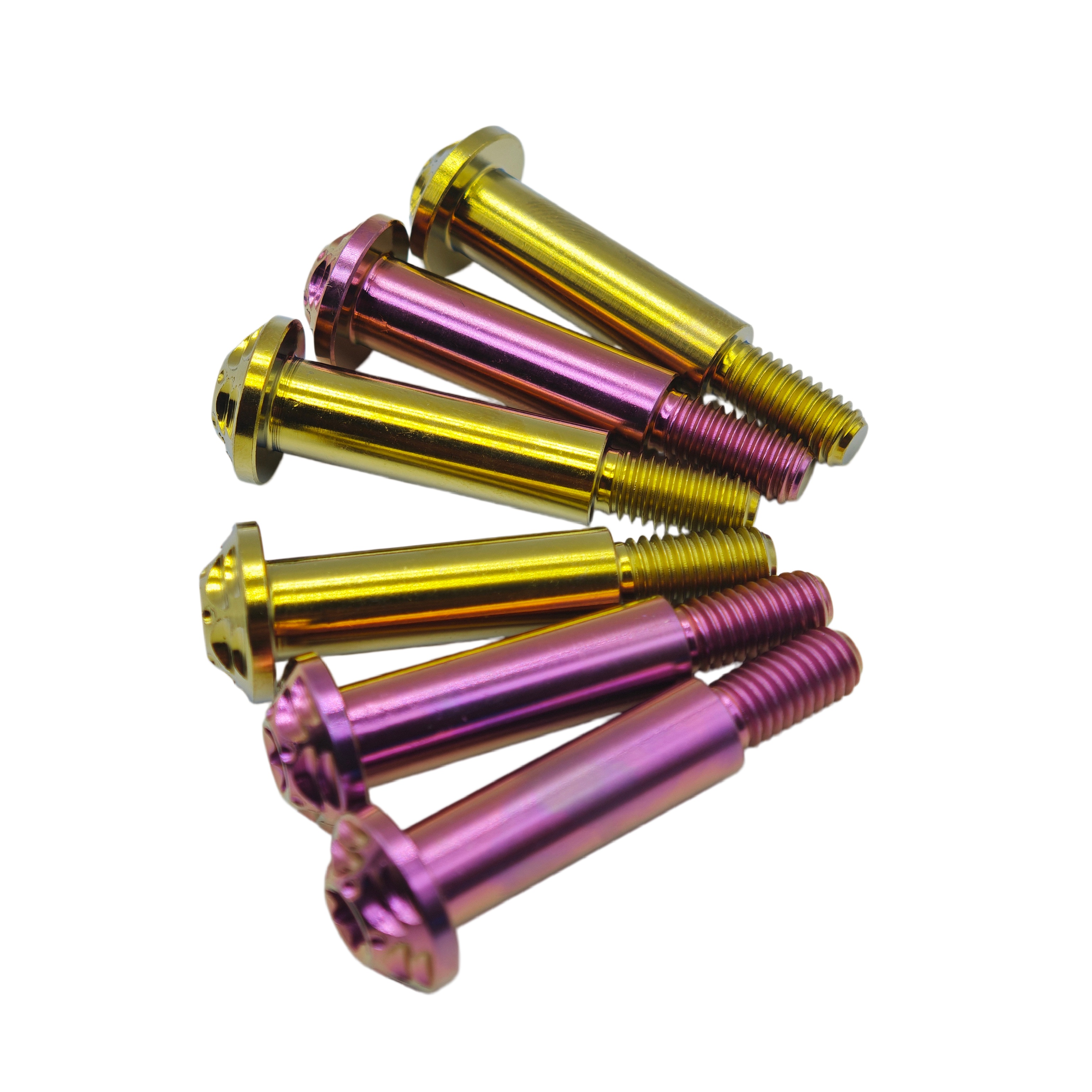
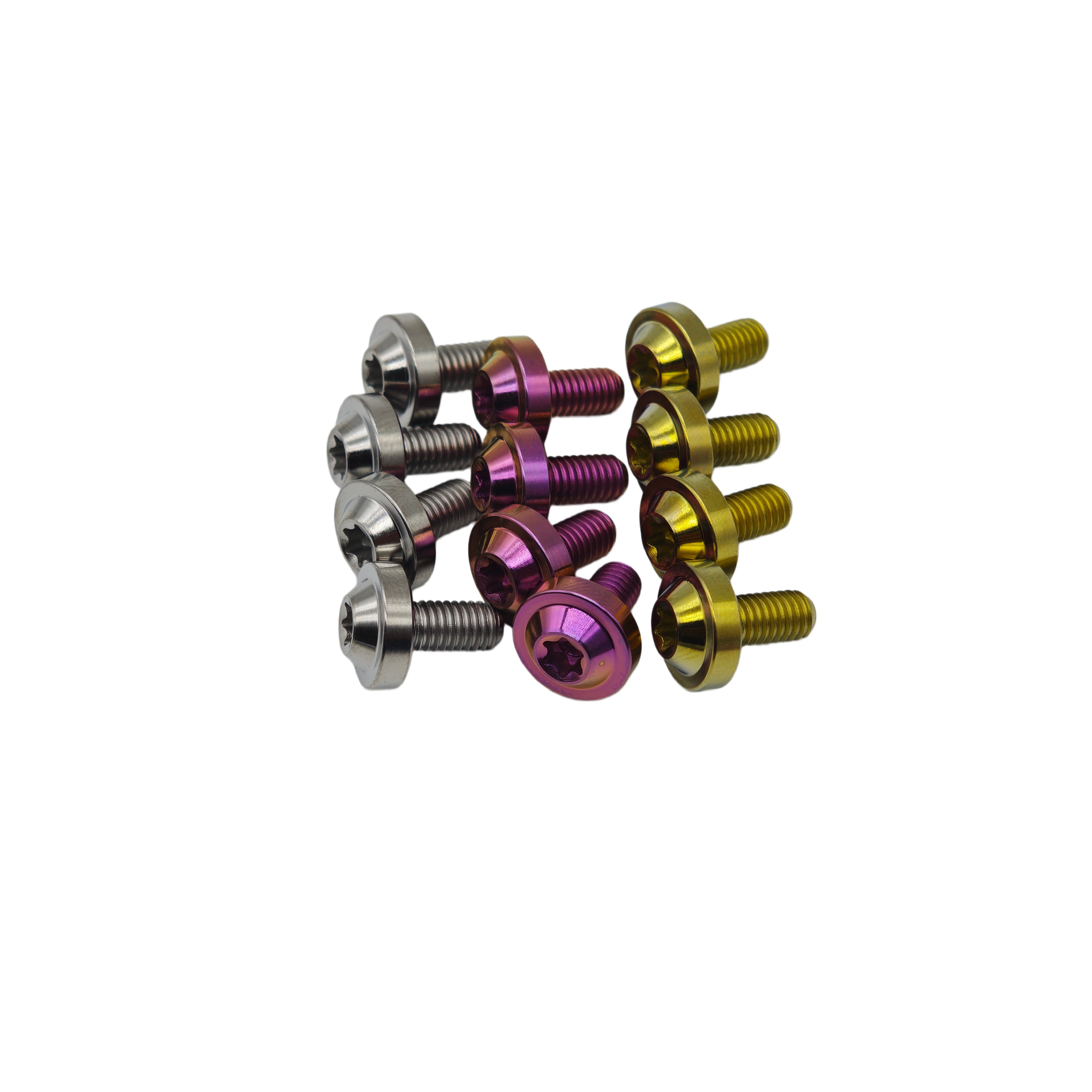
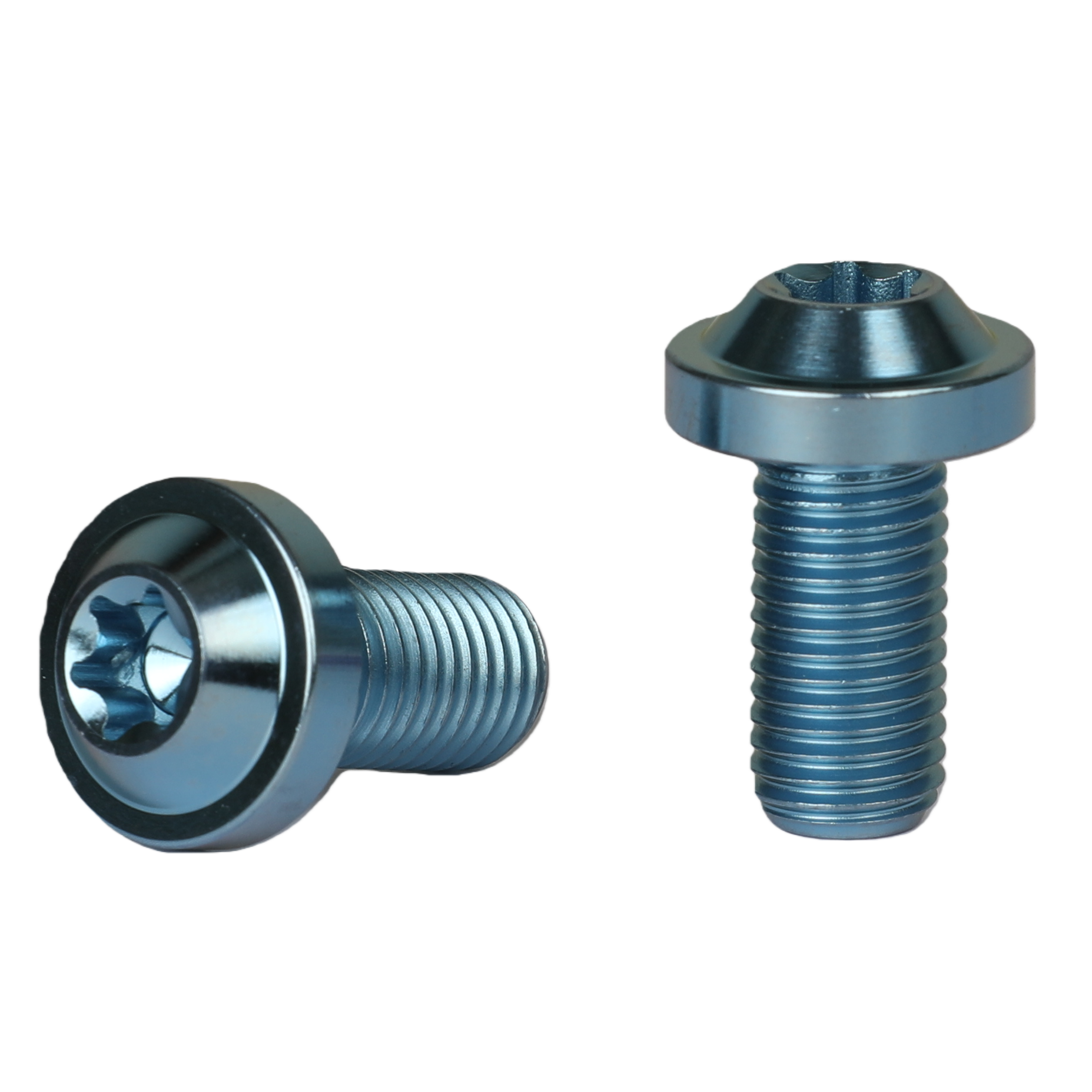
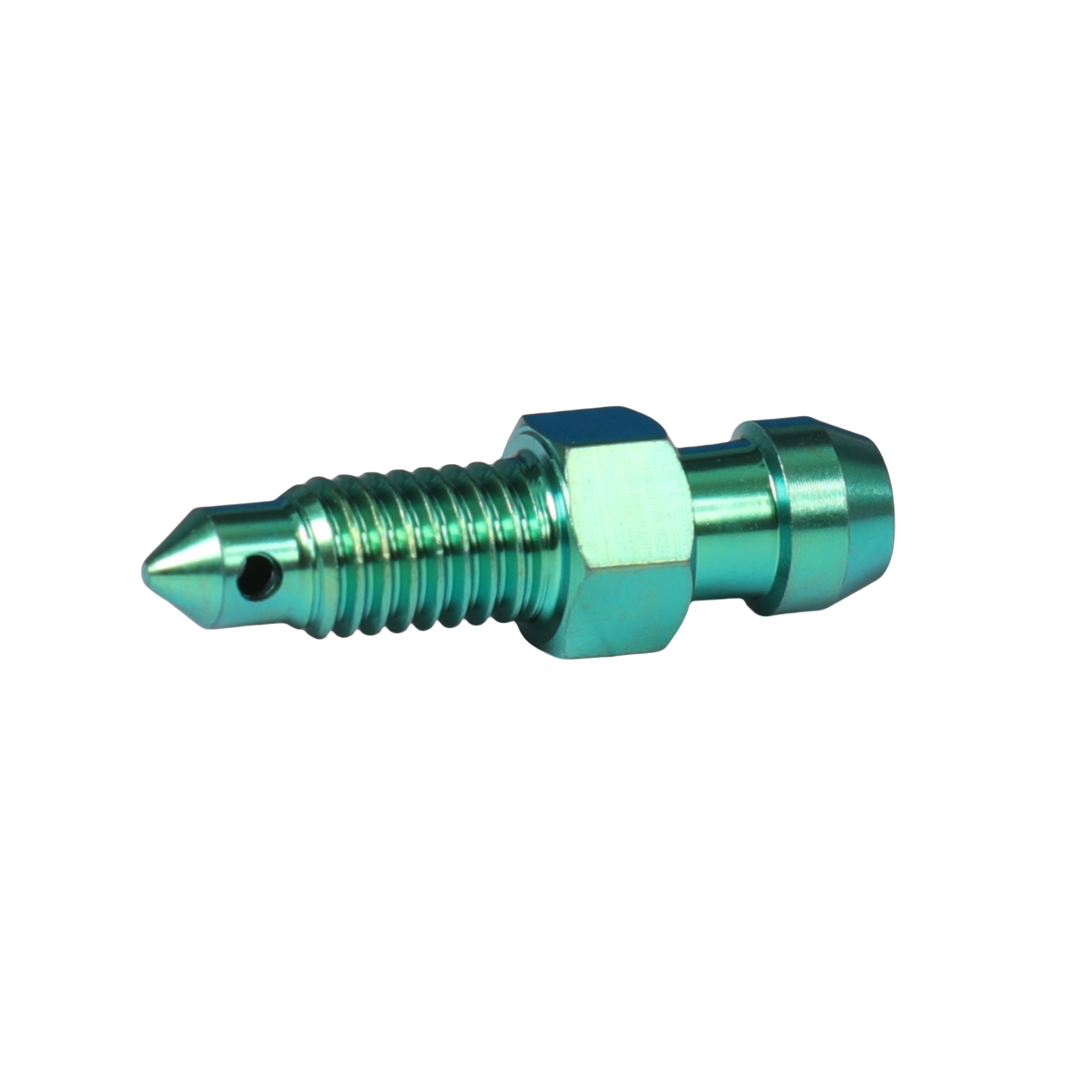
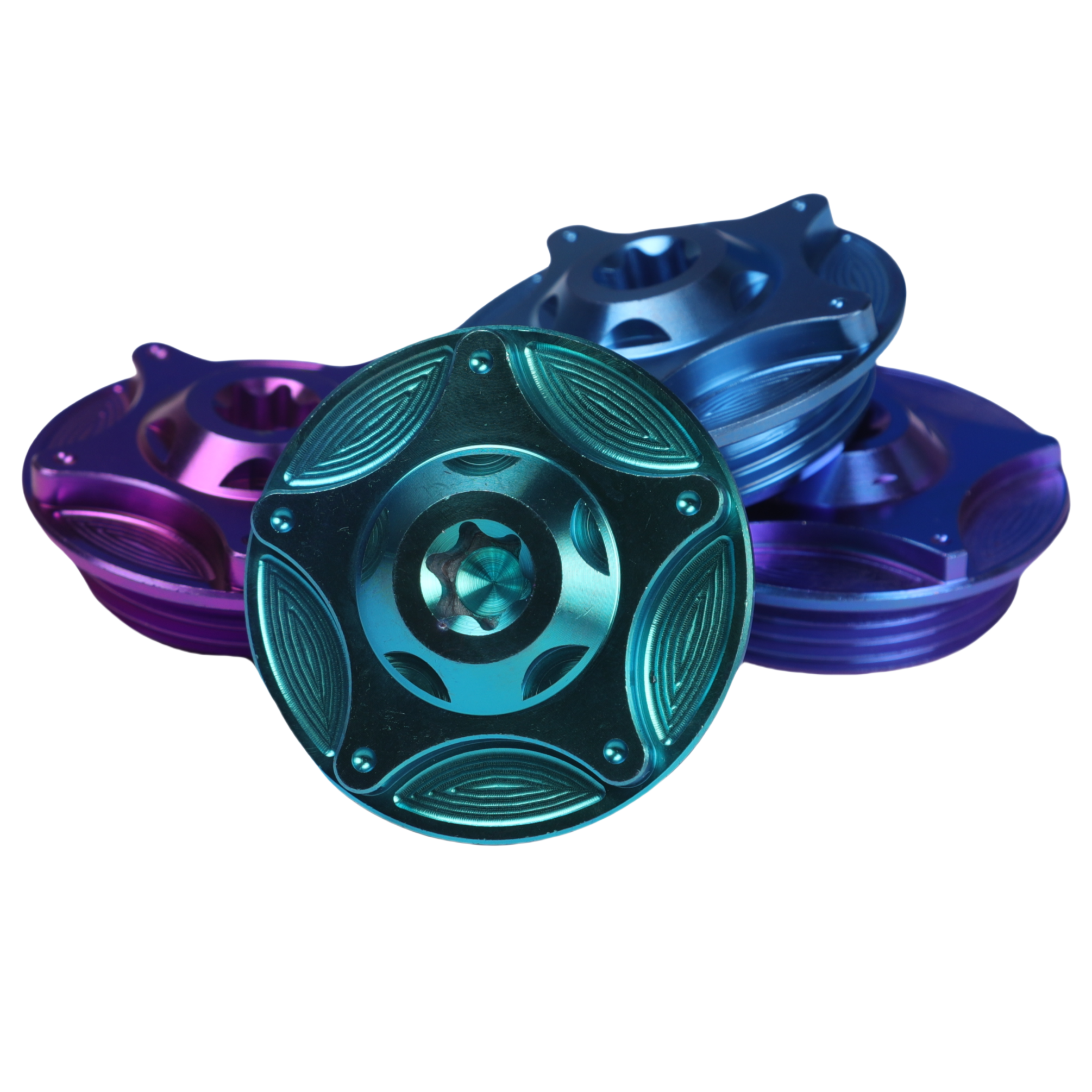
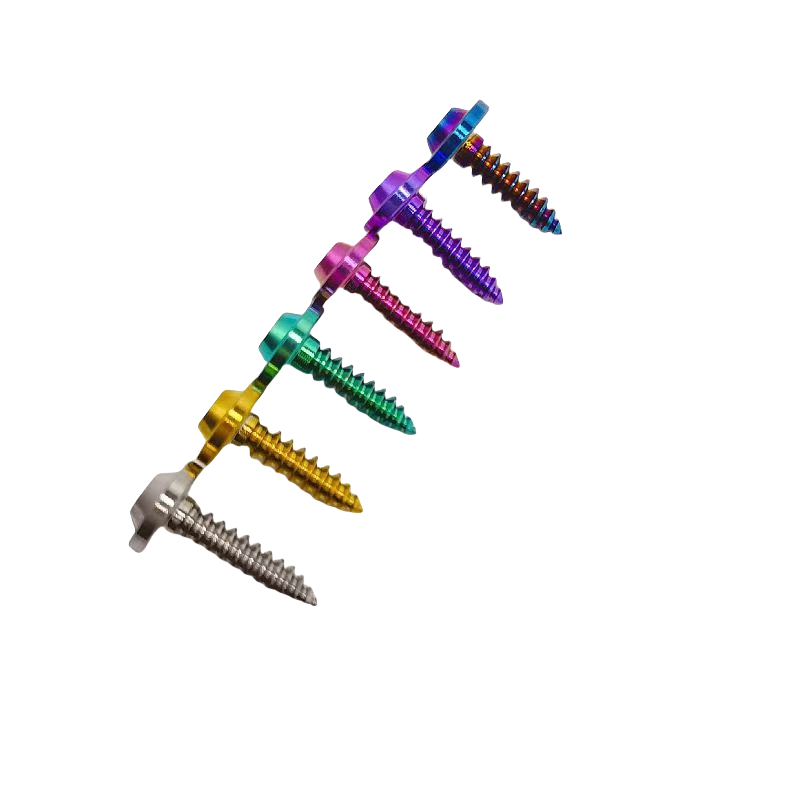
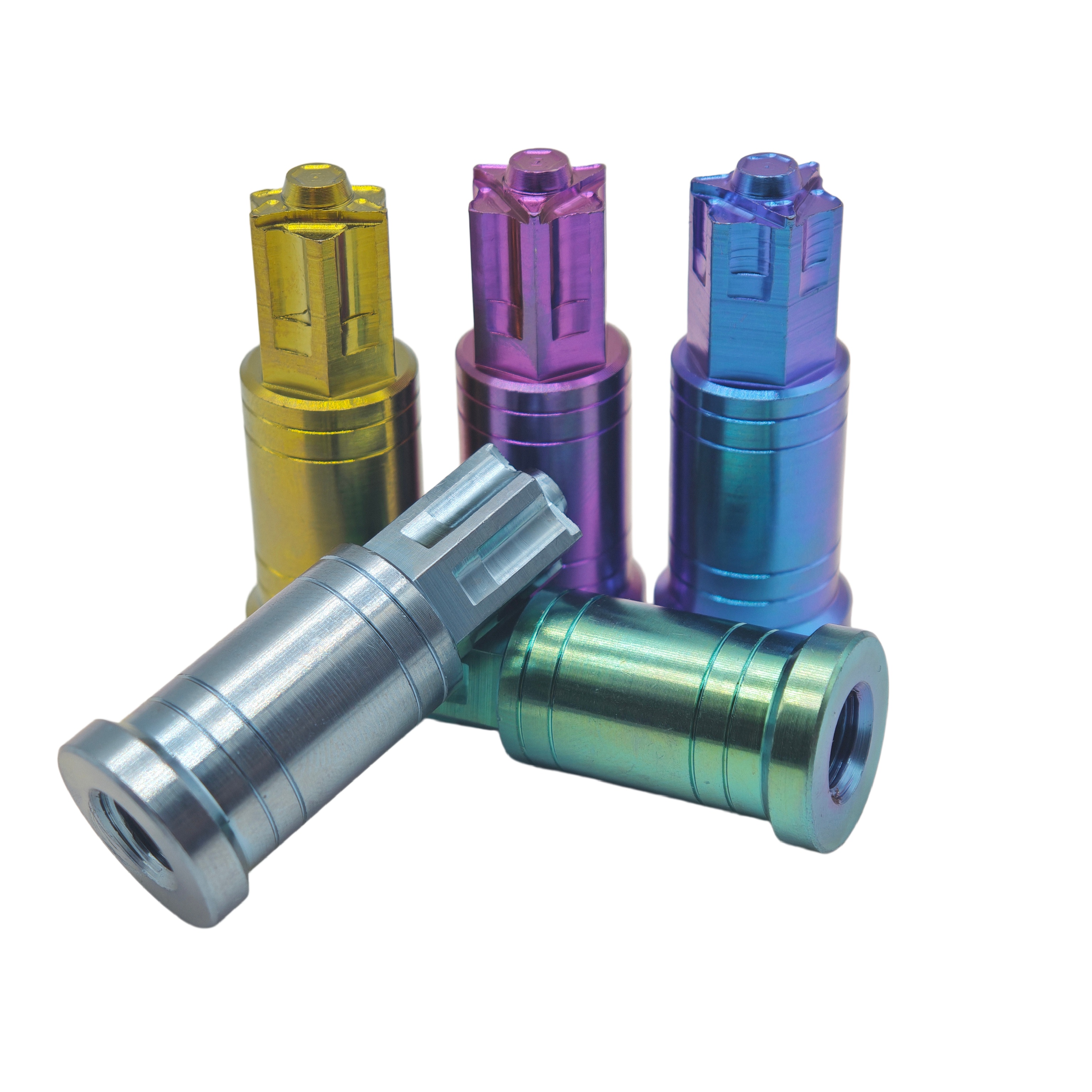
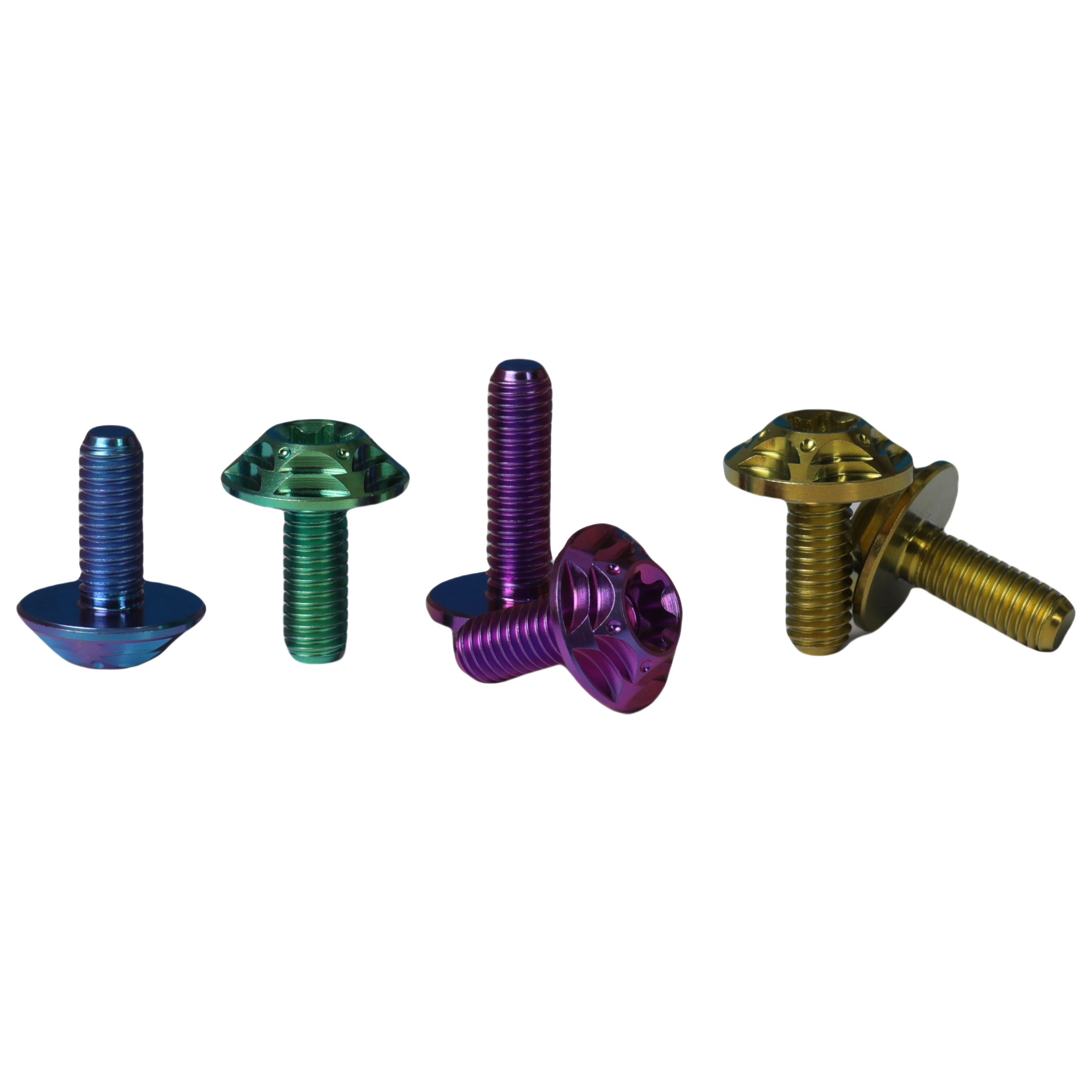
44% Mass Reduction
Substantially reduces unsprung rotational mass on wheel hub assemblies, accelerating damper response times and reducing rotational kinetic energy losses.
Corrosion Immunity
Self-healing stable TiO2 passivated oxide barrier prevents galvanic seizure, thread galling, and chemical breakdown against road de-icers and coastal salts.
Rolled Thread Geometry
Cold-formed thread grain continuity eliminates notch sensitivity, yielding continuous metallurgical grain flow that prevents micro-cracks under peak cyclic shear.
Direct Mill Traceability
Direct single-source provenance from Baoji Titanium Valley with spectral analysis and EN 10204 3.1 inspection reports assigned to every production batch.
Engineering Whitepaper: Structural Kinematics and Metallurgical Integrity of Automotive Wheel Hub Fasteners
An authoritative evaluation of shear mechanics, clamping preload, and cyclic torque stability for high-performance automotive assemblies operating in high-demand environments.
In modern automotive engineering, wheel hub fasteners—comprising wheel hub screws, wheel studs, and lug nuts—function as the definitive mechanical boundary between the rotating unsprung mass of the wheel assembly and the vehicle’s drive and suspension architecture. These fasteners endure complex multiaxial stresses: high-tensile preload applied during torquing, severe cyclic shear induced by lateral cornering forces, high-frequency rotational vibration, and aggressive thermal cycling generated by brake friction discs exceeding 600°C. Standard automotive production typically relies on zinc-plated Grade 8.8 or Grade 10.9 carbon steel. While functionally adequate under initial assembly conditions, carbon steel fasteners suffer from susceptibility to hydrogen embrittlement, stress-corrosion cracking, and galvanic seizure when exposed to variable meteorological conditions.
Zunvo Titanium Products Co., Ltd. re-engineers this critical interface by employing aerospace-grade Ti-6Al-4V Grade 5 titanium (UNS R56400 / Werkstoff 3.7165). Gr5 titanium possesses an exceptional strength-to-weight density ratio, exhibiting a minimum yield strength ($R_{p0.2}$) of 828 to 895 MPa and an ultimate tensile strength ($R_m$) spanning 895 to 1,050 MPa, while maintaining a density of merely 4.43 g/cm³ compared to steel's 7.85 g/cm³. For automotive engineers and fleet maintenance managers, reducing the unsprung rotational mass by approximately 44% at the outer hub circumference minimizes polar rotational inertia. This delivers a direct kinematic dividend: faster shock absorber response damping, reduced gyroscopic resistance during steering transitions, improved steering wheel feedback, and reduced parasitic mechanical drag during rotational acceleration and deceleration.
Dynamic Clamping Force Retention & Thread Rolling Metallurgy
Fastener failure within the wheel hub interface rarely originates from simple static tensile overload; it is almost universally caused by rotational self-loosening followed by low-cycle or high-cycle shear fatigue. The friction coefficient ($\mu$) across the thread flanks and the under-head radius dictates clamp force retention. Zunvo titanium fasteners are not manufactured via basic single-point thread cutting, which cuts through metallurgical grain boundaries and introduces stress-concentrating micro-notches. Instead, we employ precision high-tonnage cold/warm CNC thread rolling dies. This process displaces the titanium grain structure plastic-plastically along continuous contour lines parallel to the load axis, generating compressive residual surface stresses that boost fatigue endurance limits by up to 300% over cut threads.
| Mechanical / Chemical Property | Zunvo Ti-6Al-4V Grade 5 | Class 10.9 Alloy Steel | Class 12.9 High-Tensile Steel | 7075-T6 Billet Aluminum |
|---|---|---|---|---|
| Density ($\rho$, g/cm³) | 4.43 | 7.85 | 7.85 | 2.81 |
| Yield Strength ($R_{p0.2}$, MPa) | 895 – 920 | 940 | 1,100 | 505 |
| Tensile Strength ($R_m$, MPa) | 960 – 1,050 | 1,040 | 1,220 | 570 |
| Specific Strength ($R_m / \rho$) | 216 – 237 | 132 | 155 | 202 |
| Modulus of Elasticity ($E$, GPa) | 110 – 114 | 205 – 210 | 210 | 71.7 |
| Thermal Expansion ($10^{-6}/K$) | 8.6 | 11.7 | 11.2 | 23.4 |
| Corrosion Resistance (Chloride/Brine) | Virtually Immune | Requires Plating | Severe Embrittlement Risk | Pitting Susceptible |
| Fatigue Notch Factor ($K_f$) | Ultra-Low (Rolled) | Moderate | High (Brittle Failure Risk) | High |
Furthermore, the lower elastic modulus of Grade 5 titanium ($E \approx 110\text{ GPa}$) compared to structural steel ($E \approx 205\text{ GPa}$) provides a profound mechanical advantage: under thermal expansion from hard braking and vibration shock loads, the titanium bolt acts as a high-strength mechanical spring. It maintains a broader elastic elongation range before yielding, which dampens dynamic shock loads and prevents the peak stress spikes that typically loosen or crack brittle 12.9 steel fasteners under track or mountain driving conditions.
Localized Automotive Application Scenarios Across Shkodër & Northern Albania
Addressing unique operational stresses: Lake Shkodër freshwater humidity, Adriatic marine mists, harsh alpine salt corrosion, and rugged Balkan corridor logistics.
Shkodër represents the dominant industrial, commercial, and transport epicentre of Northern Albania, anchoring key regional arteries including the SH1 highway (European Route E762) linking Tirana through Koplik to the Montenegrin border at Hani i Hotit. Vehicles operating within this territory navigate an exacting triad of mechanical challenges: complex multi-elevation topography, rapid climatic shifts between Mediterranean coastal moisture and severe alpine cold, and aggressive corrosion vectors. The proximity of Lake Shkodër, coupled with maritime humidity drifting inland from the Adriatic via the Buna River basin, produces an ambient environment with elevated atmospheric moisture. In winter months, municipal road maintenance across mountain passes—such as routes traversing Theth, Boga, and Pukë—relies heavily on sodium chloride and chemical de-icing solutions.
1. Cross-Border Freight & Commercial Transit Corridors
Commercial logistics operators and transport fleets running daily heavy haulage between Shkodër, Montenegro, and the central distribution warehouses of Durrës face persistent wheel end maintenance overheads. Standard steel wheel hub screws repeatedly seize due to galvanic bonding between steel threads and cast-iron or aluminum wheel hubs. Mechanical workshops along Rruga Teuta and Bulevardi Bujar Bishanaku routinely report lost vehicle operating hours caused by sheared lug bolts during emergency roadside tire changes. Upgrading to Zunvo Grade 5 Titanium wheel hub screws and spline-drive sleeve nuts permanently eliminates rust seizing, guaranteeing consistent removal and re-torque values across hundreds of thousands of duty-cycle kilometers.
2. Performance Vehicle Tuning, Off-Road 4x4 & Motorsport Enthusiasts
Northern Albania boasts a burgeoning performance automotive and off-road modification culture. High-load off-road utility vehicles operating in the rugged terrain of Malësia e Madhe and Dukagjin place extreme shear loads on wheel studs during rock-crawling, axle articulation, and high-speed gravel transit. Standard lug bolts frequently suffer thread deformation under such shock torques. Zunvo's precision-machined M12x1.25, M12x1.5, M14x1.25, and M14x1.5 titanium hub bolts provide the critical tensile elasticity needed to absorb lateral impacts without brittle fracture. Simultaneously, track-day builds and sport sedans modified in regional tuning shops gain quantifiable lap-time improvements through the dramatic drop in rotational inertia.
3. High-End European Vehicle Maintenance & Restoration
The automotive composition of Shkodër is heavily weighted toward premier German and Italian marques—notably Mercedes-Benz, BMW, Audi, Volkswagen, and Alfa Romeo. These chassis feature sensitive electronic stability systems (ESP), adaptive dynamic dampers, and high-precision multi-link wheel geometry. Using corroded, mismatched, or sub-spec aftermarket steel fasteners can generate microscopic runout variances at the hub-to-rotor mounting face, causing brake pedal pulsation, uneven pad wear, and wheel vibration. Zunvo’s CNC-machined titanium hub screws are held to concentricity and perpendicularity tolerances within $\pm 0.005\text{ mm}$, preserving hub integrity and preserving the value of luxury vehicles.
Automotive Modernization Trends Across Shkodër County & The Western Balkans
The strategic shift from low-cost consumable fasteners to life-of-vehicle titanium components within regional supply chains.
The automotive service and components distribution sector in Northern Albania is undergoing an accelerated modernization phase. Driven by the expansion of cross-border trade, investments in national highway infrastructure, and EU harmonization standards for commercial transit safety, local automotive fleets and independent repair enterprises are transitioning away from low-cost, disposable hardware toward advanced, certified components that lower Total Cost of Ownership (TCO). Fastener failure, once dismissed as routine wear-and-tear, is now recognized by proactive fleet managers as an avoidable operational expense that causes catastrophic wheel detachment risks and axle spindle destruction.
Three macro-industrial trends are actively shaping fastener procurement within Shkodër:
• Electrification & Fleet Weight Optimization: With the steady influx of hybrid and battery electric vehicles (EVs) entering Albania's vehicle fleet, curb weights have risen substantially due to lithium battery packs. Simultaneously, instant electric motor torque exerts higher rotational shear on hub studs. Fleet engineers are actively seeking unsprung weight reductions wherever possible to offset battery mass, making Grade 5 titanium wheel fasteners the preferred technical choice.
• Digital Traceability and Material Compliance: Professional service centers in the Shkodër region increasingly require verified metallurgical test certificates (MTCs). In an automotive aftermarket historically challenged by uncertified counterfeit steel fasteners, procurement managers demand full chemical heat traceability to ensure alloys meet stated yield specs and will not fail under emergency braking.
• Surface Finish Longevity & Aesthetic Specialization: Beyond pure mechanical metrics, the rise of custom automotive detailing and wheel restoration in Shkodër has catalyzed demand for high-durability surface coatings. Unlike decorative zinc plating that oxidizes within a single winter season, Zunvo’s voltage-controlled electrochemical anodization and Physical Vapor Deposition (PVD) finishes (Burnt Rainbow, Nitride Gold, Royal Blue, DLC Black) produce an ultra-hard surface impervious to brake cleaner, road salt, and harsh wheel-cleaning acids.
Zunvo Titanium Products: Industrial Metallurgy Direct From China's "Titanium Valley"
A decade of specialized manufacturing excellence supplying certified titanium hardware to global aerospace, automotive, and motorsport buyers.
Founded in 2015 and headquartered in the Shiling Road Industrial Park of Baoji, Shaanxi, China, Zunvo Titanium Products Co., Ltd. operates at the center of the world's largest titanium smelting, forging, and processing cluster—widely recognized as China's "Titanium Valley." This geographic integration provides our engineering team with an unmatched structural advantage: direct pipeline access to premium-grade raw Ti-6Al-4V vacuum-arc remelted (VAR) titanium bars, absolute verification of raw chemical analysis, and instant access to specialized heat treatment facilities.
Baoji Smelting Proximity
Raw materials sourced exclusively from certified mills with 100% spectral heat number traceability and zero inclusion contamination.
Sub-Micron CNC Tolerances
Multi-axis Swiss turning centers and automated thread rollers producing finishes down to Ra 0.4 and tolerances within ±0.005 mm.
100% Quality Inspection
Every wheel hub screw is verified using calibrated Go/No-Go thread gauges, optical profile comparators, and surface integrity scans.
Direct Logistics to Albania
Seamless door-to-door air freight dispatch via DHL/FedEx to Tirana International Airport (TIA) and ocean freight routing through the Port of Durrës.
With an operating production area spanning 1,000 to 3,000 m² and a specialized manufacturing workforce of 101 to 200 skilled machinists, metallurgists, and export managers, Zunvo maintains a 66% repeat buyer order rate and an average customer inquiry response time of under 7 hours. For distributors, fleet operators, and tuning centers in Shkodër, partnering directly with Zunvo eliminates intermediate brokerage markups, cuts prototype turnaround times to just 3 days, and ensures every fastener delivered meets or exceeds the most stringent international DIN 912, DIN 933, ISO 7380, and customized OEM automotive dimensional standards.
B2B Procurement FAQ: Importing Titanium Wheel Hub Screws to Shkodër
Practical answers to technical fitment, customs protocols, torque retention, and galvanic compatibility questions for automotive buyers in Shkodër.
Yes. Gr5 Ti-6Al-4V exhibits an ultimate tensile strength exceeding 895–1,050 MPa, making it directly comparable in yield resistance to Class 10.9 steel while saving 44% in mass. Its elasticity allows it to absorb heavy cornering shock loads without brittle deformation. However, installers must adhere strictly to specified seating styles (conical 60°, ball R12/R13/R14, or flat flange) and use calibrated torque wrenches.
Titanium naturally forms an exceptionally stable, chemically passive TiO2 oxide surface film that isolates the metal. Unlike carbon steel, it will never generate rust expansion that welds fasteners into wheel hubs. For optimal long-term maintenance in Shkodër's humid climate, we recommend applying an anti-seize paste (containing molybdenum disulfide or copper/nickel) during installation to prevent thread galling.
We provide comprehensive international air and sea logistics. For rapid sampling and urgent repair orders, express courier (DHL, FedEx, UPS) delivers directly to Shkodër addresses within 4 to 7 business days via Tirana International Airport (TIA). For containerized bulk distribution, maritime freight routes to the Port of Durrës within 25–35 days. All commercial invoices, EUR.1 / Certificate of Origin, and packing lists are provided to ensure smooth clearance through Albanian Customs (Drejtoria e Përgjithshme e Doganave).
Standard inventory items (such as standard M12 and M14 lug bolts, M6/M8 brake disc screws, and flange nuts) have a low baseline MOQ of 100 to 200 pieces or dozens. For custom drawing-based wheel hub screws featuring proprietary thread lengths, custom hex heads, or unique drive styles, production runs start from just 100 pieces to facilitate physical fitment validation prior to full commercial scale.
Our electrochemical anodization colors result from precise micro-layer light interference on the titanium oxide film; they contain zero organic dyes, meaning they cannot crack, chip, or peel under intense heat like spray paint or cheap powder coatings. For extreme wear applications like wheel lug screws subject to impact wrenches, our Physical Vapor Deposition (PVD) titanium nitride coatings provide superior surface hardness (exceeding 2,000 HV) that resists abrasion from impact sockets.
Because titanium has slightly different frictional characteristics than plated steel, we recommend torquing Grade 5 titanium wheel bolts to the vehicle manufacturer's OEM torque spec using an approved anti-seize lubricant. Under lubricated conditions ($\mu \approx 0.12 - 0.15$), the resulting bolt preload tension aligns closely with OEM engineering parameters, preventing overtightening while guaranteeing safe clamp force under high-shear operation.
Source Factory-Direct Titanium Wheel Fasteners for Shkodër
Whether you require bulk supply for regional automotive distribution, custom CNC wheel studs for performance tuning, or technical validation for commercial fleets across Northern Albania, our Baoji engineering team is ready to review your specifications.
