Industrial Grade Titanium Fastener Solutions
Engineered with rolled threads according to ISO 965 and tested under stringent EN 10204 3.1 inspection schemes. Designed for uncompromised structural stability across extreme mechanical and chemical exposure environments.
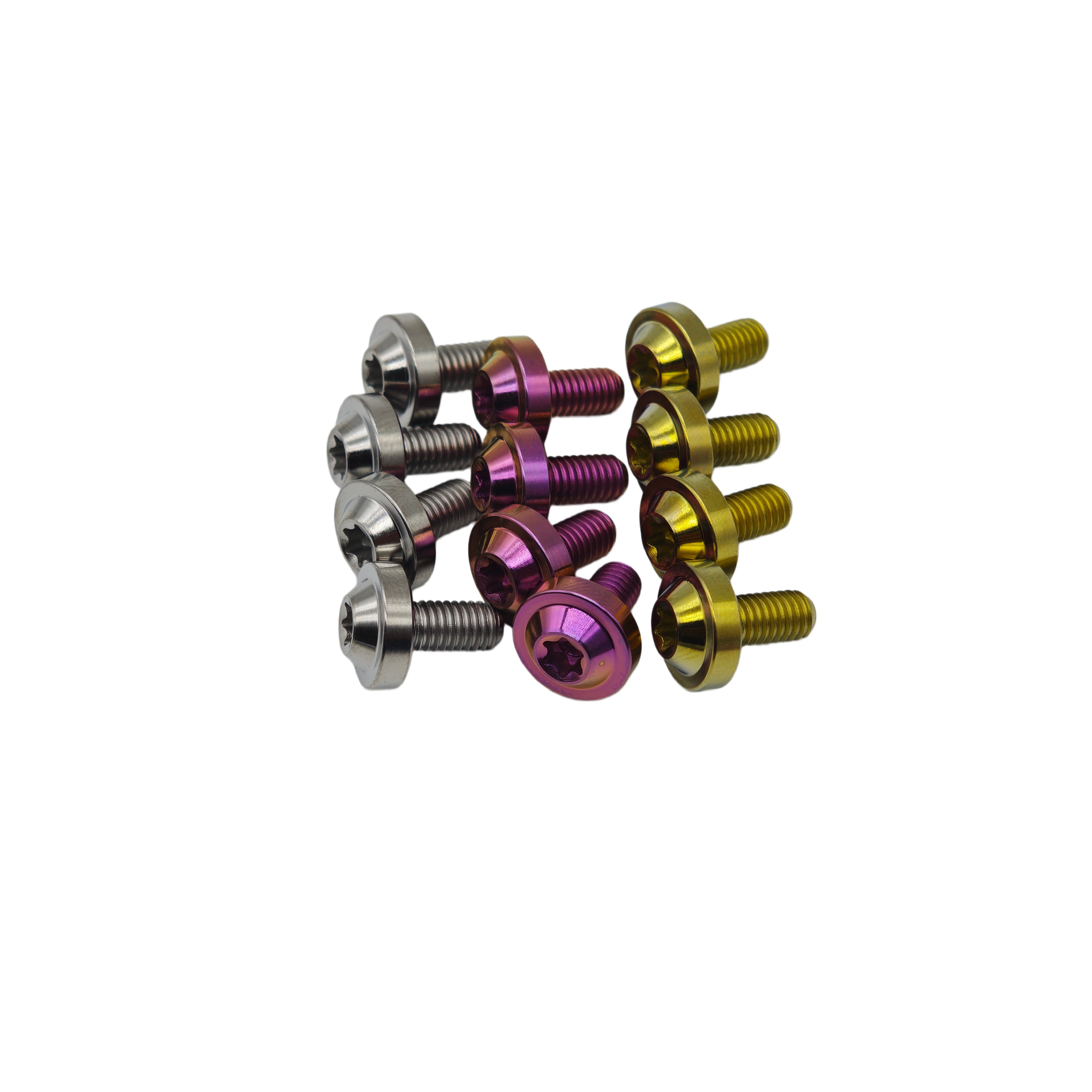
Custom GR5 Titanium M8 Disc Head Bolts with Plain Finish for Bike Motorcycle
- Thread: Precision Rolled M8 Metric
- Tensile Strength: ≥ 895 - 950 MPa
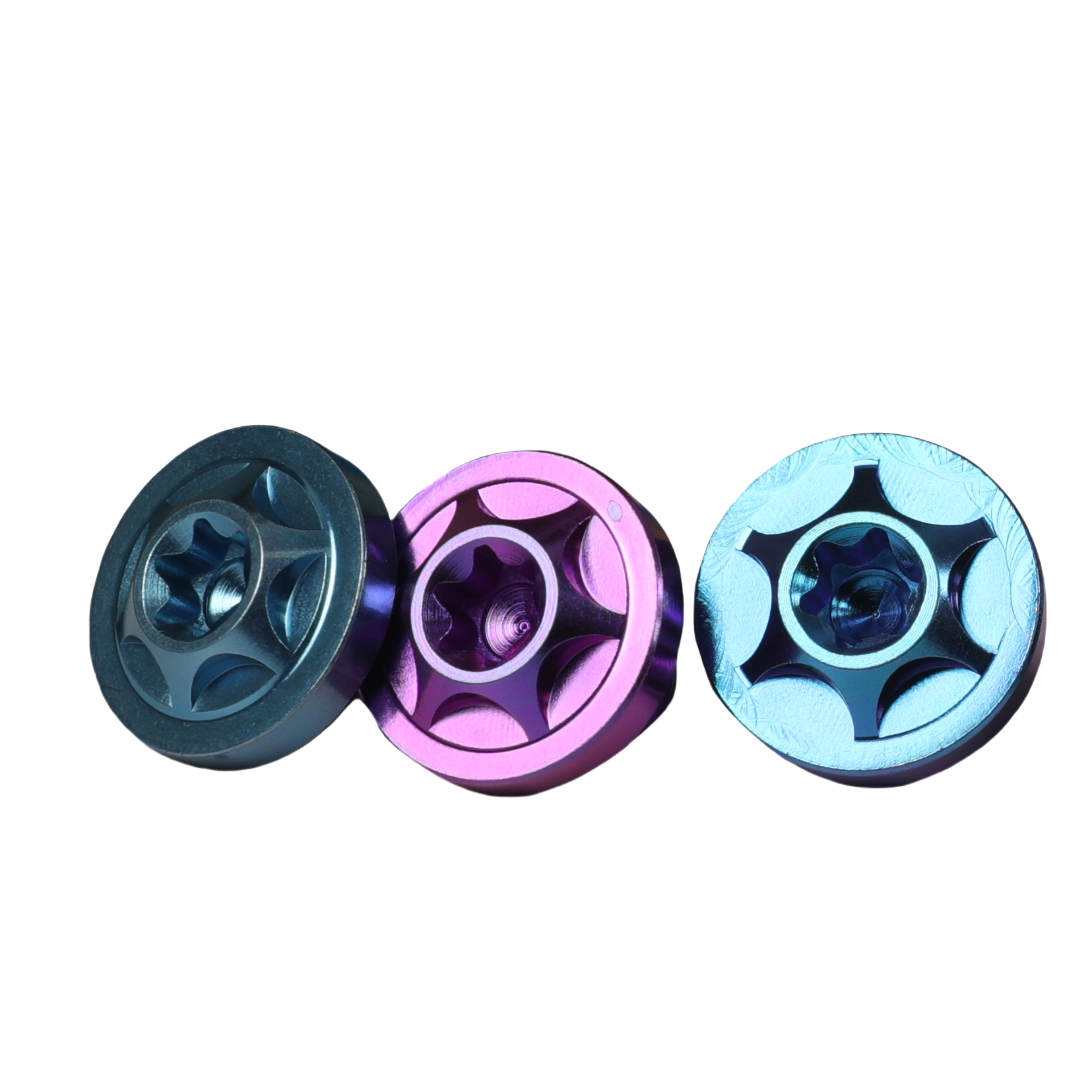
Titanium Alloy Disc Brake Bolts with Torx Head Flange Screws for Bike & Motorcycle Ti Bolts
- Drive: High-Torque Anti-Cam Torx
- Finish: Plain / Anodized Surface
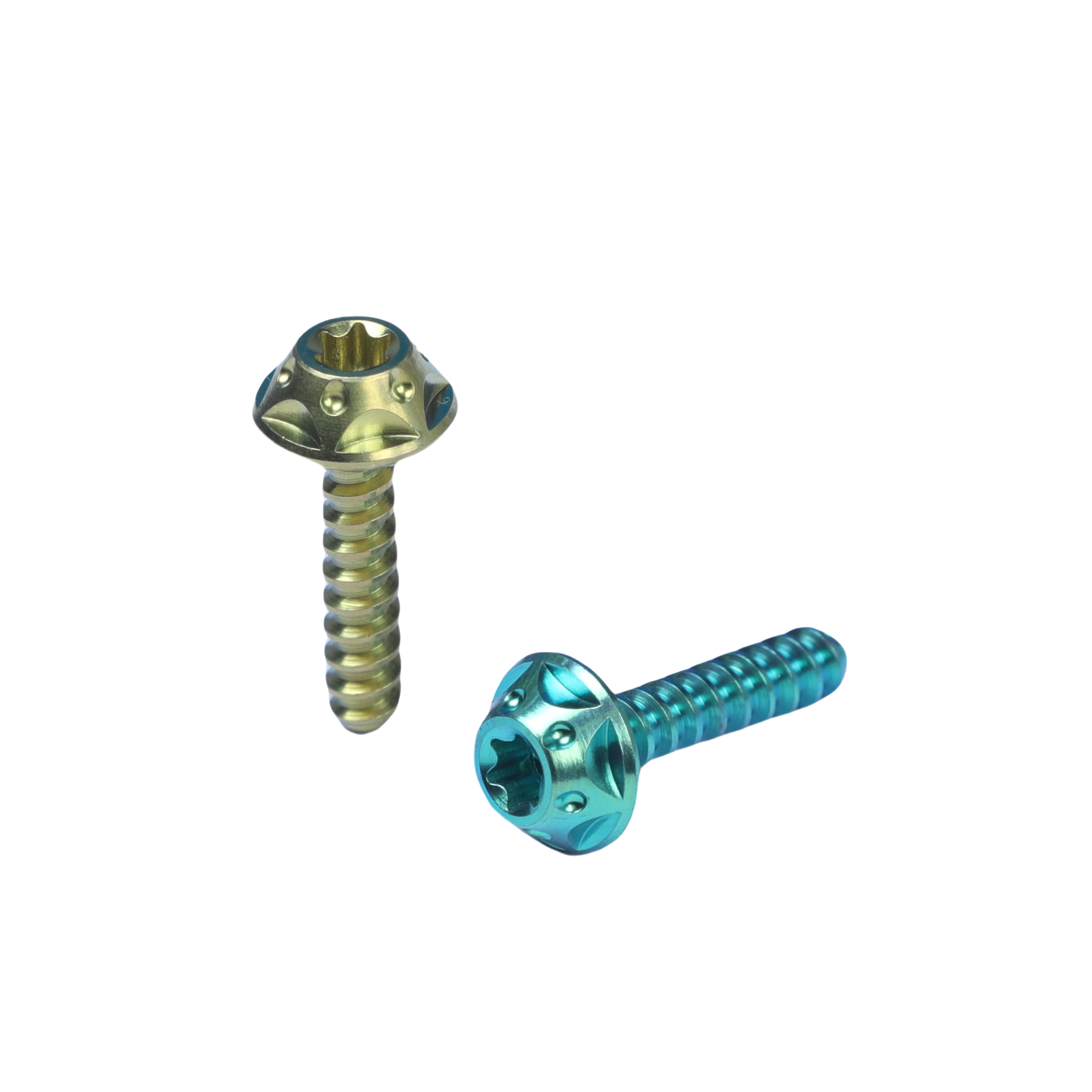
GR5 Titanium M5 CNC Flower Head Self-Tapping Screws Factory Direct Grade 5
- Geometry: Custom CNC Flower Head
- Density: 4.43 g/cm³ (Ultralight)
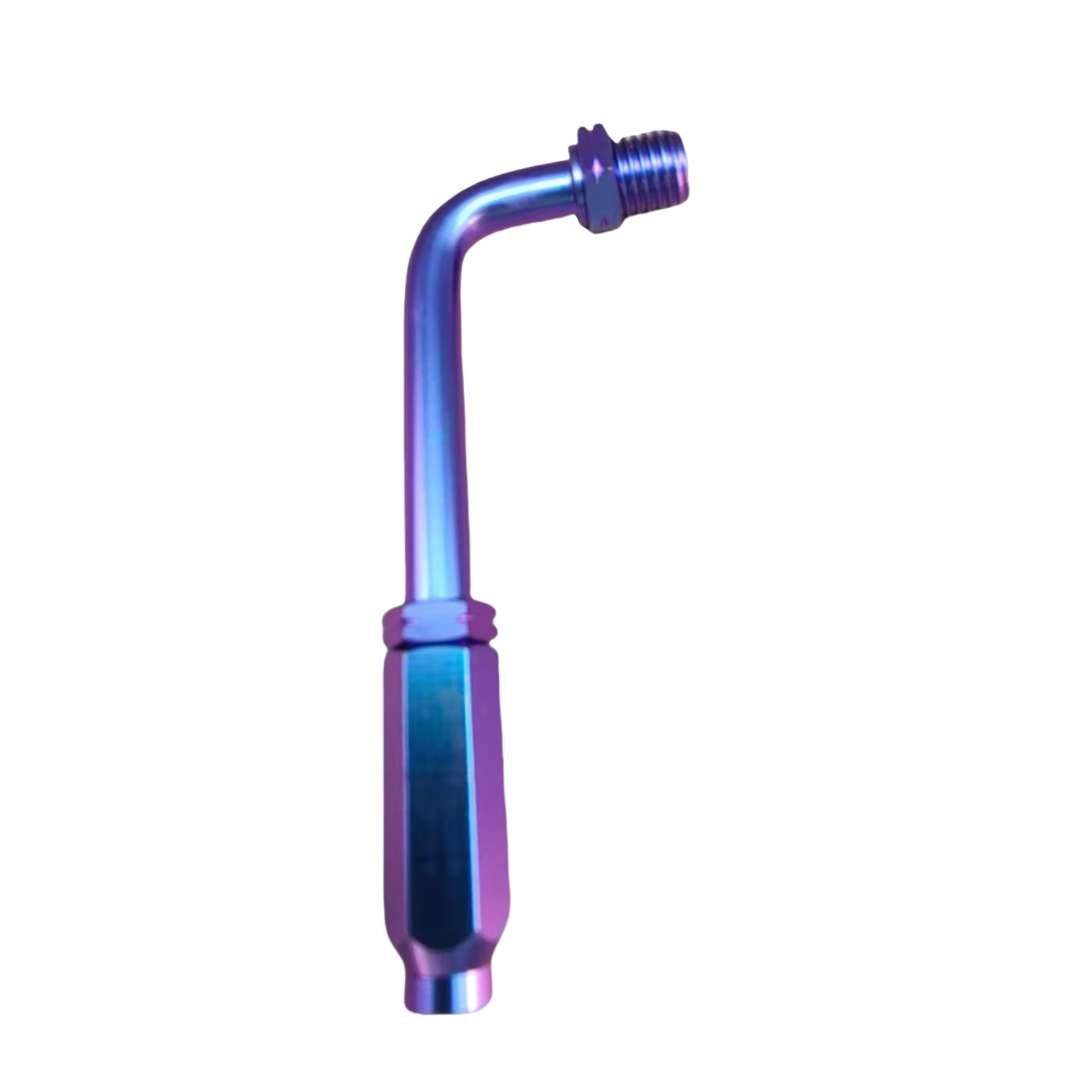
Custom CNC Gr5 Flat Head Titanium Alloy Motorcycle Throttle Line Colorful Refueling Cable Fittings Titanium Valve Parts
- Process: 5-Axis Precision Lathe Turning
- Application: High-Vibration Fluidics
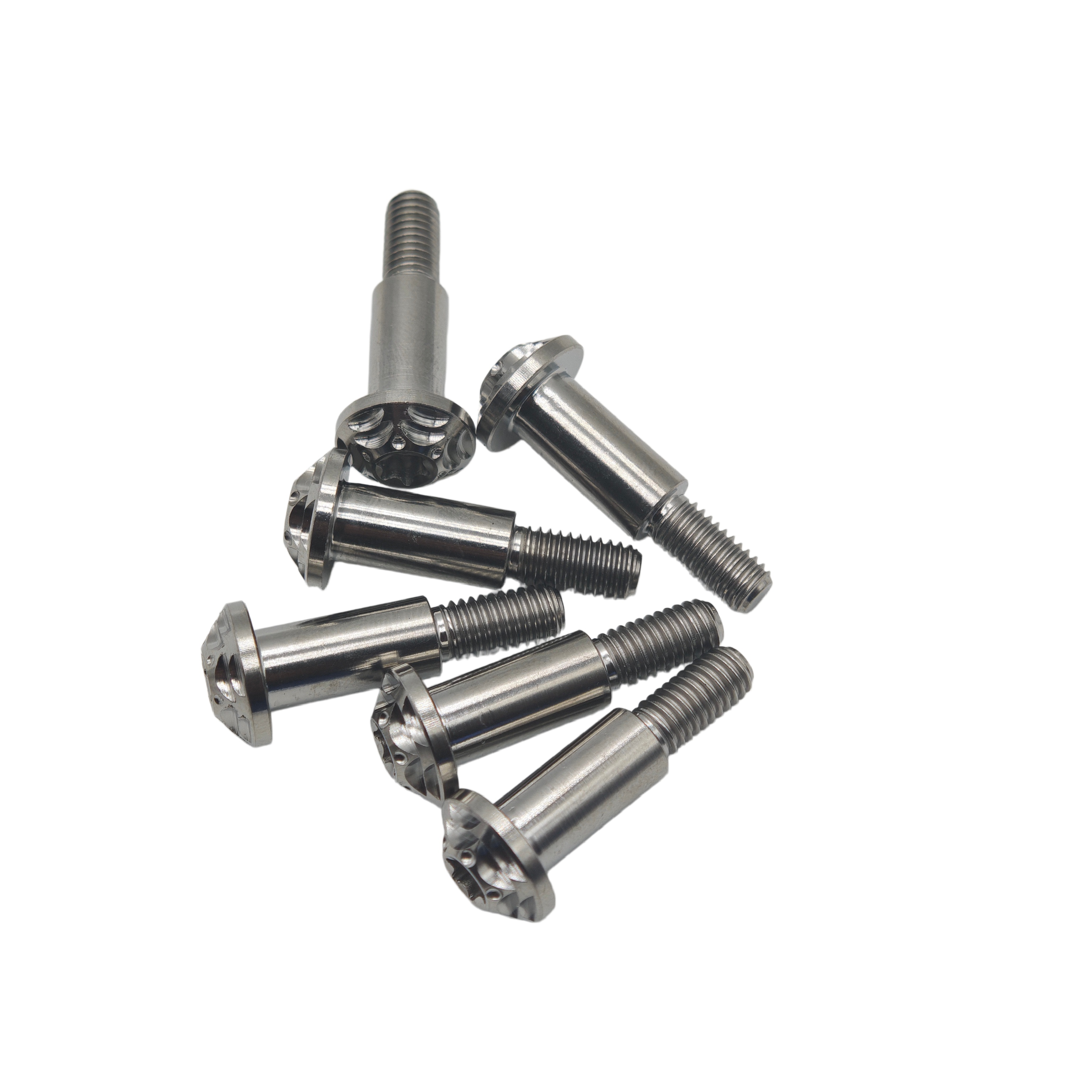
Custom Torx Shoulder Screw CNC Machined GR5 Titanium Socket Head Decorative Bolt for Motorcycle Bicycle Upgrade
- Tolerance: Down to ±0.005 mm
- Shear Strength: Exceeds 500 MPa
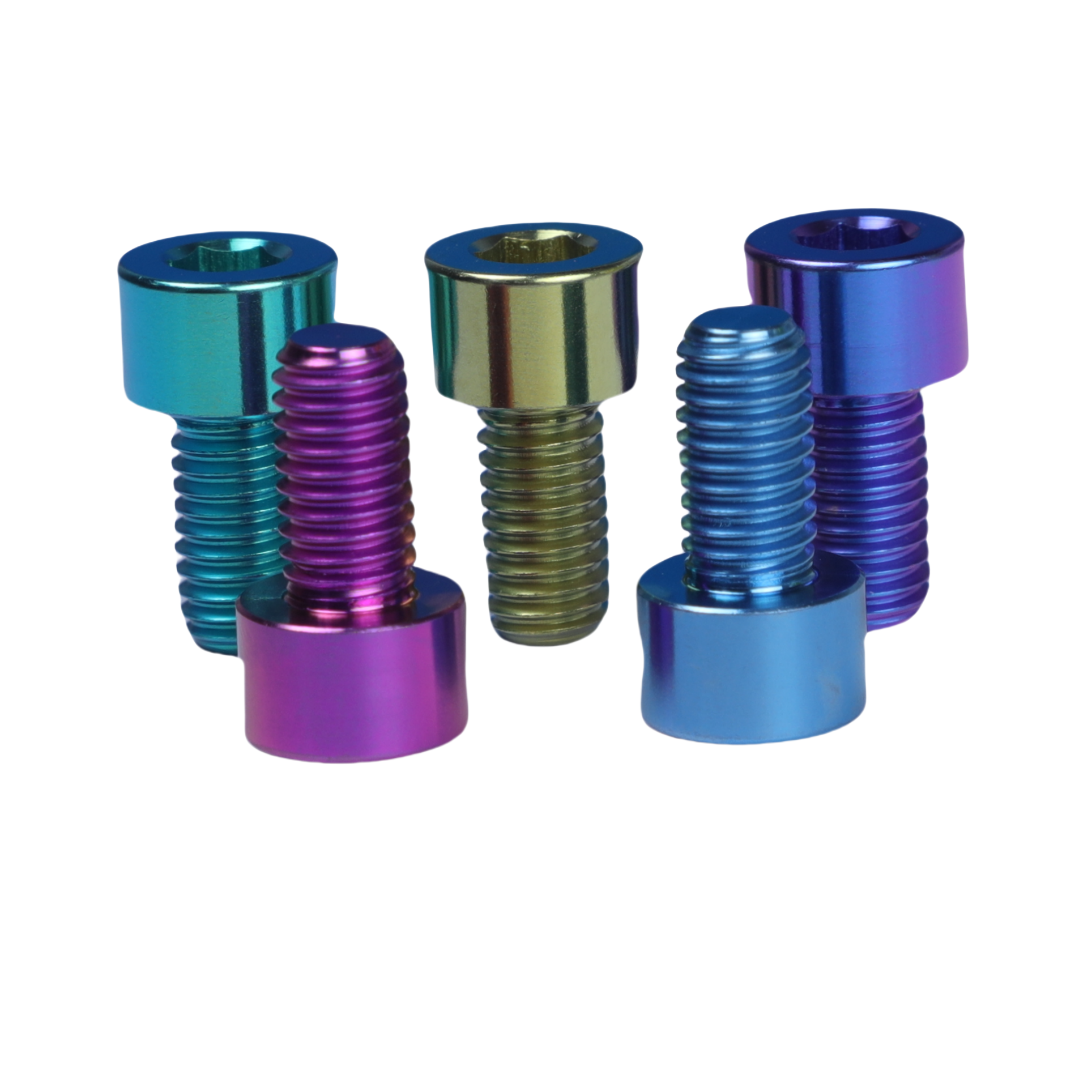
High Quality DIN912 GR5 Titanium Alloy Hexagon Socket Head Bolts Industrial Fastener Machine Made Titanium Screws
- Standard: DIN 912 / ISO 4762 Full Match
- Class: Equivalent to 10.9 Alloy Steel
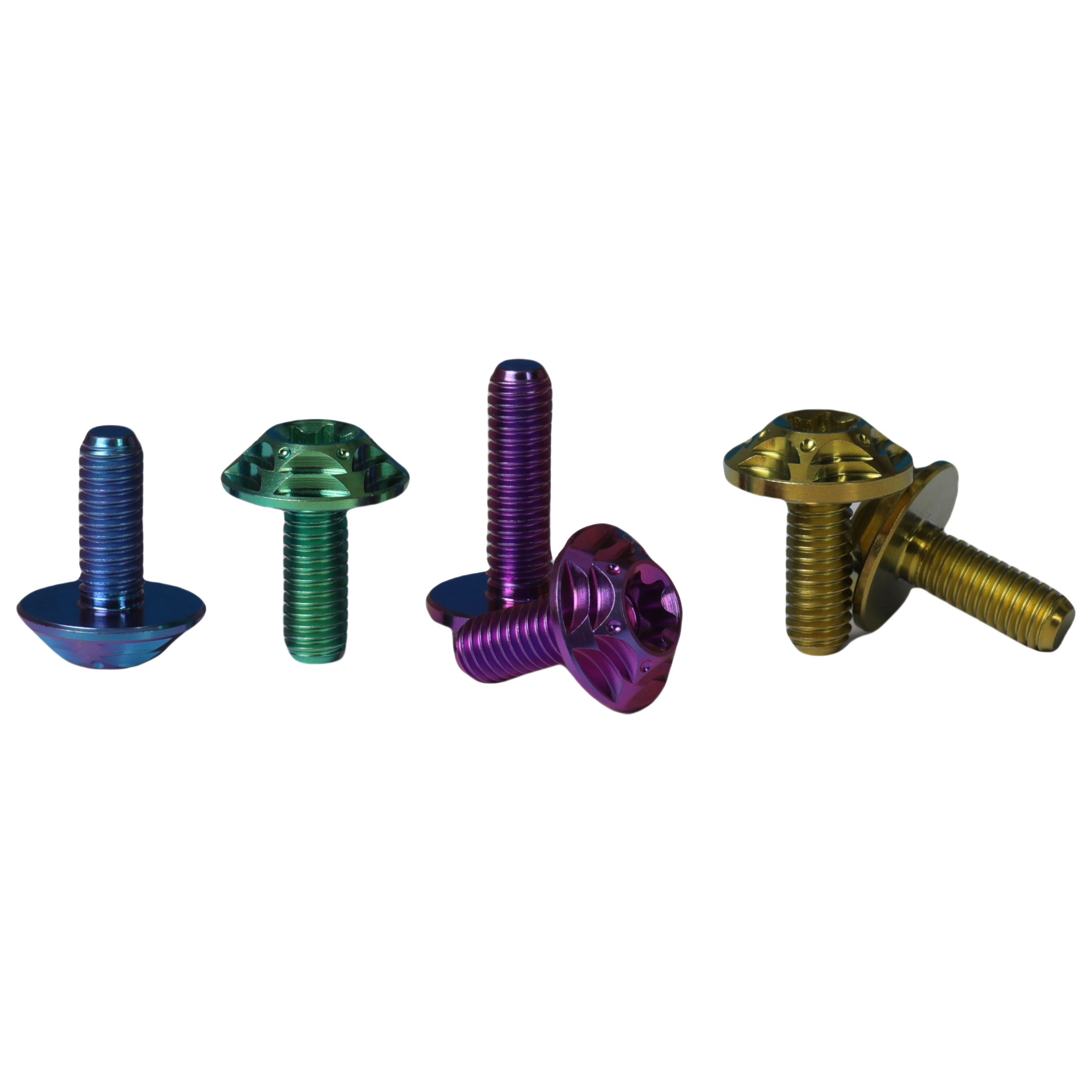
Titanium Alloy CNC Disc Brake Disc Head Bolts Torx Head DIN Thread Anodized/PVD Finish Class 10.9/12.9 Grade TKS Brand Factory
- Rating: Class 10.9 / 12.9 Proof Load
- Coating: Physical Vapor Deposition (PVD)
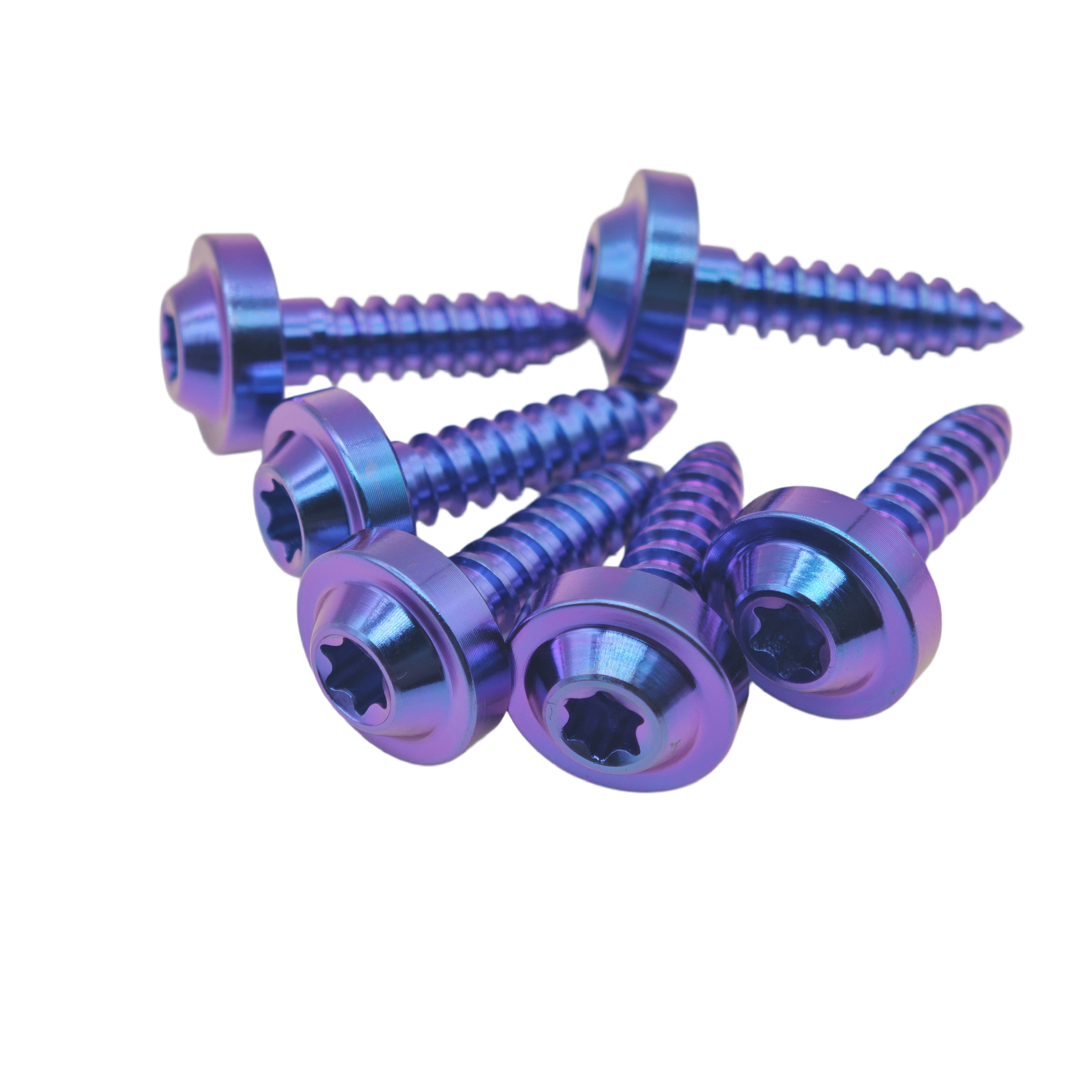
GR5 Anodized Titanium Torx Head Standard Thread Self-Tapping M6 Screw for Motorcycles
- Thread: Self-Tapping Coarse Lead
- Resistance: Hydrochloric & Sulfate Proof
1. Technical Scope: CE-Certified Titanium Fasteners for Erdenet's Heavy Industrial Fabric
The Orkhon province, anchored by the industrial metropolis of Erdenet, represents one of Central Asia's most demanding operating theaters for structural and process hardware. Home to the Erdenet Mining Corporation—one of the world's premier copper-molybdenum mining and ore-dressing complexes—the local operational environment imposes compounding stresses rarely encountered in conventional industrial centers: persistent sub-zero continental temperatures (frequently dropping below -40°C in winter), heavily aerated slurry transportation, highly acidic copper solvent extraction and electrowinning (SX-EW) circuits, and extreme high-frequency vibrational wear from ore crushers and grinding mills.
Historically, heavy industrial processing facilities in Erdenet utilized high-tensile alloy steels (such as GOST Grade 40Kh or Western 10.9/12.9) or austenitic stainless steels (AISI 304 and 316L). However, empirical metallurgical data from ore slurry processing pipelines and flotation tanks demonstrate rapid failure lifecycles: alloy steels suffer aggressive chloride pitting and rapid uniform corrosion from wet mineral salts, while standard stainless steels undergo catastrophic Chloride Stress Corrosion Cracking (CSCC) and severe hydrogen embrittlement under continuous cyclic torque.
To address this critical integrity gap, Zunvo Titanium manufactures and supplies fully CE-certified marine-grade titanium fasteners directly into the Erdenet market. While conventionally designated for maritime offshore subsea installations, "marine-grade" titanium fasteners—principally Grade 5 Ti-6Al-4V (UNS R56400) and Grade 2 Commercially Pure Titanium (UNS R50400)—provide the exact thermodynamic passivity necessary to withstand Erdenet's copper-sulfate leaching liquors, aerated flotation froths, and sub-zero impacts. Fasteners certified under European Union harmonized standards (including Machinery Directive 2006/42/EC and Pressure Equipment Directive 2014/68/EU Annex I) guarantee guaranteed chemical purity, impact resilience at low temperatures, and full batch-level traceability according to EN 10204 3.1 certification schemes.
| Material Designation | Tensile Strength Rm (MPa) | Yield Strength Rp0.2 (MPa) | Density (ρ, g/cm³) | Pitting Resistance (PREN) | -40°C Cryogenic Toughness | Slurry Acid Resistance |
|---|---|---|---|---|---|---|
| Ti-6Al-4V (Grade 5) CE | ≥ 895 - 1000 | ≥ 828 | 4.43 | Immune (Passivated TiO&sub2;) | Superior (No DBTT Shift) | Extreme (pH 1.0 - 12.0) |
| Grade 2 Titanium (CP-Ti) | ≥ 345 - 500 | ≥ 275 | 4.51 | Immune (Passivated TiO&sub2;) | Excellent | Extreme (Oxidizing Media) |
| 316L Stainless Steel (A4-70) | ≥ 700 | ≥ 450 | 7.98 | 23 - 25 (Pitting Vulnerable) | Moderate (Embrittlement Risk) | Poor in Dynamic Chlorides |
| 10.9 Structural Alloy Steel | ≥ 1040 | ≥ 940 | 7.85 | < 5 (Rapid Oxidation) | Severe Ductile-to-Brittle Jump | Zero (Rapidly Decomposed) |
| Duplex 2205 (1.4462) | ≥ 680 - 880 | ≥ 460 | 7.80 | 32 - 35 | Moderate (-40°C Limit) | Moderate to High |
2. Localized Engineering Applications Across Erdenet's Industrial Landscape
Deploying advanced non-ferrous fastening systems within the Erdenet regional ecosystem requires aligning structural fastener geometry with localized metallurgical operations. Marine-rated Grade 5 titanium bolts are not generic off-the-shelf items; they are specialized structural components fulfilling precision functions across four primary localized sectors:
Hydrometallurgical Acid Circuits
In copper solvent extraction and electrowinning circuits handling high-concentration sulfuric acid (H&sub2;SO&sub4;) and copper sulfate (CuSO&sub4;) pregnant leach solutions (PLS), titanium's spontaneous formation of a dense, self-healing rutile/anatase titanium dioxide (TiO&sub2;) passivation layer prevents localized galvanic deterioration, preserving joint tension on process valves and heat exchangers.
Froth Flotation Cell Agitators
High-capacity froth flotation tanks rely on aggressive slurry agitation involving mineralized collector chemicals, xanthates, and aeration. The shear stress exerted on agitator shaft bolts and mounting flanges demands the high cyclic fatigue endurance of Grade 5 titanium (endurance limit exceeding 510 MPa in air and 400 MPa in corrosive brines), completely avoiding fatigue fractures.
Sub-Zero Heavy Transport & Machinery
Haulage trucks, open-pit excavators, and drilling rigs operated in the Orkhon steppe experience cyclic shock loadings at sub-zero temperatures. Unlike ferritic and martensitic steels, which undergo a dangerous Ductile-to-Brittle Transition (DBTT) at -20°C, Grade 5 Ti alloy maintains exceptional Charpy V-notch impact toughness and ductility down to -60°C without catastrophic embrittlement.
Furthermore, in Erdenet's urban infrastructure, municipal water chlorination plants, thermal power stations, and localized vehicular modification shops require specialized titanium components. High-precision motorcycle brake disc bolts (M8x24), DIN 912 socket head screws, and flanged Torx-head hardware prevent seizing under winter de-icing salt exposure, reducing unscheduled maintenance shutdowns and lowering total ownership cost.
3. Modernization Trends in the Erdenet Fastener Market: Transitioning to CE & ISO Standards
The industrial landscape of northern Mongolia is undergoing structural technological modernization. In alignment with national modernization initiatives and modernization mandates at the Erdenet processing facilities, procurement policies are systematically moving away from legacy Soviet GOST steel standards toward European (CE/DIN/EN) and international (ISO/ASTM) compliant non-ferrous engineering materials. This tectonic shift is driven by three measurable market dynamics:
A. Reduction of Downtime and Total Cost of Ownership (TCO)
In heavy mineral concentrators operating 24 hours a day, 365 days a year, the true cost of a fastener failure is not measured by the purchase price of the bolt, but by the catastrophic financial impact of plant stoppage. A snapped M16 flange bolt on an autoclave feed pump or an agitation column can trigger millions of tugriks per hour in lost slurry throughput. While the initial capital expenditure of Grade 5 titanium fasteners exceeds carbon steel by a factor of 4 to 6, titanium fasteners eliminate routine bolt replacement cycles, anti-corrosion re-coating requirements, and downtime due to seized threads. Over a five-year operating lifecycle in acidic processing streams, titanium delivers an estimated 65% reduction in cumulative fastener maintenance costs.
B. Integration of Turnkey European & International Capital Machinery
As Erdenet integrates modernized European filtration units, German-engineered centrifuge separators, and Finnish hydrometallurgical extraction skids, factory specifications require components that comply with European CE directives. Utilizing uncertified non-compliant domestic or unverified imported fasteners voids system performance warranties and compromises pressure vessel approvals under PED 2014/68/EU. Certified Baoji-manufactured titanium fasteners, backed by mill test certificates (MTC) matching ISO 10474 / EN 10204 Type 3.1 standards, provide seamless compliance for plant engineers and technical procurement boards.
C. High-Vibration Damping and Weight-Reduction Synergies
Modernization of secondary processing facilities also emphasizes energy efficiency and reduction of reciprocating mass. Titanium's density (4.43 g/cm³) is approximately 56% that of structural steel, yet its specific yield strength (yield strength divided by density) far exceeds standard structural alloys. In high-speed vibrating screens, slurry centrifuges, and mobile heavy machinery, reducing hardware mass decreases harmonic vibration fatigue, protects expensive bearings, and extends overall equipment lifespan.
Why Industrial Procurement Directors Choose Zunvo Titanium
Located in Baoji—the heart of China's "Titanium Valley"—Zunvo combines verified raw material traceability with multi-axis CNC micro-machining and strict European CE-conformity testing to serve the international industrial market.
4. Localized Procurement FAQ: Engineering Solutions for Erdenet
Technical buyers, reliability engineers, and commercial procurement managers in Erdenet face specific regional challenges when integrating titanium hardware. Below are technical answers addressing direct field concerns:
Why specify "Marine-Grade" CE certified titanium fasteners in landlocked Erdenet?
How do Grade 5 titanium bolts prevent cryogenic brittle failure during Orkhon winters (-40°C)?
How can engineers prevent galling (cold-welding) when tightening titanium fasteners?
What documentation is supplied to satisfy Mongolian customs and industrial quality audits?
What are the transit logistics, lead times, and customs handling routes from Baoji to Erdenet?
5. Structural Engineering Guidelines: Torque, Tightening & Galvanic Isolation
To maximize the mechanical service life of CE-certified titanium fasteners across Erdenet's industrial facilities, plant engineers must follow validated mechanical assembly protocols. Because titanium has an elastic modulus of approximately 110 to 114 GPa—roughly half that of structural steel (205 GPa)—its elongation under tensile load is greater. This inherent elasticity makes titanium fasteners exceptionally resistant to loosening under cyclic vibrational shock, but requires calibrated torque control:
- Calibrated Tightening Torque: Because Grade 5 titanium offers yield strength comparable to Class 10.9 steel, but exhibits different frictional coefficients, installation must follow calculated tightening torque formulas ($T = K \cdot D \cdot F_p$, where $K$ is the nut factor, $D$ is nominal diameter, and $F_p$ is required pre-load). Utilizing an anti-seize lubricant typically reduces the $K$-factor from 0.30 (dry) to 0.12 - 0.15, protecting threads from galling and guaranteeing accurate clamping preload.
- Galvanic Isolation Protocols: When titanium bolts pass through structures composed of unalloyed carbon steel, cast iron, or aluminum (such as vehicle frames, gearbox casings, or pump housings), the wide electrochemical potential difference between the noble passivated titanium ($E^0 \approx 0.05 \text{ V}$) and active base metals ($E^0 \approx -0.44 \text{ V}$ for Fe, $-1.66 \text{ V}$ for Al) can accelerate galvanic attack on the base metal in wet electrolyte conditions. To eliminate galvanic coupling in Erdenet's open-pit moisture and slurry zones, non-conductive dielectric isolation kits (EPDM, PTFE, or glass-reinforced epoxy washers and sleeves) must be fitted under the bolt head and nut.
- Thread Rolling Superiority: Unlike cheap machined fasteners with cut threads that disrupt grain flow and create stress-concentration notches at the thread root, Zunvo's industrial titanium fasteners are manufactured with cold/hot rolled threads in accordance with aerospace thread radius requirements (ISO 5855 / UNJ specifications). Continuous, uninterrupted grain flow delivers up to 35% higher dynamic fatigue strength and higher shear load resistance under severe equipment vibrations.
Connect with Zunvo's Metallurgical Engineering Team
Request batch material test reports, inquire about custom CNC drawings, or receive immediate technical quotation for the Erdenet market.
