High-Performance Titanium Fasteners Engineered for Daejeon
Direct from our Baoji manufacturing facility to Daejeon's racing workshops, automotive prototype facilities, and advanced EV engineering centers. 100% thread-rolled, high-shear certified hardware.
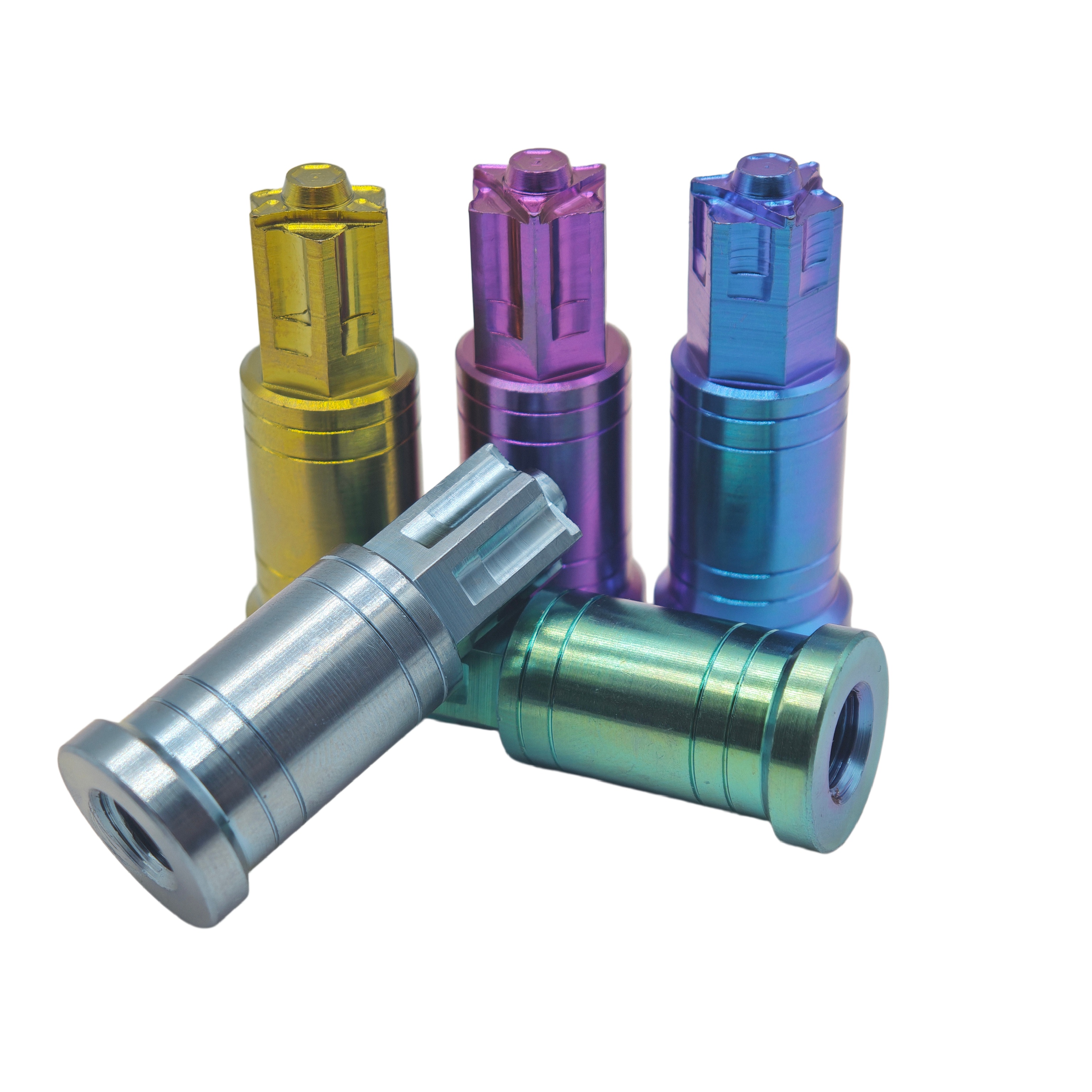
GR5 Custom Titanium Spline Drive Sleeve Nuts
Explore Specifications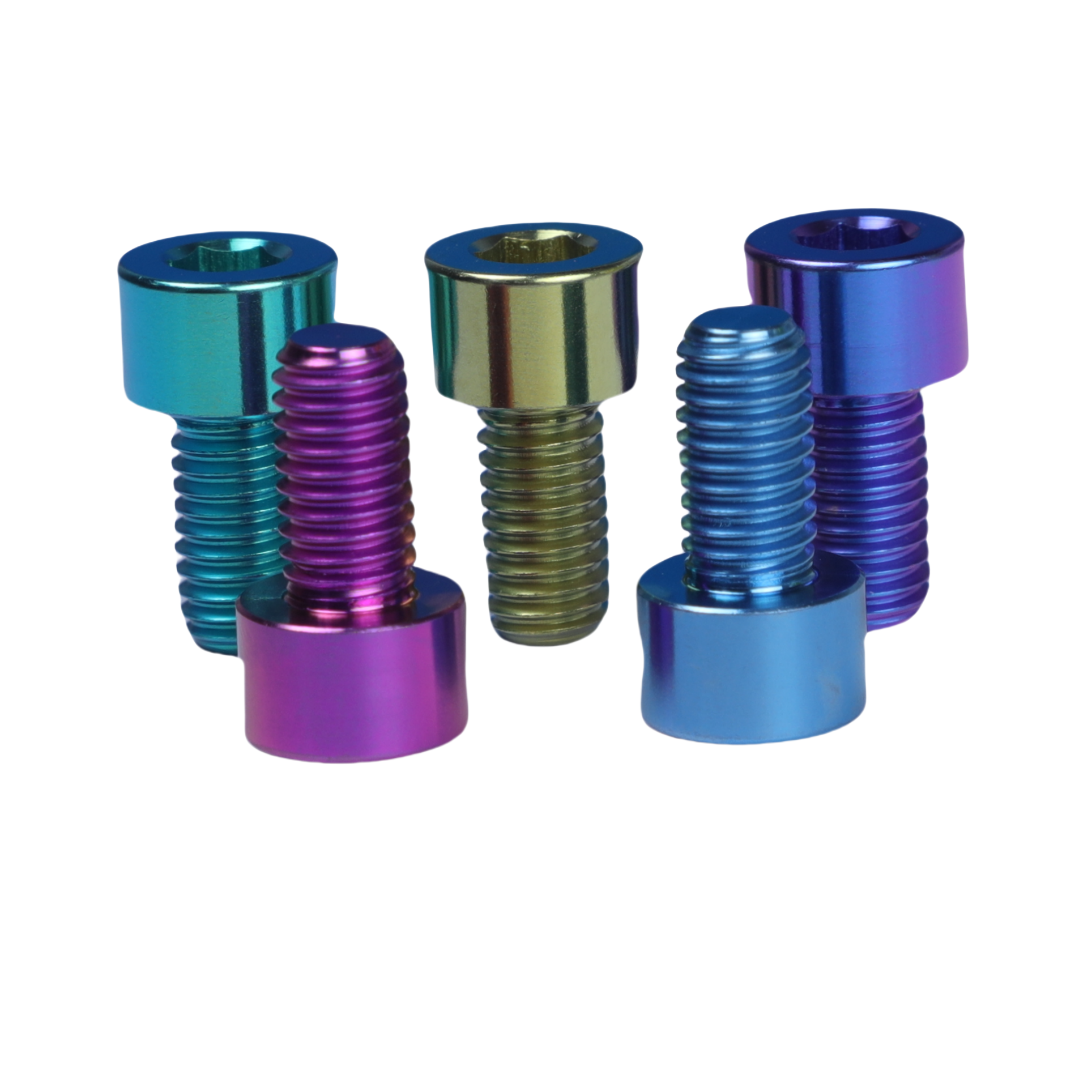
DIN912 GR5 Titanium Hexagon Socket Head Bolts
Explore Specifications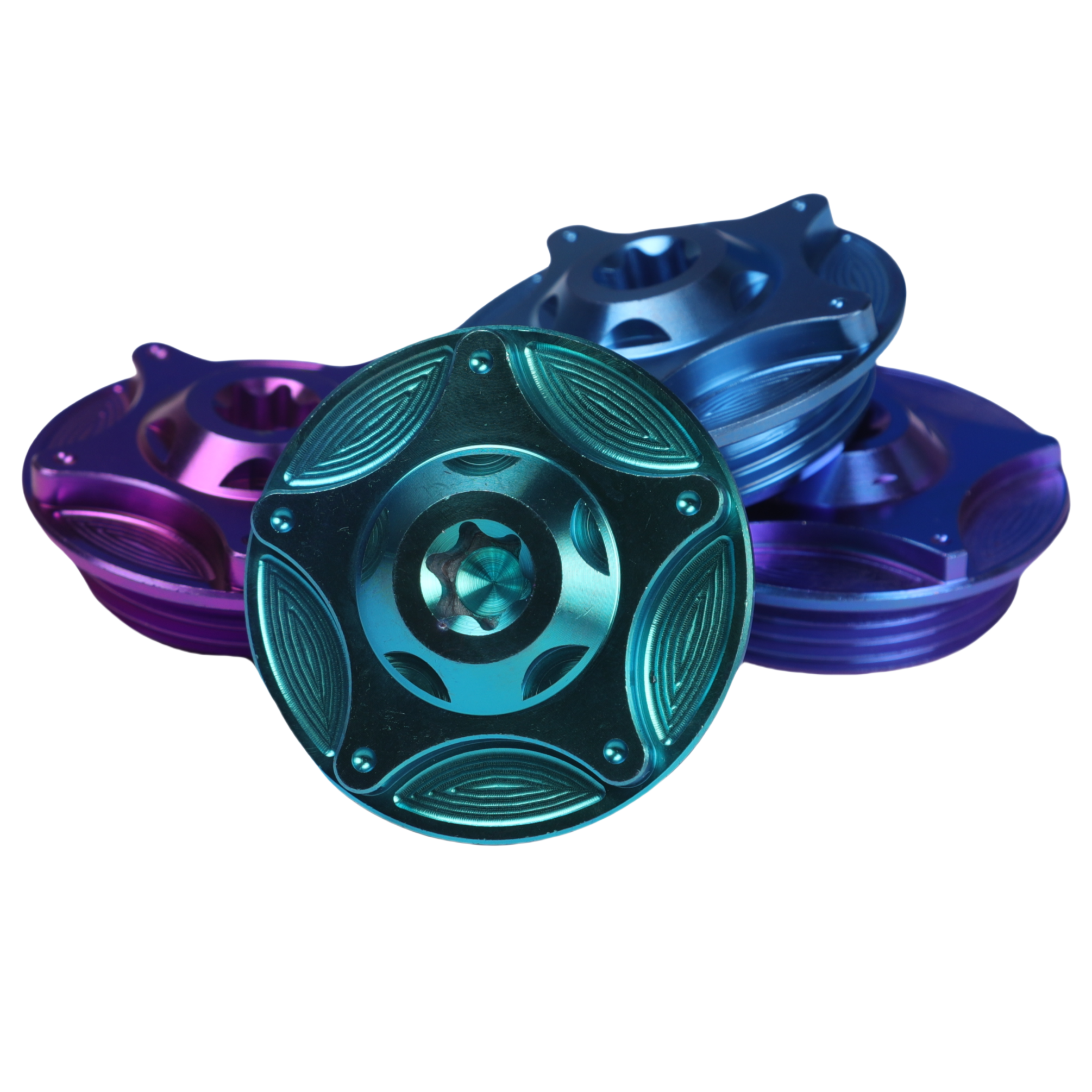
M31 Super Light Anti-Skid Motorcycle Oil Cap
Explore Specifications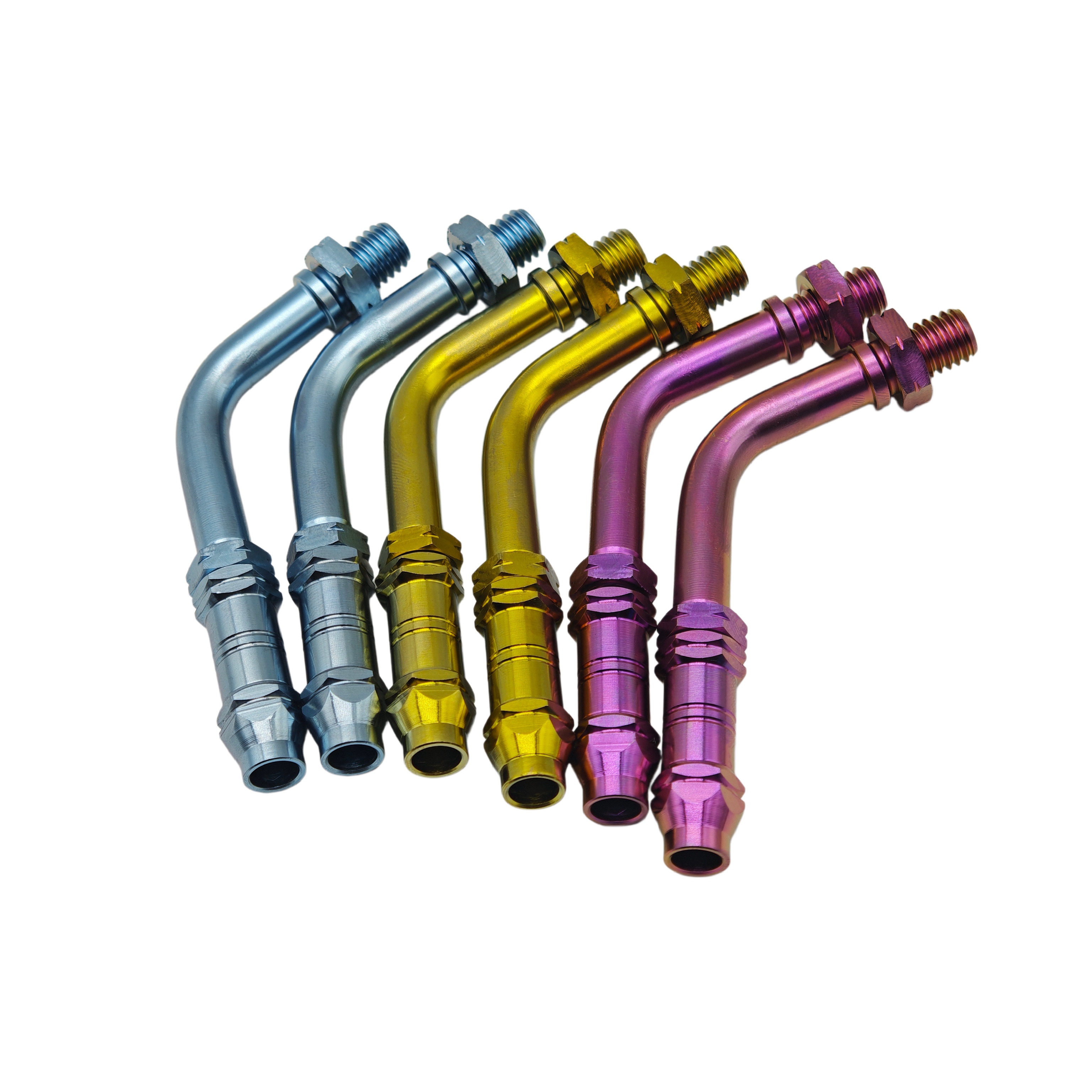
M10 CNC 90° Hex Flange Throttle & Brake Adjuster
Explore Specifications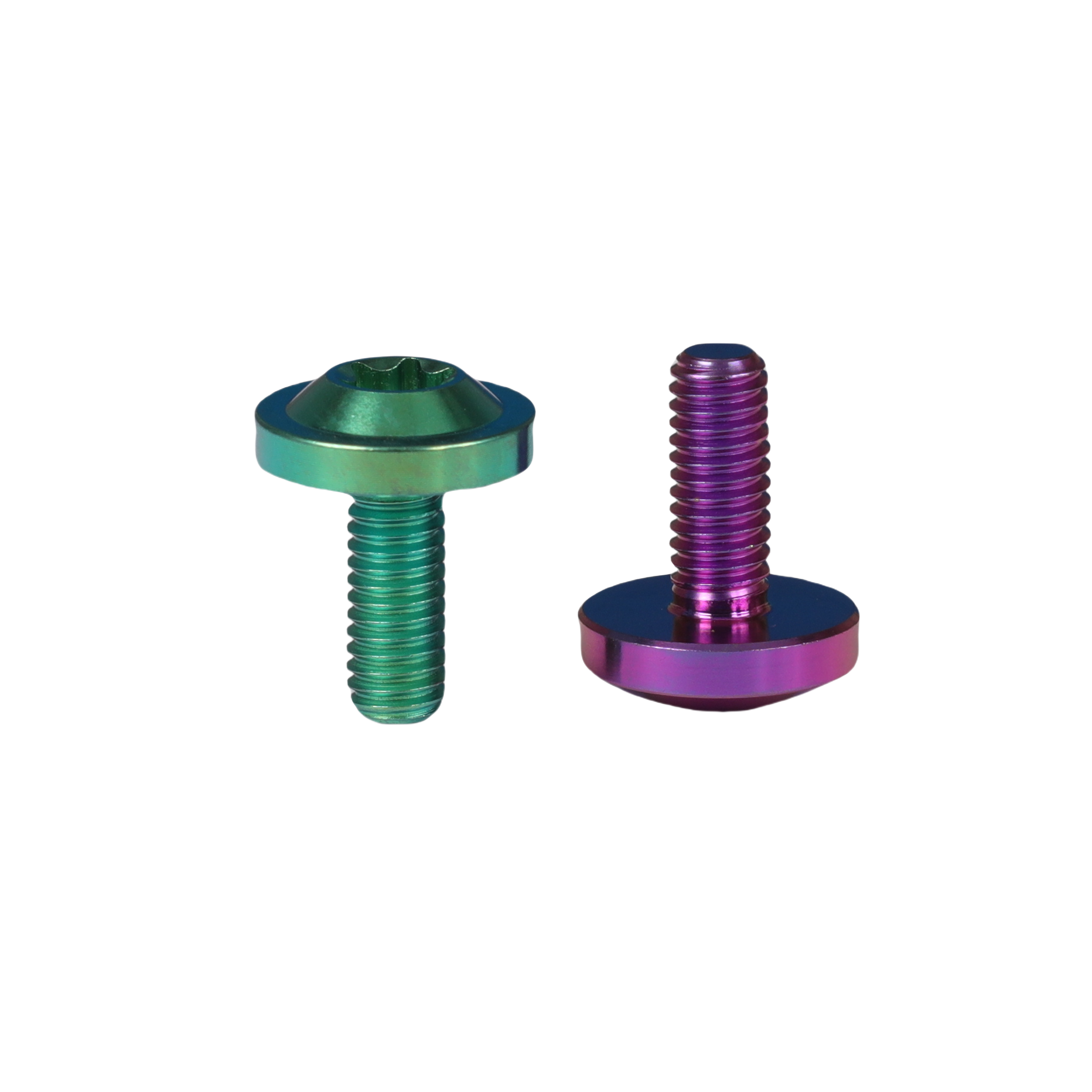
Class 6 M6×15 GR5 Titanium Pan Head Screw
Explore Specifications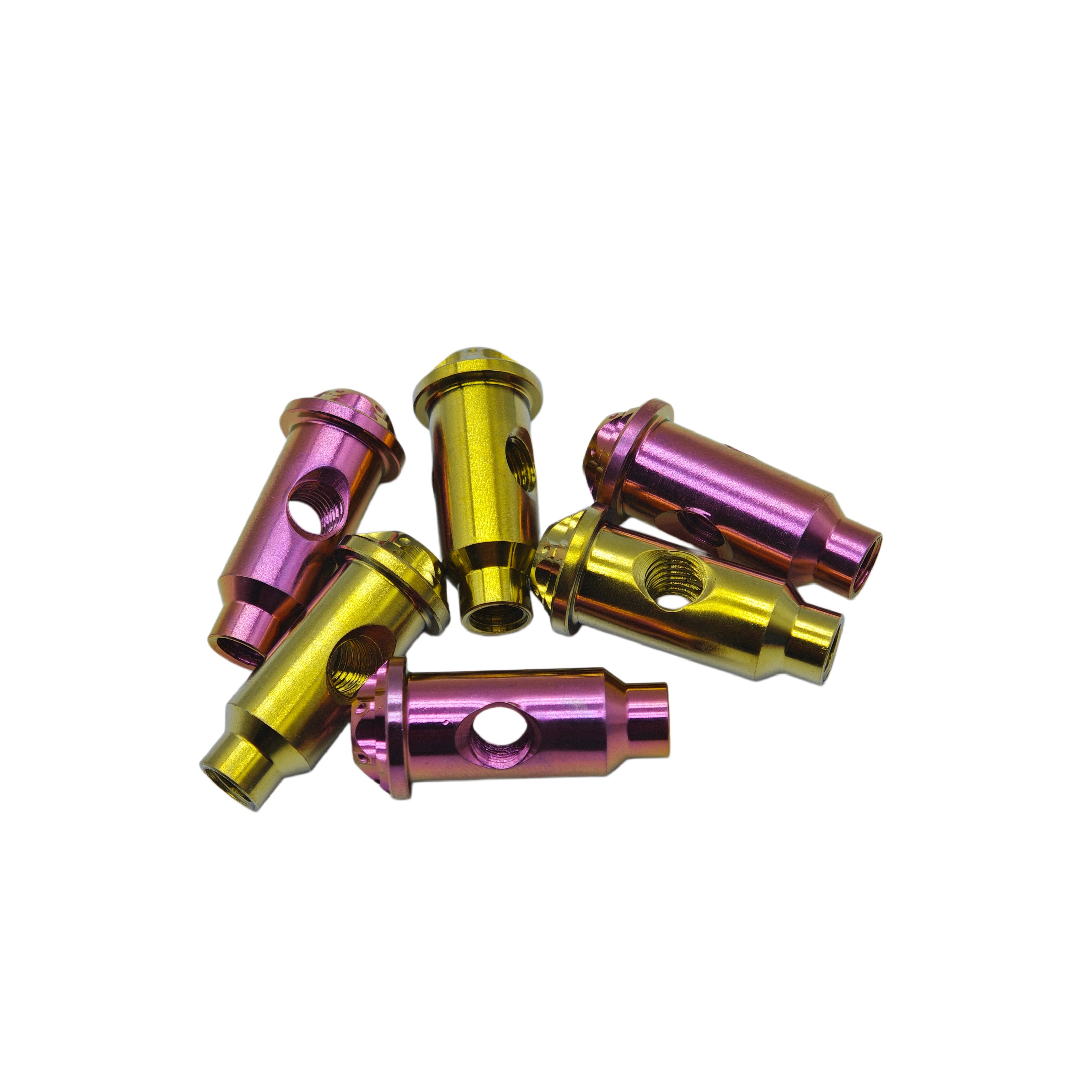
Gr5 Titanium Cross Dowel Nuts & Knobs Bolt
Explore Specifications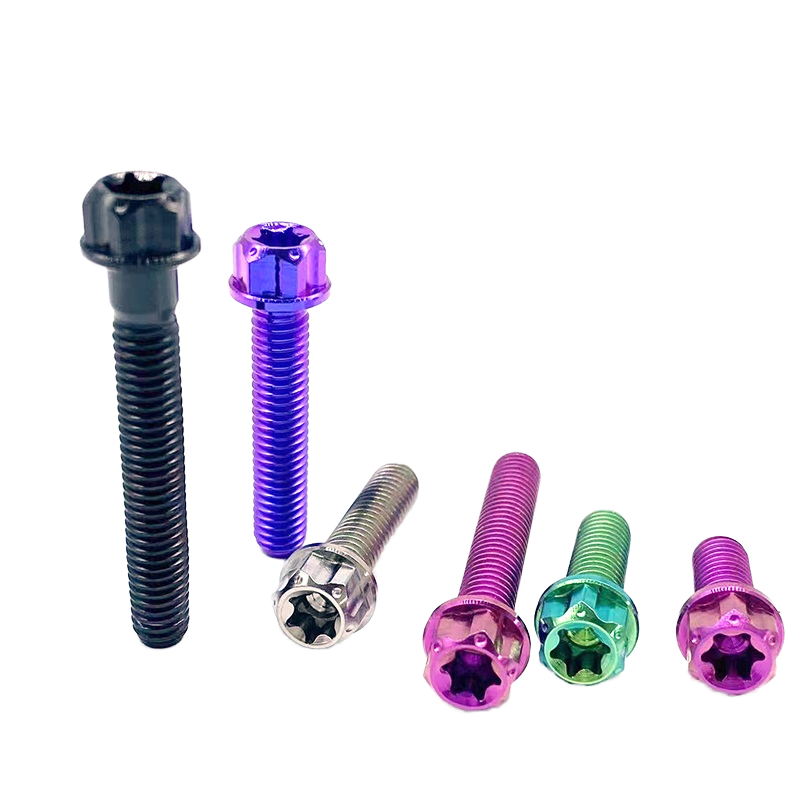
GR5 Titanium Alloy M8 & M10 Flange Bolts
Explore Specifications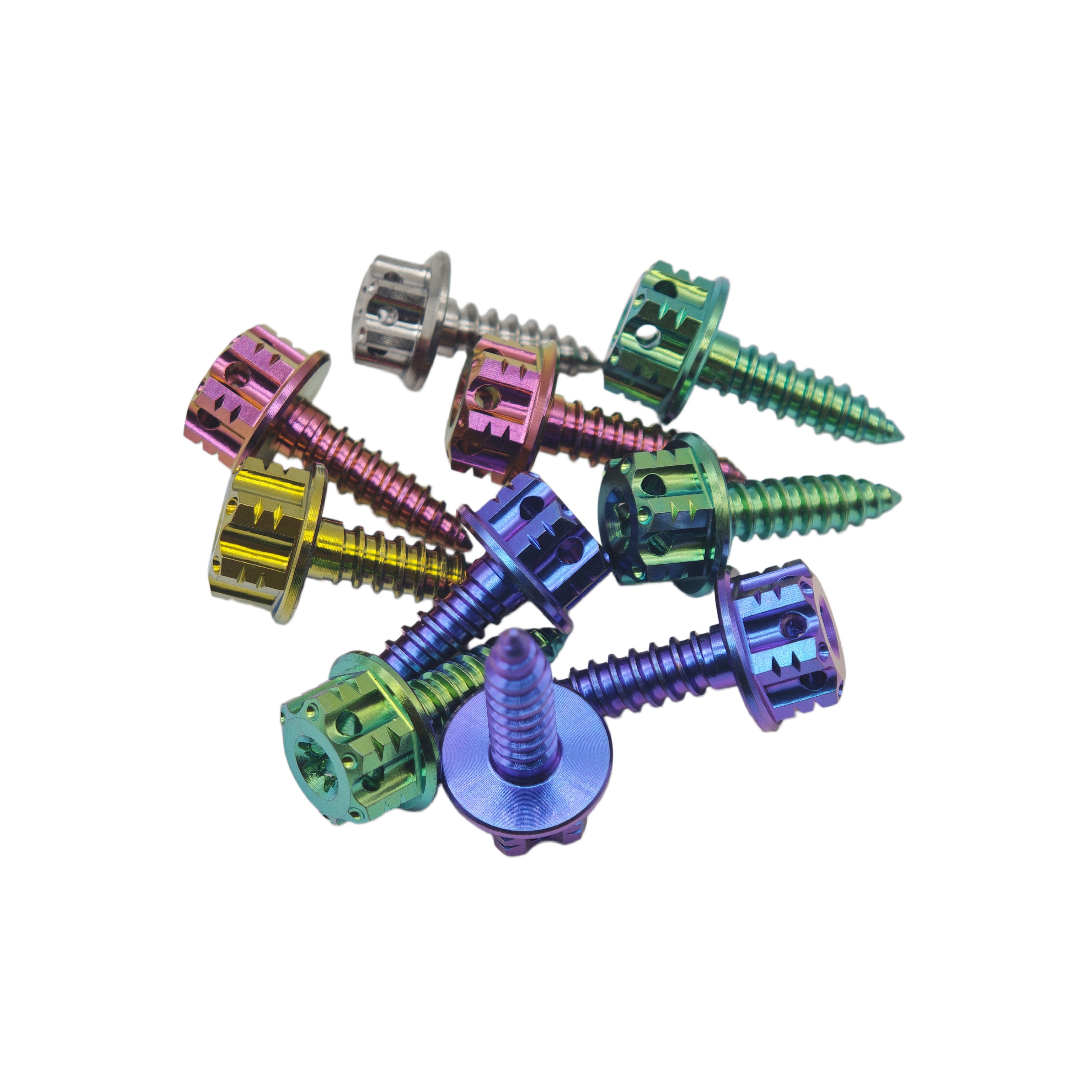
Metric M5×15 Grade 5 Titanium Flange Screws
Explore SpecificationsOptimizing Unsprung Mass & Thermal Dissipation on Brake Rotors
A rigorous examination of material selection, shear fatigue resistance, and thermo-mechanical characteristics in precision two-wheeled disc brake assemblies.
Reduction of Unsprung Gyroscopic Mass
Motorcycle brake disc bolts represent critical unsprung rotating mass. By replacing OEM carbon steel fasteners (7.85 g/cm³) with Ti-6Al-4V Grade 5 titanium (4.43 g/cm³), unsprung peripheral weight drops by 43.6%. In rapid directional transitions—such as those encountered on technical racing courses or demanding Korean mountainous roads—lower moment of inertia significantly decreases gyroscopic precession resistance, delivering sharper front-wheel tracking, reduced fork rebound oscillation, and superior steering agility.
43.6% Rotational Weight ReductionThermal Barrier & Brake Fluid Protection
Under repeated deceleration from speeds exceeding 160 km/h, brake rotor temperatures routinely exceed 450°C. Titanium exhibits a thermal conductivity of approximately 6.7 W/m·K—drastically lower than standard alloy steel (45–50 W/m·K) and aluminum alloys (130–200 W/m·K). This low thermal conduction serves as a physical thermal choke between the glowing rotor friction ring and the forged aluminum wheel hub, preventing dangerous heat soaking into wheel bearings and minimizing brake caliper fluid boil.
λ ≈ 6.7 W/m·K Heat ChokeContinuous Grain Thread-Rolling Technology
Unlike conventional fasteners produced by CNC turning where cutting tools sever the crystalline metal grain lines, Zunvo brake rotor bolts undergo cold and warm thread-rolling processes. This plastic deformation technique forces the titanium alpha-beta grains to flow uninterruptedly along the crests and roots of the threads. Root burnishing imparts compressive residual surface stresses, increasing shear fatigue limits under heavy cyclic braking loads by more than 35% compared to thread-cut equivalents.
Fatigue Life Extended > 35%| Mechanical & Thermal Property | Ti-6Al-4V Grade 5 (Zunvo) | 10.9 Grade Carbon Steel | A2-70 Stainless Steel | 7075-T6 Billet Aluminum |
|---|---|---|---|---|
| Density (g/cm³) | 4.43 (Optimized) | 7.85 (Heavy) | 7.93 (Heavy) | 2.81 (Extremely Light) |
| Ultimate Tensile Strength (MPa) | 950 – 1,050 | 1,040 | 700 | 570 (Insufficient for Brake Disc) |
| Yield Strength (MPa) | ≥ 895 | 940 | 450 | 505 |
| Thermal Conductivity (W/m·K) | 6.7 (Thermal Choke) | 46.5 (High Conduction) | 16.3 (Moderate) | 130 (Excessive Heat Soak) |
| Fatigue Strength Limit (10⁷ cycles) | 510 MPa | 420 MPa | 280 MPa | 160 MPa (High Risk of Shear) |
| Corrosion in Chloride / Salt Solution | Complete Immunity (Passivated Oxide) | Severe Oxidation / Rusting | Pitting & Crevice Susceptibility | Exfoliation / Galvanic Decay |
Engineering Application Scenarios Across the Daejeon Region
Serving R&D institutions in Daedeok Innopolis, the Yuseong tuning district, and regional performance racing teams throughout Chungcheongnam-do.
Daedeok Innopolis EV & Robotics R&D Labs
Daejeon functions as South Korea’s science and technology epicenter. Research institutes and spin-offs within Daedeok Innopolis, along with engineering groups connected to KAIST (Korea Advanced Institute of Science and Technology), are pioneering high-torque electric two-wheel platforms and autonomous courier units. Our custom-machined Grade 5 titanium rotor bolts and flanged axle fasteners provide the exact micro-tolerance precision (DIN and ISO 6g class) and non-magnetic insulation necessary to eliminate interference with sensitive wheel-speed sensors and autonomous LiDAR calibration arrays.
Circuit Enthusiasts & Mountain Pass Dyno Tuning
Daejeon serves as a central staging geographic crossroads for circuit racers heading to Inje Speedium, Korea International Circuit (KIC Yeongam), and local technical winding tracks along Mount Gyeryong and Geumsan passways. Precision workshops in Yuseong-gu and Jung-gu upgrade superbikes (Yamaha YZF-R1, BMW S1000RR, Ducati Panigale V4) with Zunvo M8×24 and M10 low-profile Torx disc bolts. The bolts resist extreme thermal deformation during successive high-speed threshold braking maneuvers, eliminating disc-binding issues caused by thermal expansion differences between steel and alloy hub components.
Sub-Zero Winter Road De-Icer Resistance
Winters in Daejeon involve extensive municipal distribution of liquid and granular calcium chloride (CaCl₂) and rock salts across major arterial avenues, hilly junctions, and overpasses. While standard plated OEM steel rotor bolts develop catastrophic pitting, galvanic bonding, and rust within a single season, Grade 5 titanium forms an instantaneous, self-healing stoichiometric Titanium Dioxide (TiO₂) passive barrier. Our fasteners demonstrate zero structural decay, zero cosmetic oxidation, and zero seize risks, maintaining thread integrity throughout severe winter cycles.
Emerging Technical Trends in Daejeon's Two-Wheeler Fastener Market
A strategic overview of industrial transitions, regulatory developments, and product design shifts steering hardware specifications in central South Korea.
Shift to Low-Profile Torx T30/T40 Drive Systems
Across Korean superbike customization hubs, traditional internal hex (Allen) sockets are being phased out in favor of precision Torx (6-Lobe) geometries. Torx heads distribute driving torque across a wider mechanical contact perimeter, effectively preventing cam-out and stripped sockets during repetitive rotor changes and precision safety-wire torquing routines.
High-Voltage Electrification Demands
With Daejeon's municipal smart-city mandates accelerating electric scooter fleets, high-torque regenerative braking systems introduce frequent multi-directional shear oscillations. Fleet operators are turning to high-tensile Gr5 titanium fasteners to prevent fatigue shear failure without increasing unsprung hub weight.
PVD Physical Vapor Deposition Custom Finishes
Anodized coatings can exhibit color shifting under extreme thermal exposure (>300°C) near brake pads. The Korean market is increasingly adopting PVD-coated finishes—such as Diamond-Like Carbon (DLC) black, spectrum burnt rainbow, and titanium nitride (TiN) gold—which deliver hardness exceeding 2,000 Vickers with thermal resilience past 500°C.
Strict Metallurgical Certification & Provenance
Research engineers and racing technicians in Daejeon now systematically require Mill Test Certificates (MTC) conforming to EN 10204 3.1. General commercial titanium fasteners lacking raw material provenance are rejected in favor of verified aerospace-grade Ti-6Al-4V with full chemical and mechanical traceability back to certified ingot smelters.
Direct Manufacturing Authority from China's Titanium Valley
Headquartered in Baoji, Shaanxi, Zunvo Titanium Products Co., Ltd. delivers direct factory transparency, certified metallurgical purity, and customized OEM supply lines to clients in Daejeon.
Baoji Titanium Smelting Cluster Sourcing
Positioned directly adjacent to China's primary aerospace titanium mills, we source 100% prime virgin Ti-6Al-4V bar stock. Every single production batch is verified by atomic emission spectrometry and ultrasonic inspection to guarantee zero void inclusions, maintaining a minimum tensile strength of 895 MPa and consistent yield dynamics.
Multi-Axis CNC & Cold/Warm Heading Fleet
Our workshop houses high-precision CNC multi-axis turning centers, multi-station automatic warm headers, and specialized thread-rolling lines. We maintain dimensional machining tolerances down to ±0.005 mm, ensuring that flange diameters, shoulder clearances, and thread pitches seat into OEM or custom brake hubs with zero lateral runout.
Streamlined Export & Logistics to Daejeon
We maintain an optimized direct logistics corridor into South Korea. In-stock catalog orders dispatch within 24 hours, flying via dedicated air express lines into Incheon International Airport and clearing through bonded customs directly to Daejeon within 48 to 72 hours, backed by complete commercial documentation and dual-language packing manifests.
Full OEM/ODM Prototyping in 3 Days
Have an irregular hub offset, custom rotor thickness, or proprietary floating disc bobbin requirement? Send us your CAD 2D/3D drawing or physical sample. Our engineering staff completes design-for-manufacturing (DFM) reviews within 24 hours and delivers verified CNC prototypes in as few as 3 business days.
Rigorous 100% Comprehensive Quality Control
Every single brake rotor bolt undergoes rigorous Go/No-Go mechanical thread plug gauging, coordinate measuring machine (CMM) shank verification, and surface micro-crack inspection under optical amplification. We ensure 100% reliability because critical brake components cannot allow a single margin of error.
Flexible Commercial MOQs for B2B Importers
We empower independent tuning garages, track racing syndicates, and specialized development labs in Daejeon. While catalog fasteners feature accessible minimum order quantities starting from 100 dozens, custom-engineered blueprint productions begin at just 100 pieces for pilot batch testing and validation.
Procurement & Engineering FAQ for Daejeon Buyers
In-depth technical answers addressing installation parameters, material properties, customs processes, and commercial specifications for South Korean clients.
What is the correct torque specification for Grade 5 titanium disc rotor bolts?
Grade 5 (Ti-6Al-4V) bolts exhibit yield strengths comparable to Class 10.9 steel. However, titanium has an elasticity modulus roughly half that of steel (110 GPa vs. 210 GPa) and a different frictional thread coefficient. Always use an anti-seize paste (copper, nickel, or molybdenum disulfide based) or a medium-strength anaerobic threadlocker (such as Loctite 243). Torque to approximately 85%–90% of the factory OEM steel specification—typically 20–22 Nm for standard M8 rotor bolts, unless otherwise specified by your hub engineer. Never assemble titanium into aluminum hubs dry, as friction can induce galling.
Can Gr5 titanium brake disc bolts cause galvanic corrosion when mated with aluminum hubs?
Under dry conditions, titanium and aluminum remain stable. However, when exposed to an electrolyte like Daejeon's winter road de-icers (calcium chloride and water), a galvanic potential difference exists between aluminum (anodic) and titanium (cathodic). Using our anti-seize paste or medium threadlocker provides an insulating chemical barrier, completely neutralizing galvanic ion exchange. Furthermore, titanium is chemically far more compatible with aluminum than standard carbon steel, which aggressively oxidizes and creates rust jacking.
What documentation accompanies bulk hardware shipments arriving in Daejeon?
Every commercial export consignment arriving via Incheon to Daejeon includes a comprehensive documentation pack: Mill Test Certificate (MTC) conforming to EN 10204 3.1 certifying chemical composition (Ti, Al, V, Fe, C, N, H, O) and mechanical yield/tensile values; an optical measurement dimensional inspection report; an official Certificate of Origin (COO); and accurate commercial invoices/packing lists categorized under Harmonized System (HS) code 8108.90 for smooth Korean Customs Service (KCS) clearance.
How do Zunvo's rolled threads compare to ordinary CNC-turned threads?
Ordinary machine shops frequently turn titanium bolts entirely on a CNC lathe, cutting through the grain structure of the bar. Under the intense, cyclic shear and vibration of emergency motorcycle braking, stress micro-cracks propagate along severed grain roots. Zunvo utilizes high-tonnage cold and warm thread-rolling machines. This process burnishes the metal under compressive dies, preserving continuous material grain lines along the profile and creating high surface hardness that eliminates premature thread fatigue failure.
What is the standard turnaround time for custom blueprint orders shipped to South Korea?
For custom hardware engineered to client drawings, our technical department provides complete DFM feedback within 24 hours. Pre-production validation prototypes are machined, thread-rolled, and shipped via air express in 3 business days. Following client approval, mass manufacturing typically requires 7 to 15 business days depending on volume and surface treatment (PVD, anodizing, or micro-polishing). Air transit into Daejeon requires only 2 to 3 days door-to-door.
Are custom branded laser markings and private label packaging available?
Yes. We provide comprehensive OEM private labeling for performance brands, distributor networks, and race teams in Daejeon. Our high-precision fiber laser etching systems can apply your company logo, proprietary thread size, batch tracking serial, or custom torque specs directly onto the fastener flange face. We also supply customized blister packaging, retail boxes, or labeled anti-static bags ready for local commercial retail.
Accelerate Your Motorcycle Engineering with Titanium Authority
Whether you require standard DIN912/flange rotor bolts for racing fleets or custom CNC-machined titanium fasteners for innovative EV platforms in Daejeon, Zunvo’s engineers provide rapid metallurgical review, certified quality, and factory-direct pricing.
