High-Precision Titanium Fasteners for the Osaka Market
Every component is precision-forged and CNC-turned from certified Grade 5 (Ti-6Al-4V) bar stock to achieve an exceptional strength-to-weight ratio, extreme fatigue resistance, and zero oxidation under Kansai coastal conditions.
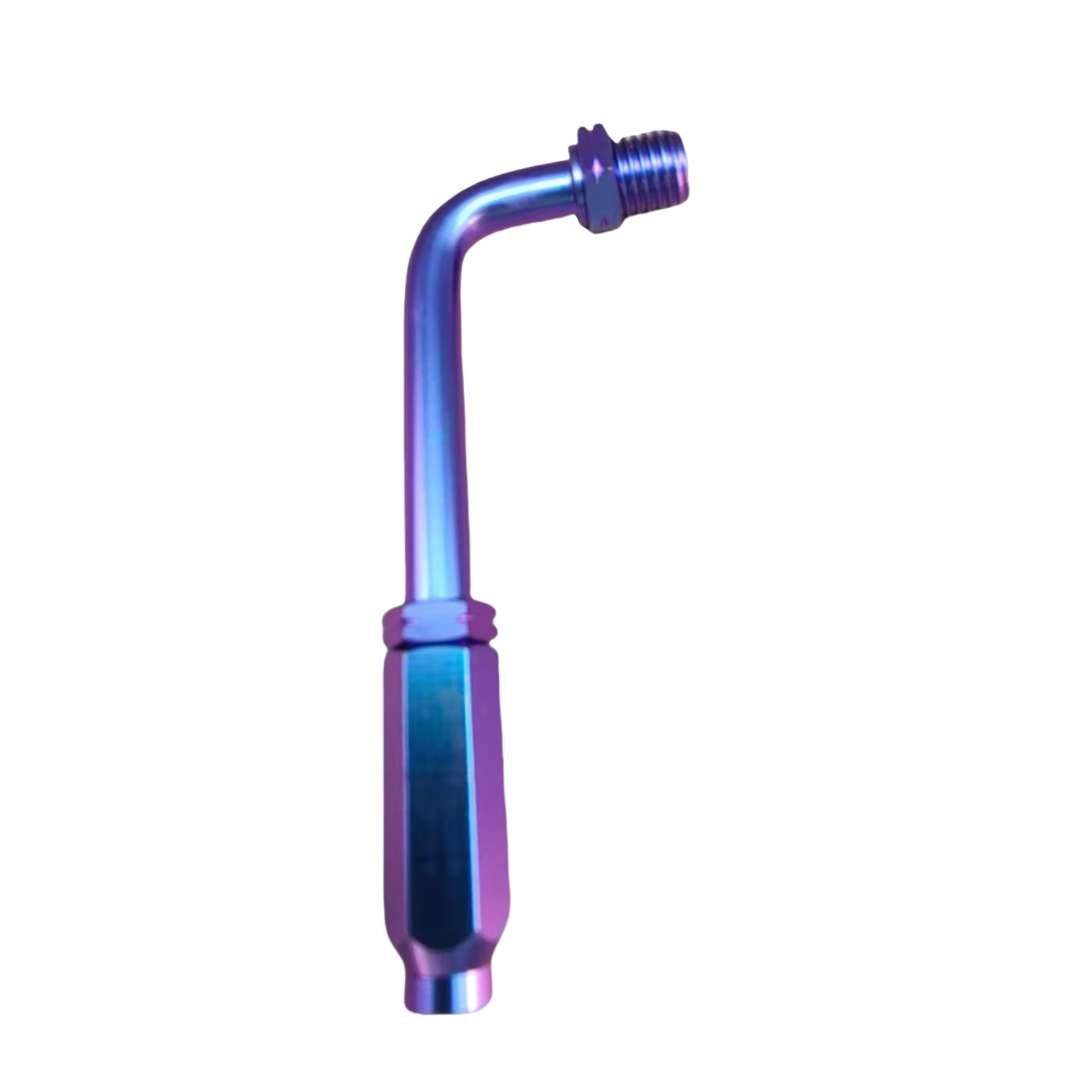
Custom CNC Gr5 Flat Head Titanium Alloy Throttle Line Fittings
Ultra-lightweight Ti-6Al-4V cable adjustment hardware with multi-color PVD treatment for high-precision throttle feel on race-tuned superbikes.
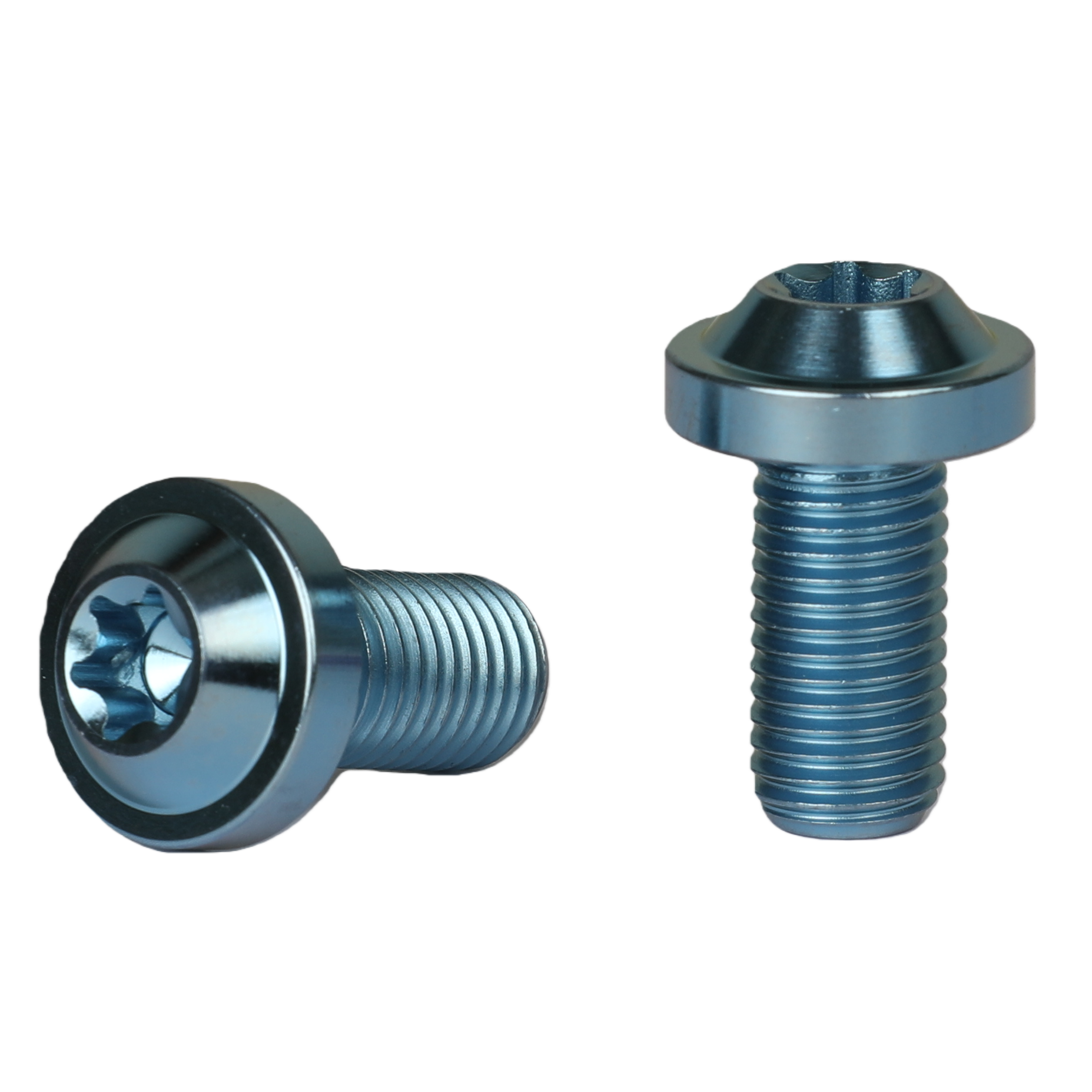
GRX Grade 5 Titanium Pan Head Brake Disc Screws M6/M8/M10
High-shear DIN standard thread-rolled rotor bolts designed to resist thermal cyclic loosening during aggressive braking at Suzuka and Central Circuit.
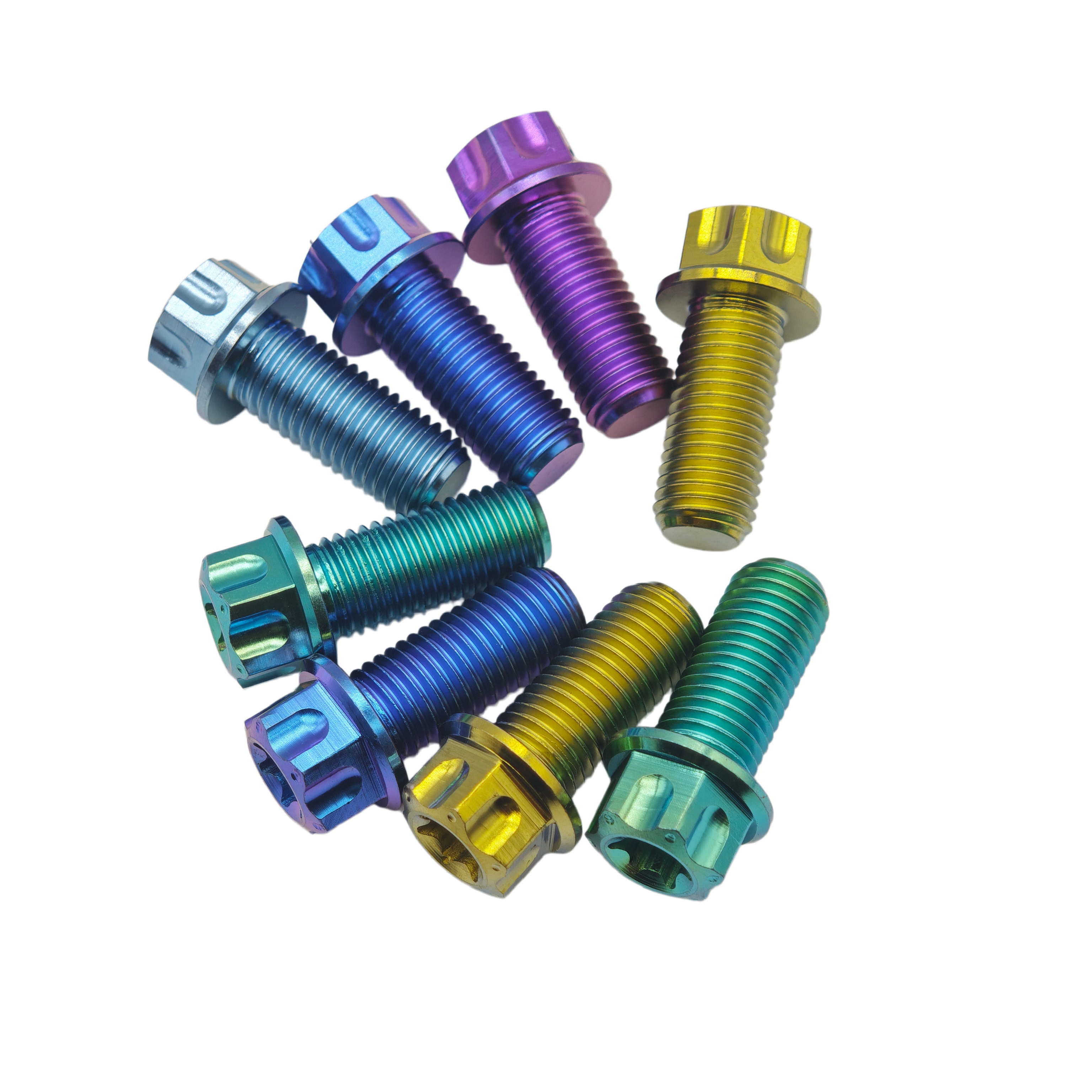
Anodized GR5 Titanium Hex Flange Head Bolts M8/M10 UNF Thread
Precision-flanged chassis and engine mounting fasteners offering 44% weight reduction against factory chromoly hardware without loss of clamping yield.
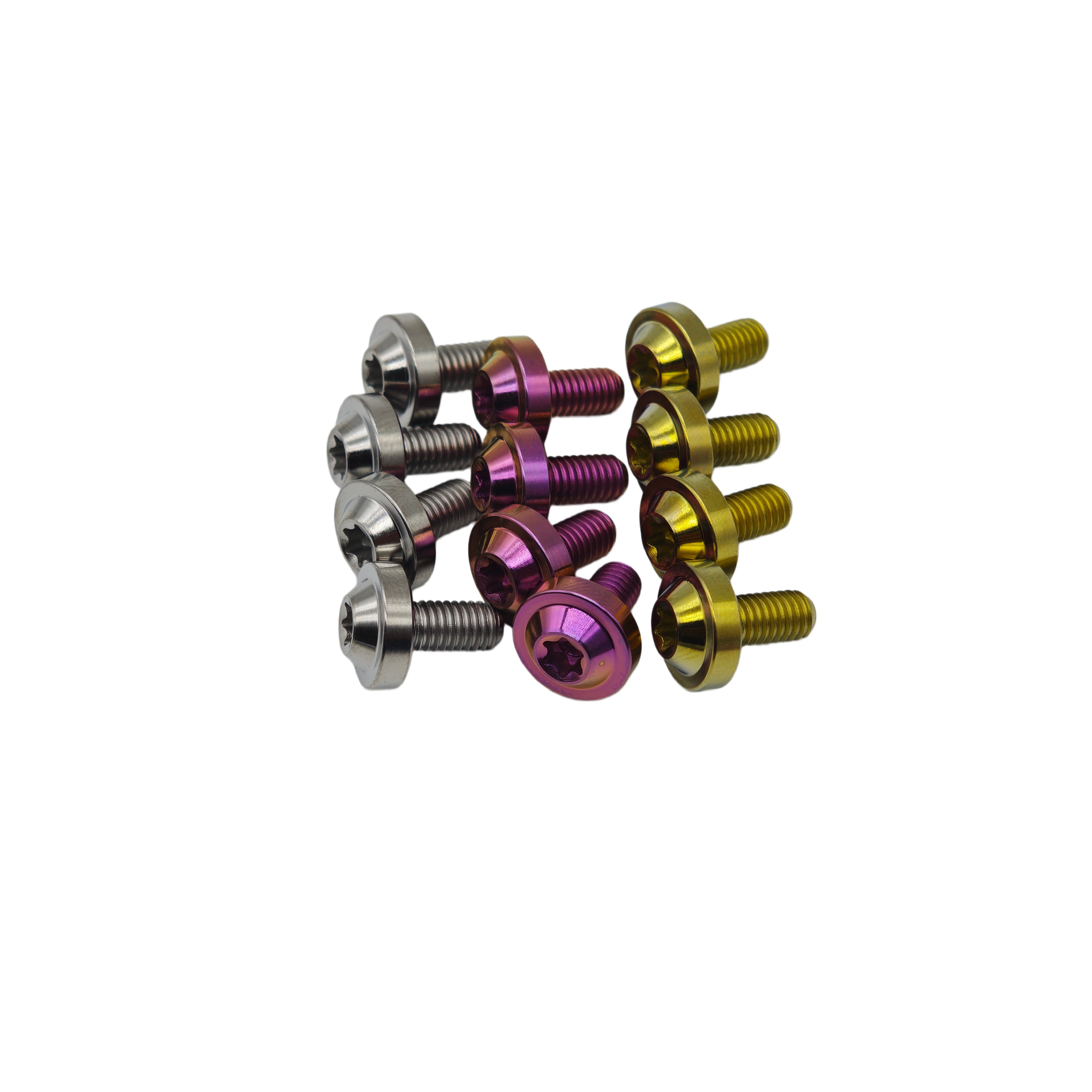
Custom GR5 Titanium M8 Disc Head Bolts Plain Finish
Ultra-flat aerodynamic profile fasteners engineered for seamless cowl integration, hub assemblies, and vibration-dampened motorcycle panel attachments.
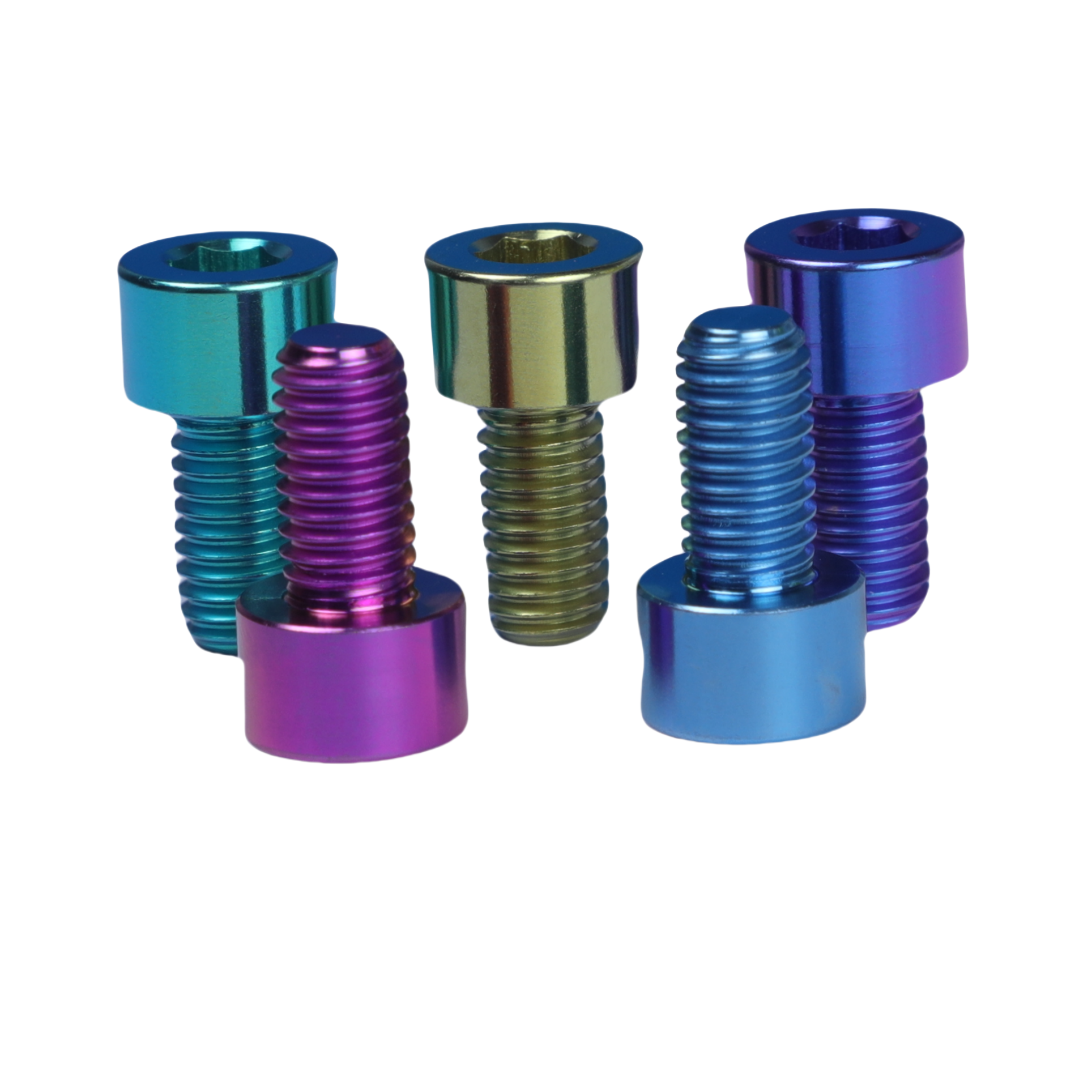
DIN912 GR5 Titanium Alloy Hexagon Socket Head Bolts
High-tensile (≥895 MPa) standardized internal hex socket bolts serving custom frame builders and industrial machinery fabricators in Osaka's machining districts.
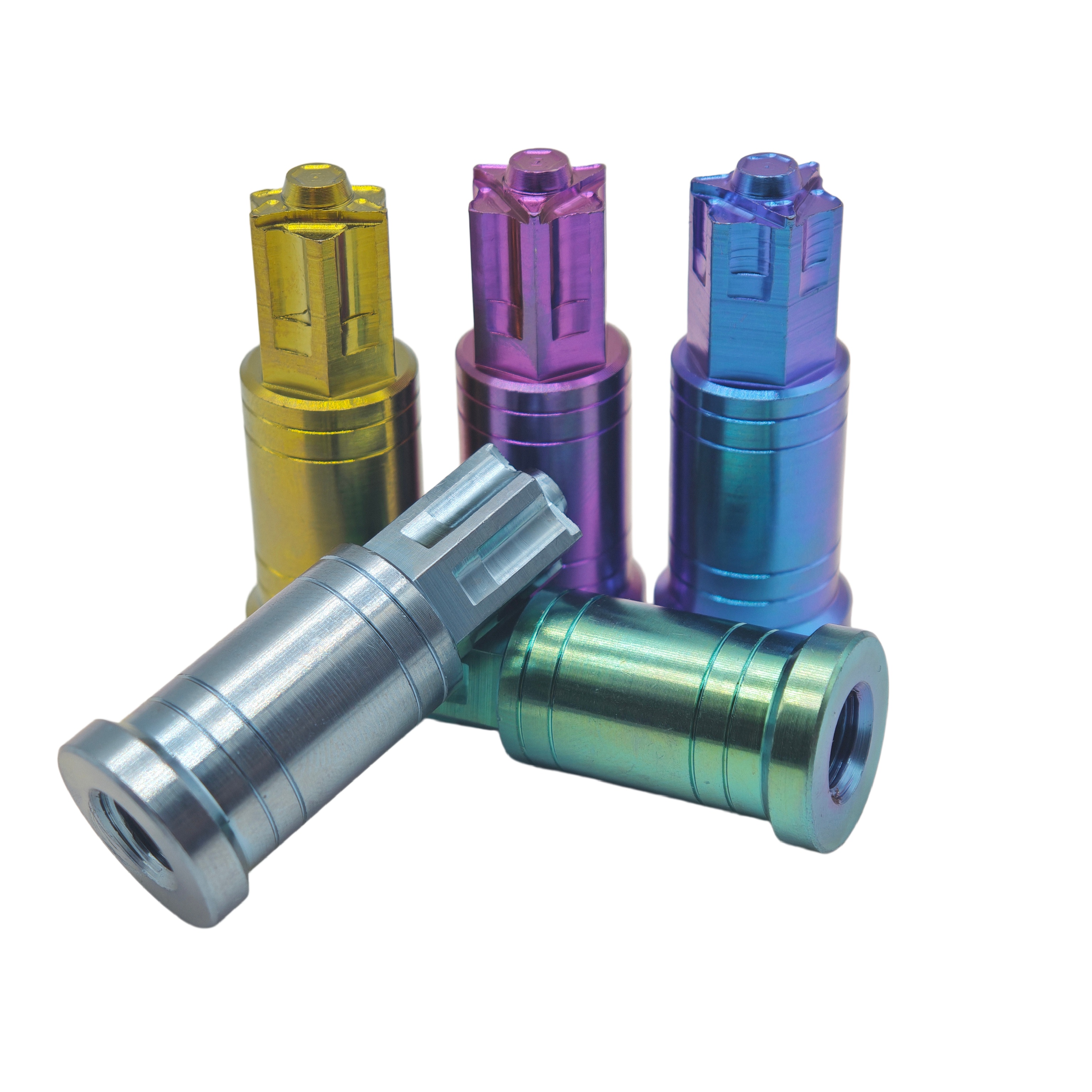
GR5 Titanium Spline Drive Flange Sleeve Nuts Anodized / Plain
High-torque tamper-resistant sleeve nuts designed for motorsport wheel hubs, drive sprockets, and heavy-duty automotive subframe applications.
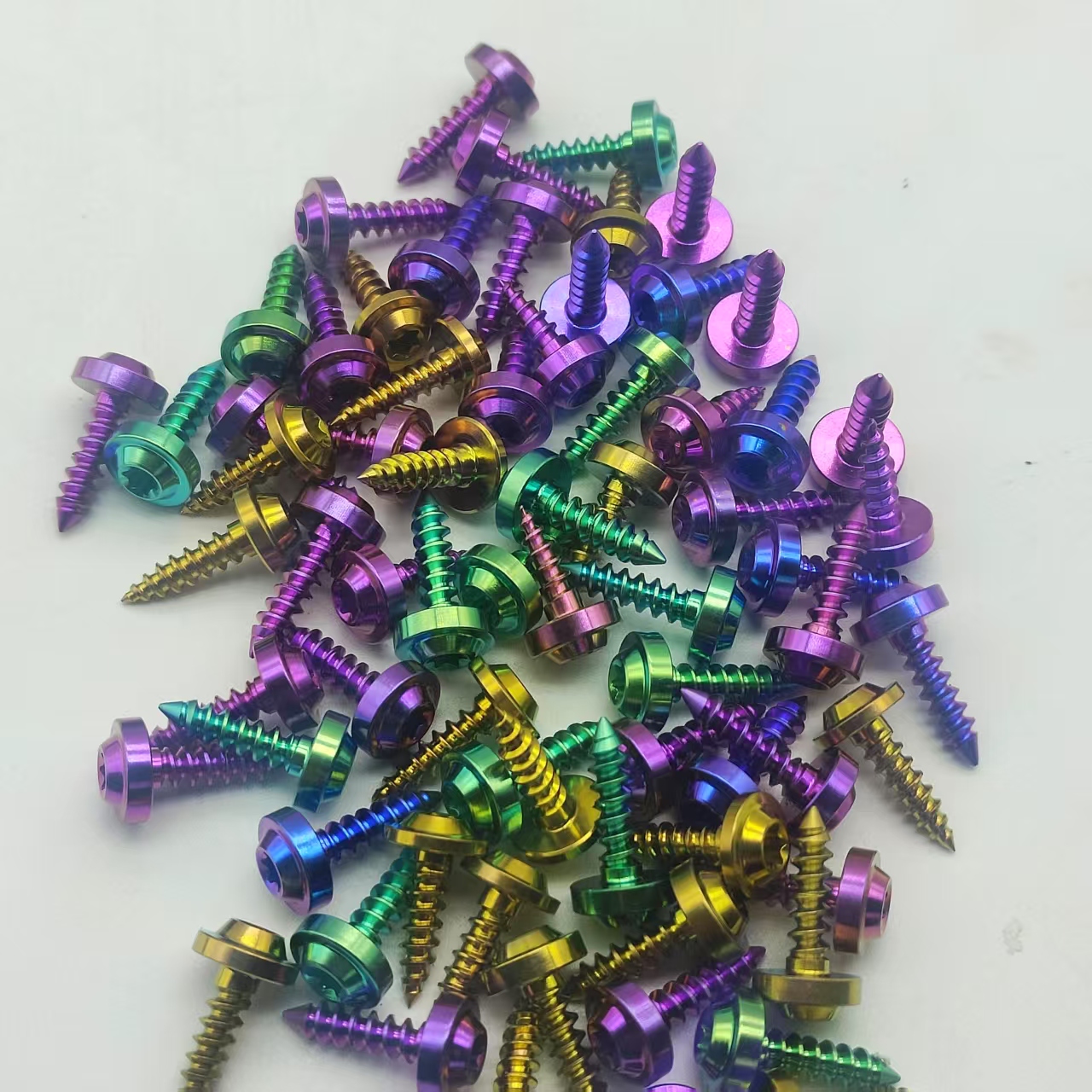
High-Strength M4–M5 Titanium Alloy Torx Self-Tapping Screws
Engineered for direct fastening into ABS/carbon body cowls, eliminating cam-out risks with precision Torx T20/T25 sockets and integrated washer heads.
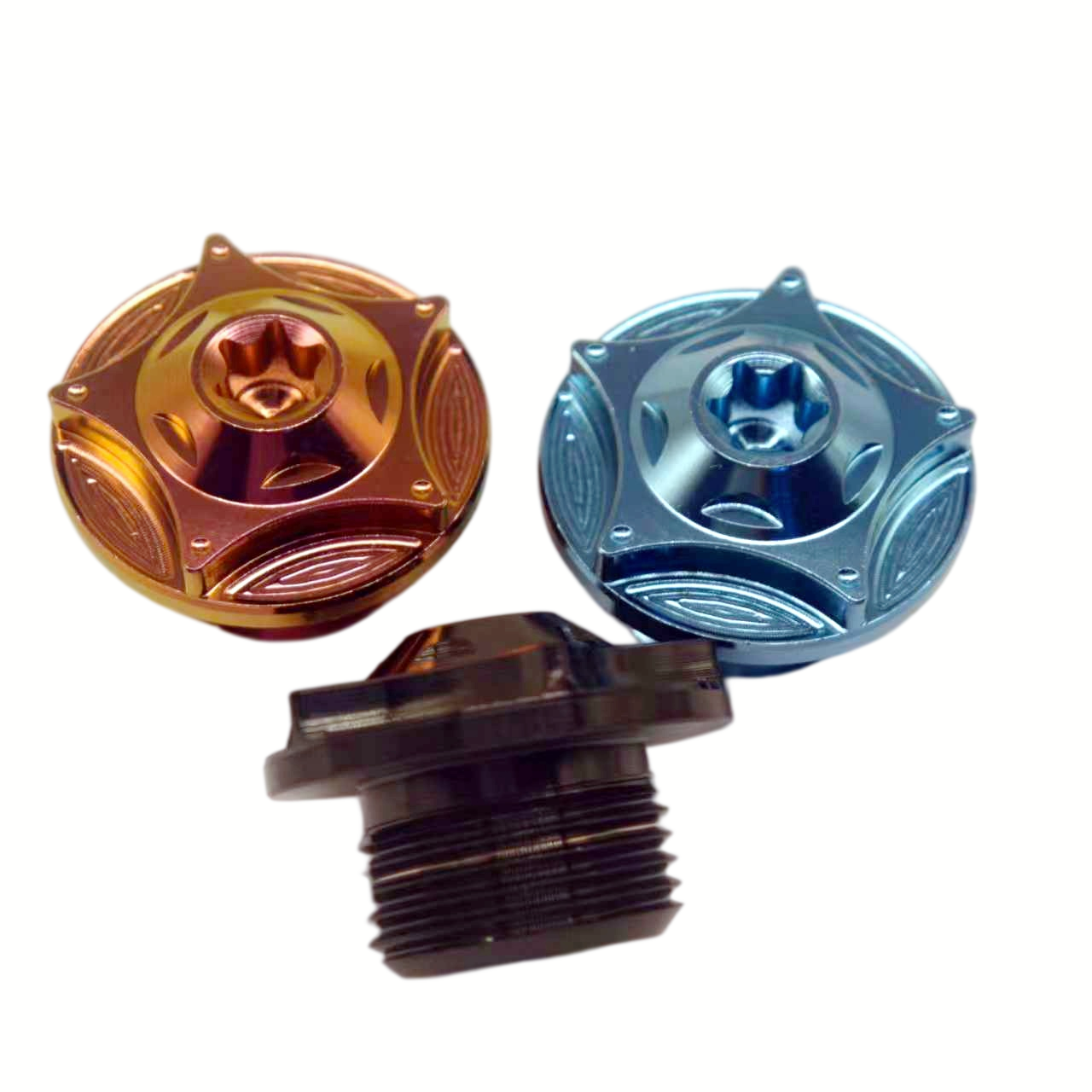
Motorcycle Engine Parts M14 Titanium Gr5 Oil Drain Plugs
CNC-machined Grade 5 magnetic sump plugs providing galvanic isolation, safety wiring retention holes, and leak-proof crush sealing for racing crankcases.
Why Ti-6Al-4V Grade 5 Outperforms Conventional Fasteners in Kansai
In high-stress motorcycle and automotive environments, hardware failure typically stems from fatigue propagation, electrolytic galvanic action, or thermal expansion mismatch. Here is how our engineered titanium solves critical assembly challenges.
Un-sprung Mass & Resonant Frequency Dampening
Un-sprung mass directly dictates suspension reaction velocity and chassis responsiveness. By replacing steel fairing brackets, subframe bolts, and unsprung brake rotor hardware with Grade 5 Titanium (density 4.43 g/cm³ vs. steel's 7.85 g/cm³), racing setups reduce rotational inertia and damp high-frequency engine harmonics across 10,000+ RPM sweeps on Japanese circuits.
- Eliminates cyclic fastener backing-out on rigid race cowlings
- Low modulus of elasticity (~114 GPa) absorbs shock loading better than chromoly
- Drastically improves directional change response in quick chicanes
Osaka Bay Coastal Air & Chloride Attack Immunity
Osaka’s coastal topography exposes vehicles along the Hanshin Expressway and coastal arterial routes to persistent saline sea mists combined with industrial sulfurous air. Unlike zinc-plated alloy steel or cheap 304 stainless which suffers from pitting corrosion and stress corrosion cracking (SCC), Ti-6Al-4V instantly develops an inert, self-healing titanium dioxide (TiO₂) passivation layer.
- Immune to salt fog, chloride de-icers, and acidic rainfall
- Zero thread seizure or red rust staining on carbon fairing surfaces
- Superior surface stability for longevity under wet coastal storage
Thermal Stability & Galling Prevention Engineering
Exhaust collectors, turbocharger casings, and cylinder head fairing mounts experience cyclic spikes up to 400°C. Our titanium fasteners maintain structural yield strength at temperatures where 7075-T6 aluminum bolts fail. To prevent galling under repetitive servicing by Kansai technicians, all threads are rolled—not cut—and can be paired with physical vapor deposition (PVD) anti-friction coatings.
- 6g/6H precision rolled thread profile minimizes stress concentrations
- Micro-smooth root radius prevents micro-fracture inception
- Controlled anti-friction coatings lower thread friction coefficient to μ ≈ 0.12
Mechanical Comparison: Ti-6Al-4V vs. Industry Standards
Quantitative property metrics assisting Osaka mechanical engineers and procurement teams in sizing fasteners for critical structural, aerodynamic, and high-vibration assemblies.
| Property Parameter | Gr5 Ti-6Al-4V Titanium | JIS SUS304 Stainless | SCM435 Class 10.9 Steel | A7075-T6 Duralumin |
|---|---|---|---|---|
| Density (ρ) (g/cm³) | 4.43 | 7.93 | 7.85 | 2.81 |
| Tensile Strength (Rm) (MPa) | ≥ 895 – 1,000 | ≥ 700 | ≥ 1,040 | ≥ 570 |
| Yield Strength (Rp0.2) (MPa) | ≥ 828 | ≥ 450 | ≥ 940 | ≥ 505 |
| Strength-to-Weight Ratio (kN·m/kg) | 202 – 226 (Superior) | 88 (Low) | 132 (Moderate) | 203 (High) |
| Modulus of Elasticity (GPa) | 114 | 193 | 205 | 71 |
| Salt-Fog Corrosion Resistance | Total Immunity (No pitting) | Susceptible to crevice pitting | Rapid oxidation if unplated | Prone to white galvanic bloom |
| Safe Max Continuous Temp | 400°C | 350°C | 250°C | 120°C |
Engineered for Kansai's High-Demand Motorcycle Scenarios
From competitive circuit engineering in the greater Kansai perimeter to urban custom builders in Osaka city and high-frequency expressway cruising, our titanium fairing bolts solve localized pain points.
Suzuka & Central Circuit Track-Day Fabricators
Kansai circuit racers operate under severe cyclic shear loads where fairing cowls and aero winglets flex at speeds above 280 km/h. Our flanged M5 and M6 Torx fairing bolts disperse high dynamic loads across larger surface areas, preserving expensive dry-carbon body panels while maintaining mandatory safety torque specifications without loosening under thermal buffeting.
- Pre-drilled safety wire heads available for MFJ racing compliance
- Low-profile aerodynamic pan heads prevent aero turbulence
- No stress fractures around carbon cowl mounting holes
Urban Custom Workshops in Naniwa, Sakai & Higashiosaka
Higashiosaka is Japan's historic center of precision craftsmanship, where custom builders demand flawless machining aesthetics. Our CNC-machined titanium hardware offers mirror-polished surfaces, micro-laser branding, and voltage-controlled anodic colors (Burnt Rainbow, Deep Gold, Cobalt Blue) that withstand repeated disassembly by meticulous Japanese mechanics.
- Clean internal Torx broaching eliminates burrs and head slippage
- Rich anodic finishes integrated into bespoke custom motorcycle themes
- Custom thread pitch and shoulder lengths machined to drawing
Hanshin Loop Commuters & Osaka Coastal Marine Climate
Daily commuters traversing the Hanshin Expressway Route 1 Loop and coastal arterial roads around Osaka Port face continuous vibration combined with moist sea winds. Traditional fasteners corrode and seize inside alloy bosses. Our titanium fairing bolts, combined with anti-seize paste, provide permanent zero-corrosion serviceability for reliable bodywork maintenance.
- Zero cosmetic degradation or staining on exterior styling surfaces
- Permanent anti-rust longevity under all-weather outdoor parking
- Seamless replacement for aging OEM factory hardware kits
Emerging Procurement Trends Across Western Japan
The Japanese performance motorcycle market is undergoing structural changes. Understanding these macro shifts helps B2B buyers and tuning distributors capitalize on evolving consumer demands.
Transition to Torx & Aerodynamic Low-Drag Heads
Traditional JIS cross-head screws and standard hex sockets are rapidly falling out of favor among top-tier Kansai tuners due to cam-out deformation. Japanese racing engineers now overwhelmingly demand precision Torx (T25/T30) and wide-flange saucer-head bolts. This shift enables higher initial clamping torques without stripping tool recesses during rapid pitstop cowl changes.
Eco-Friendly PVD Coatings Replacing Chrome & Zinc
With Japan's strict environmental controls on hazardous electroplating effluents, high-end builders and OEM component distributors in Osaka are shifting toward dry Physical Vapor Deposition (PVD). PVD provides extreme surface hardness (>2000 HV), exceptional scratch resistance against roadside grit, and eco-compliant, non-toxic manufacturing processes.
Direct OEM/ODM Sourcing Bypassing Middlemen
Kansai distributors and racing parts brands are moving away from traditional multi-tiered trading houses (shousha) to partner directly with onsite-verified manufacturers. Direct sourcing from Baoji allows Japanese brands to access bespoke CNC configurations, rapid 3-day sample validation, and customized retail branding while retaining higher retail margins.
Precision Manufacturing Directly from China's Titanium Valley
Operating from Baoji, Shaanxi—the hub of over 60% of China's titanium refining capacity—we combine verified raw ingot traceability with state-of-the-art multi-axis CNC machining to guarantee delivery consistency to Osaka Port and KIX.
100% Heat-Traceable Raw Material
Every fastener is sourced from certified Grade 5 Ti-6Al-4V bar stock. Mill Test Certificates (MTC) conforming to EN 10204 3.1 are supplied with chemical composition and tensile elongation reports.
Multi-Axis CNC Precision (±0.005mm)
Equipped with advanced multi-axis turning-milling centers, we achieve critical tolerances down to ±0.005mm. Seamless alignment ensures smooth engagement with Japanese factory fairing clip-nuts.
100% Quality Verification & CMM
Every production batch undergoes thread optical sorting, go/no-go gauge validation, and automated visual surface checks to ensure zero thread burrs, micro-cracks, or dimensional deviations.
Rapid Osaka Fulfillment Logistics
Direct air freight dispatch via Kansai International Airport (KIX) ensures door-to-door delivery within 48 to 72 hours from dispatch, backed by reliable oceanic consolidation into Osaka Port.
Frequently Asked Questions by Kansai Buyers
Direct technical answers addressing standards compliance, tariff logistics, assembly considerations, and OEM branding for Japanese motorcycle industry partners.
Yes. We manufacture directly to Japanese Industrial Standards (including JIS B 1051, JIS B 1180, and JIS B 1176) as well as global ISO/DIN formats. Whether you require specific JIS reduced-diameter head profiles for narrow cowling recesses or custom flange diameters for dry-carbon panels, our CNC tooling is programmed to exact JIS tolerances.
While titanium and aluminum create an electrolytic potential, galvanic oxidation is prevented by isolating the contact interfaces. We recommend using high-temperature nickel-based or copper-based anti-seize paste during installation into aluminum crankcases. Alternatively, we provide titanium bolts with PVD ceramic coatings or passivated oxide layers that create an effective non-conductive barrier.
For standard catalog sizes, orders dispatch within 24 hours. Custom drawing-based OEM samples ship in approximately 3 days, with volume mass manufacturing completing in 7 to 15 days. Express air freight to Kansai International Airport (KIX) delivers in 3–4 business days via DHL/FedEx. Containerized shipments to the Port of Osaka typically clear within 7–10 ocean transit days.
Due to titanium’s lower modulus of elasticity compared to alloy steel, we recommend torquing Grade 5 fasteners to approximately 80–85% of standard 8.8-grade steel torque specifications when lubricated with anti-seize compound. For instance, typical M5 fairing bolts into rubber well-nuts should be tightened to 3.5–4.5 N·m, while structural M6 cowl support bolts torque to 8.5–10 N·m.
Absolutely. Over 65% of our overseas production involves private-label OEM packaging. We offer fine-pitch fiber laser marking for your brand logo, part identification numbers, or torque ratings directly onto the bolt head. Packaging options include Japanese-barcoded blister packs, branded retail cards, laser-etched metal storage tins, and bulk anti-static workshop packs.
To support prototype development, custom race teams, and niche tuning models, our custom CNC prototype MOQ starts at just 100 pieces per drawing. For catalog-standard sizes and colors, minimum orders start from 100 dozens. This flexible scale enables Kansai tuning houses to validate fit and finish before committing to large inventory runs.
