High-Performance Titanium Hardware Solutions
Engineered from certified Ti-6Al-4V bar stock with rolled metric threads, designed for exact fitment on Indonesian OEM exhaust ports, braking calipers, and chassis assemblies.
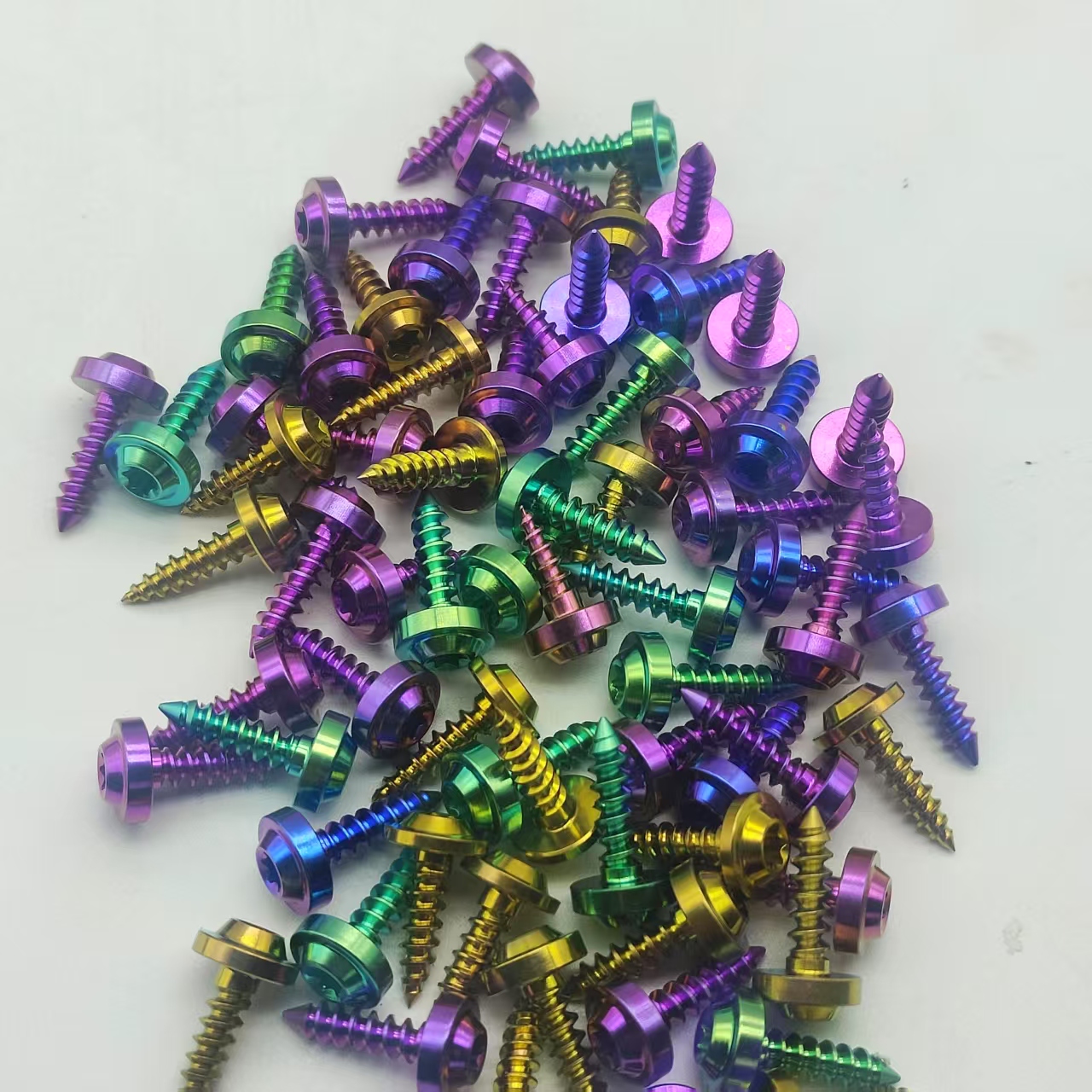
High Strength M4-M5 Titanium Alloy Torx Head Self-Tapping Screws Hex Washer Head Anodizing/PVD Finish DIN Standard Metric
Engineered for anti-vibration fairing brackets, heat shield mounts, and sensor brackets. Features PVD anti-wear treatment.
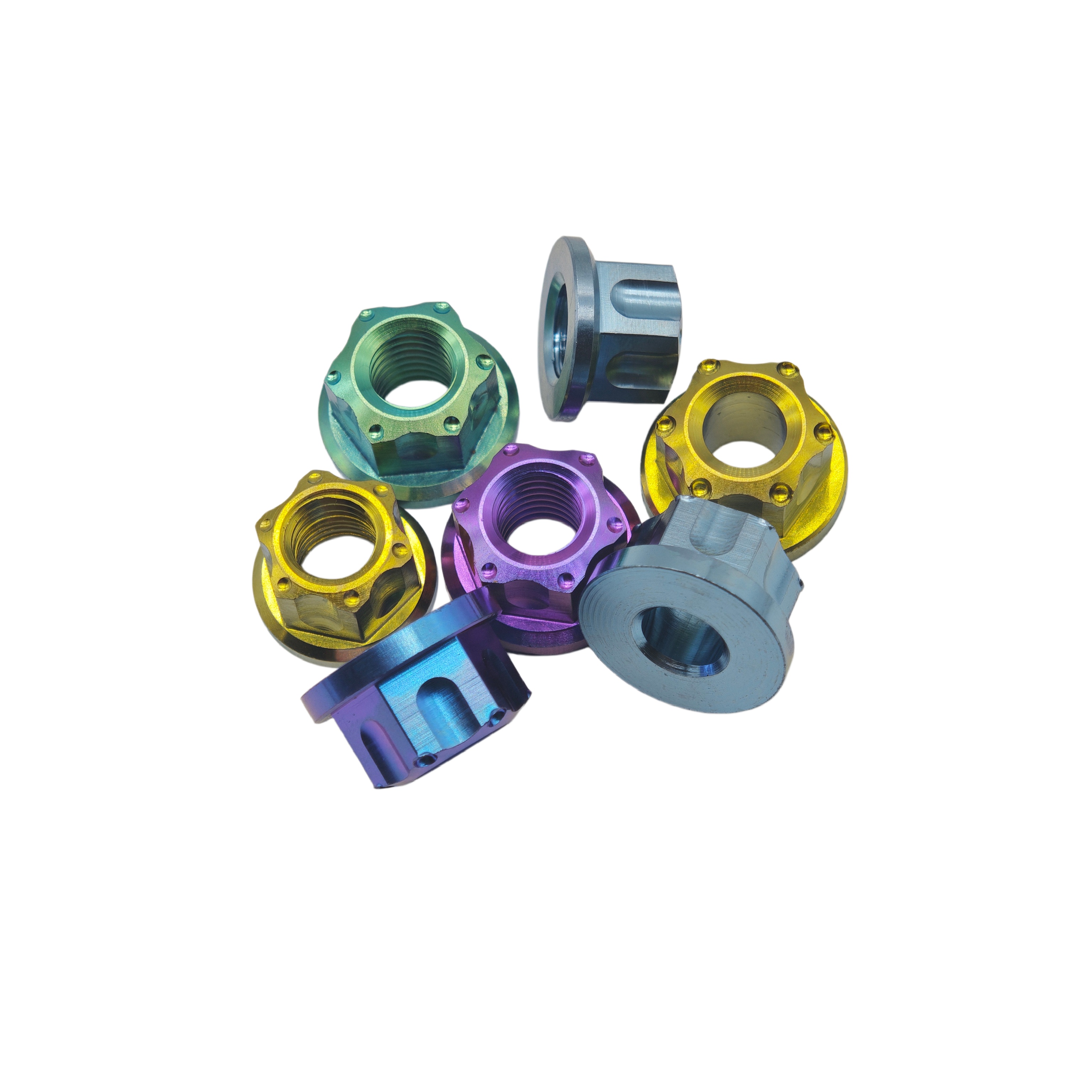
Factory Direct Sales Anodized/Plain Finish Right Hand Thread Gr5 Hexagon Flange Titanium Open Nut M10/M8
Core exhaust stud mating nut. Integral flange spreads clamping pressure uniformly over manifold flanges to eliminate exhaust blow-by.
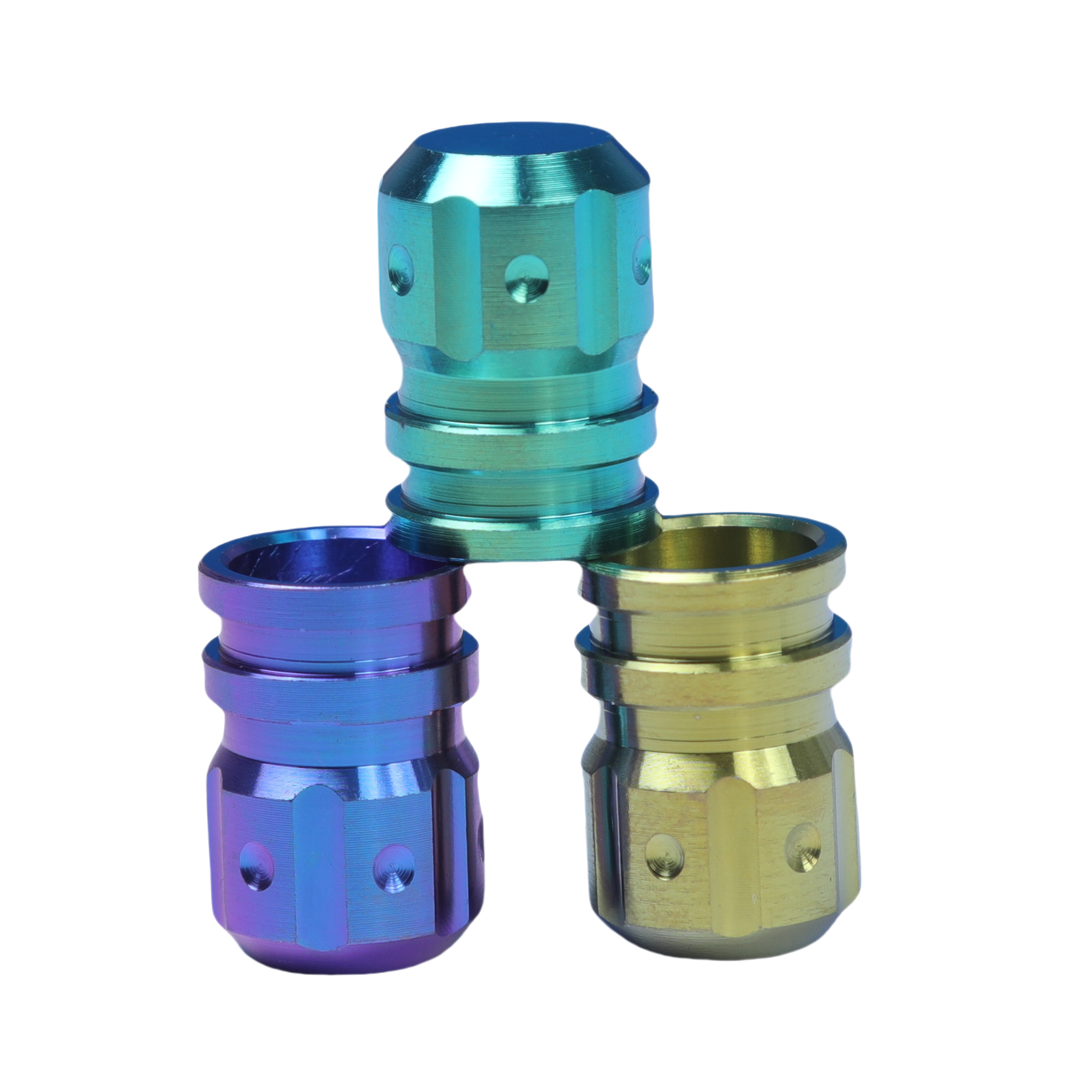
Universal Titanium Alloy Tire Valve Dust Cap Nuts Dust-proof CNC Parts for Automotive Motorcycle Bicycle Valve Caps Nut
Hermetically sealed against coastal sea-salt spray and humid road contaminants in tropical monsoon conditions.
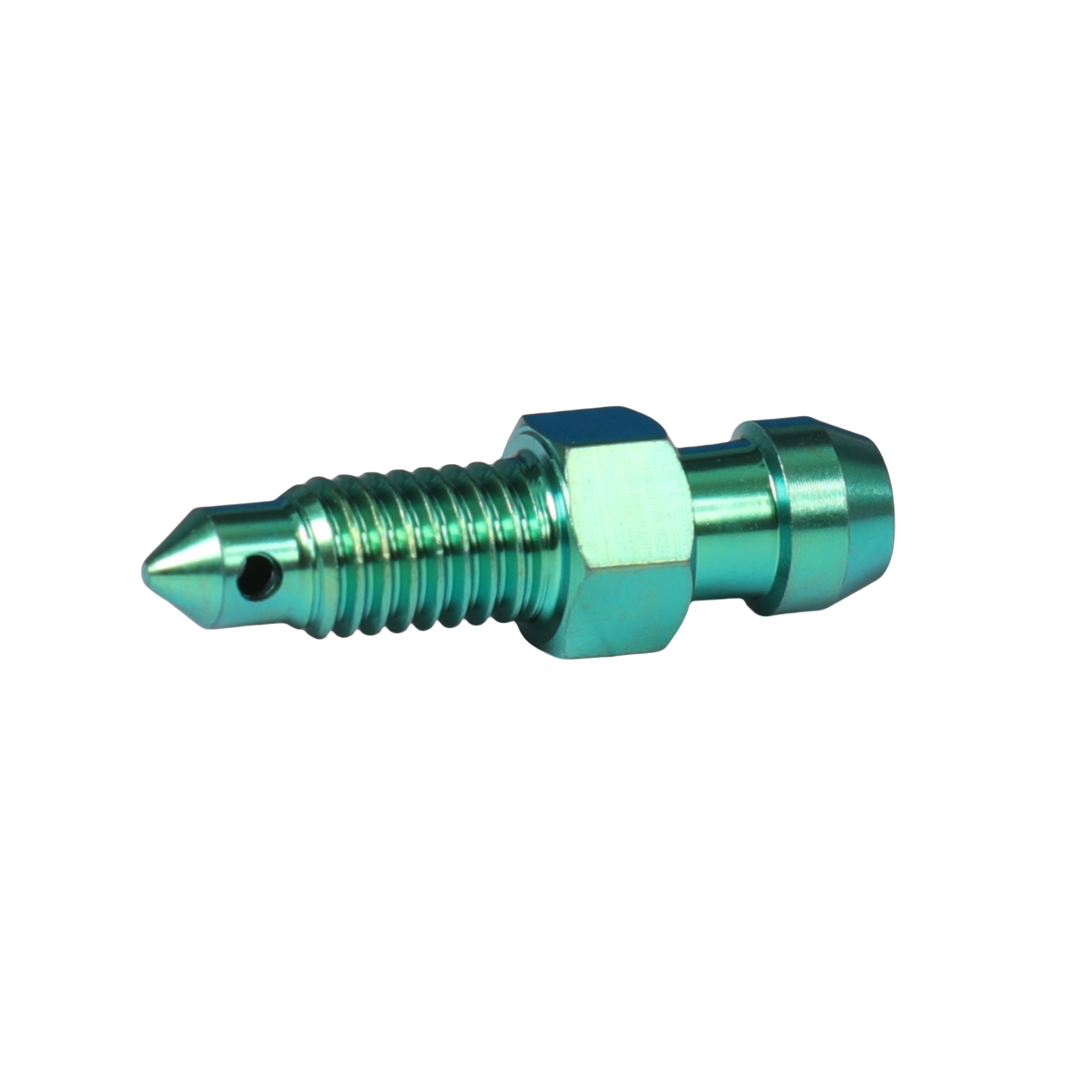
TKS M6 Anodized Gr5 Titanium Hex Motorcycle Caliper Oil Drain Bolt Screw Metric System
Ultra-light fluid pathway bolt, immune to glycol-ether brake fluid degradation and high localized caliper heat.
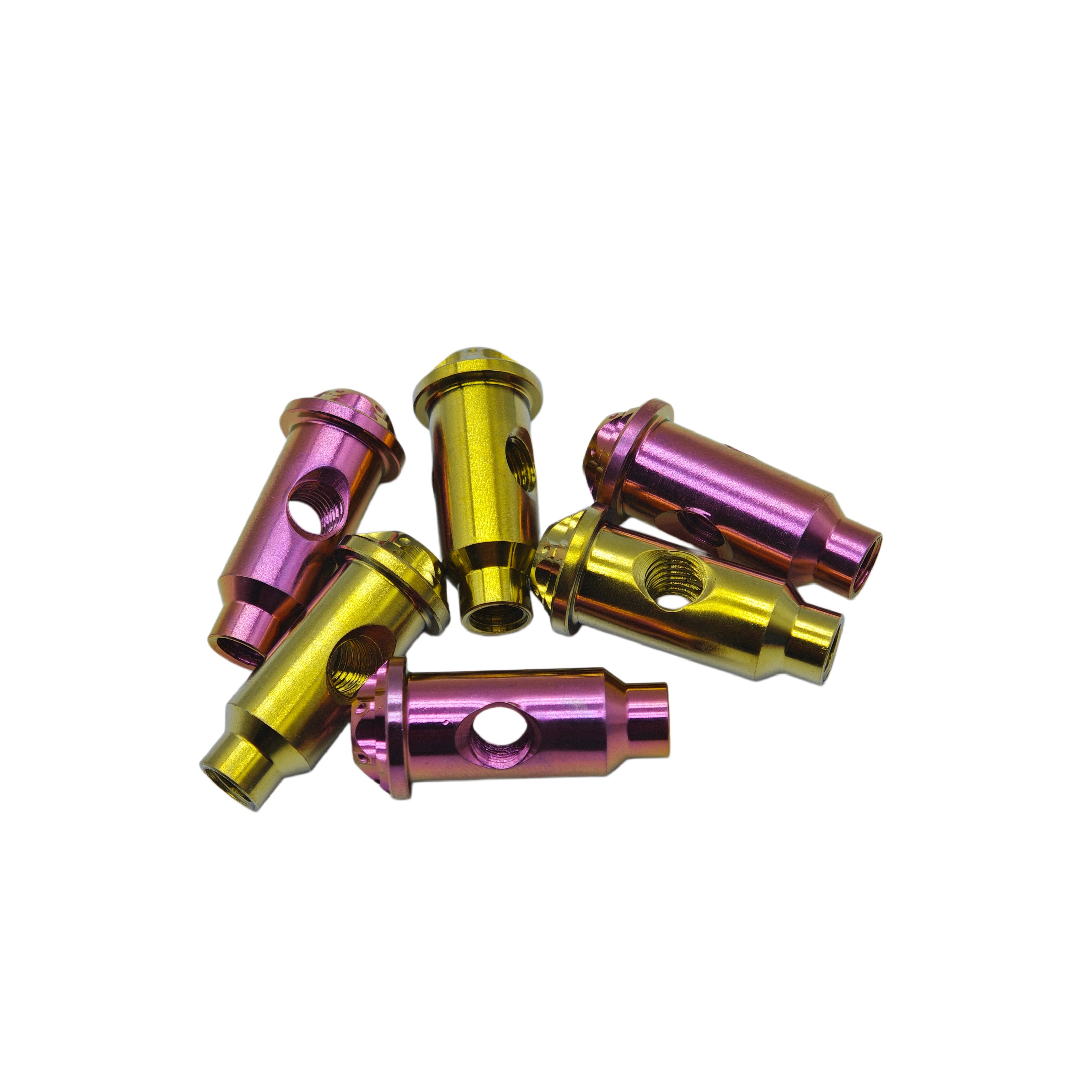
High Quality Gr5 Titanium Cross Dowel Nuts Titanium Adjusters' Knobs Bolt
High-precision barrel dowels for structural swingarms, exhaust hanger adjustments, and subframe linkages.
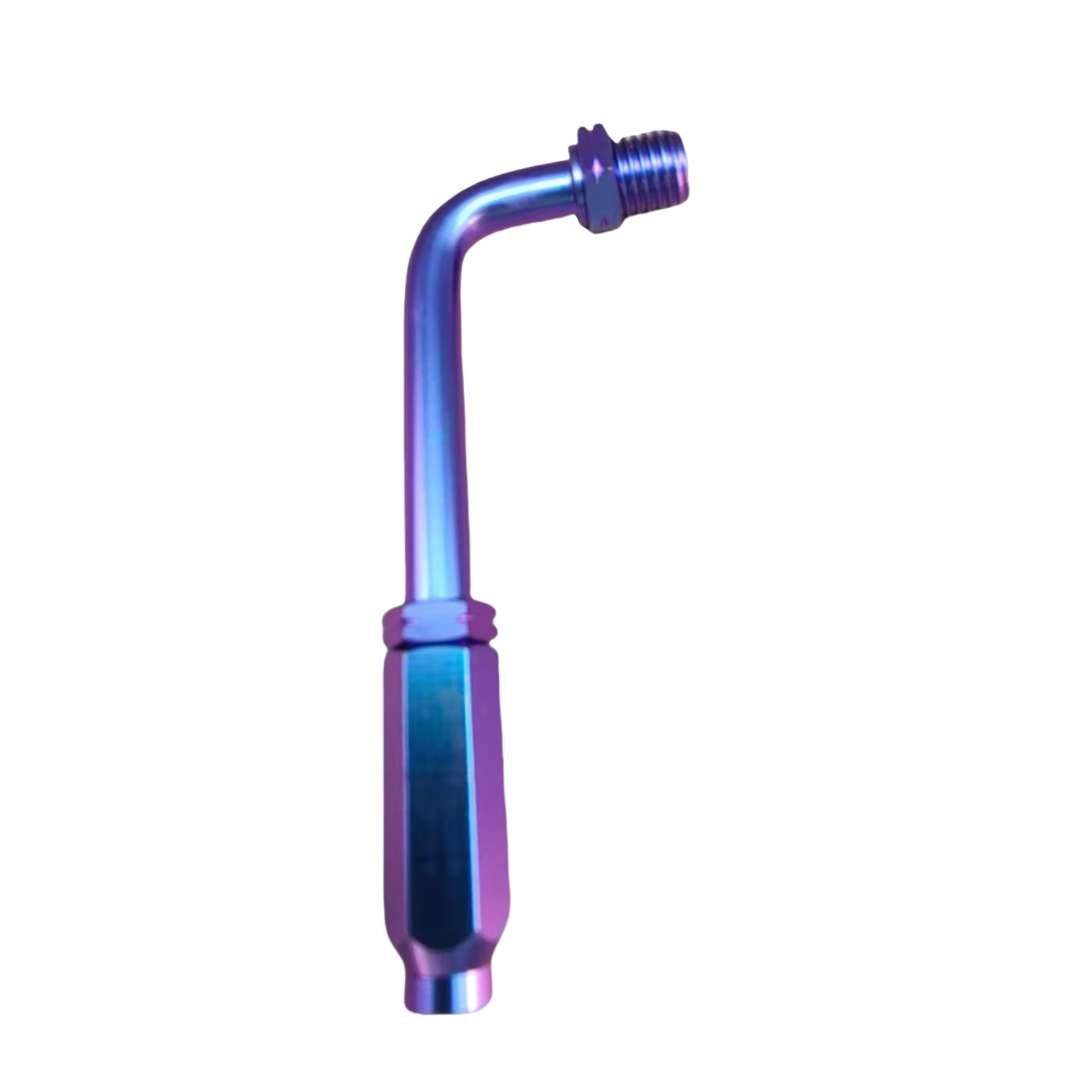
Custom CNC Gr5 Flat Head Titanium Alloy Motorcycle Throttle Line Colorful Refueling Cable Fittings Titanium Valve Parts
Micron-level CNC machined throttle linkages and cable ferrules providing responsive throttle modulation for race setups.
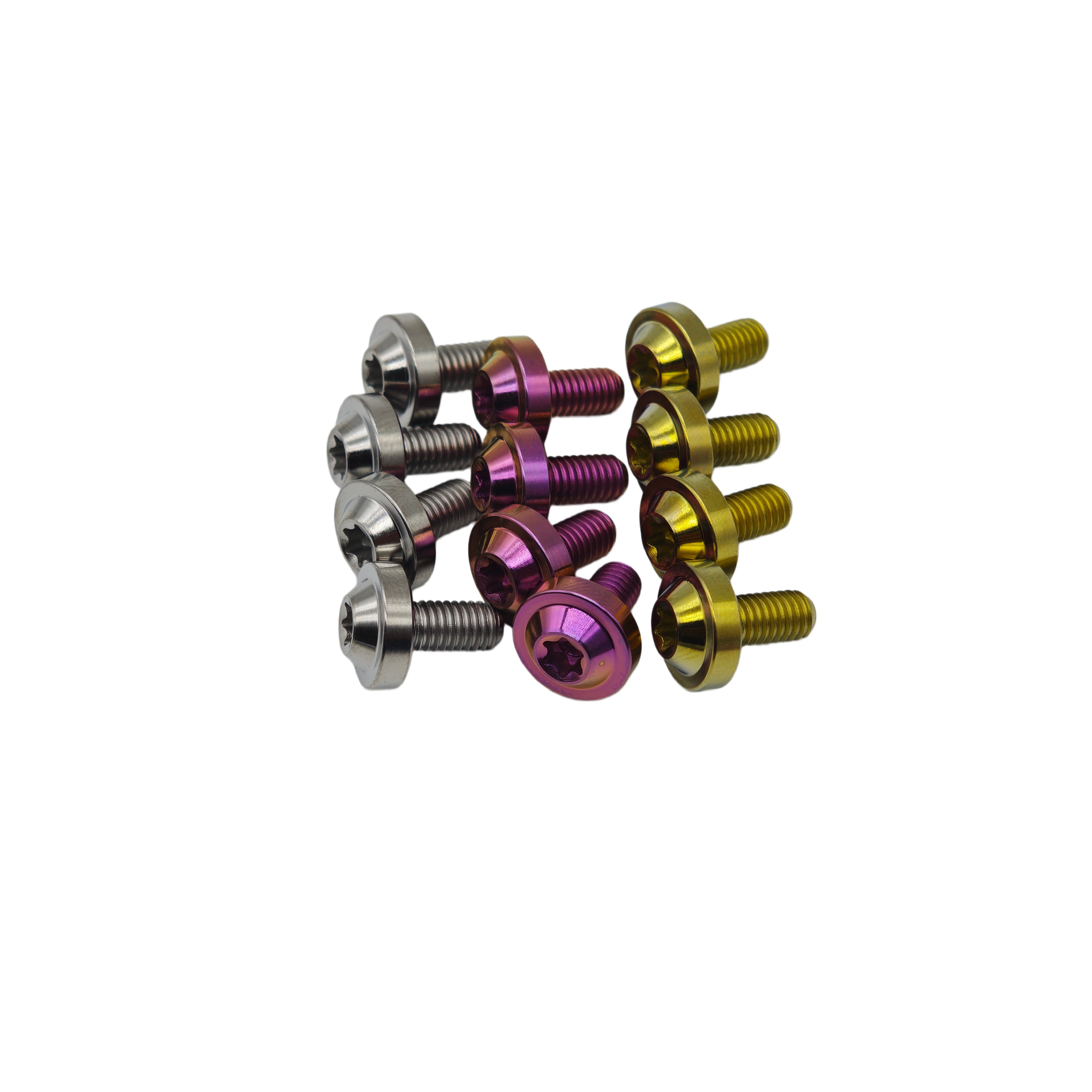
Custom GR5 Titanium M8 Disc Head Bolts with Plain Finish for Bike Motorcycle
Low-profile head design engineered to clear tight hub clearances, providing consistent torque-to-yield clamp force.
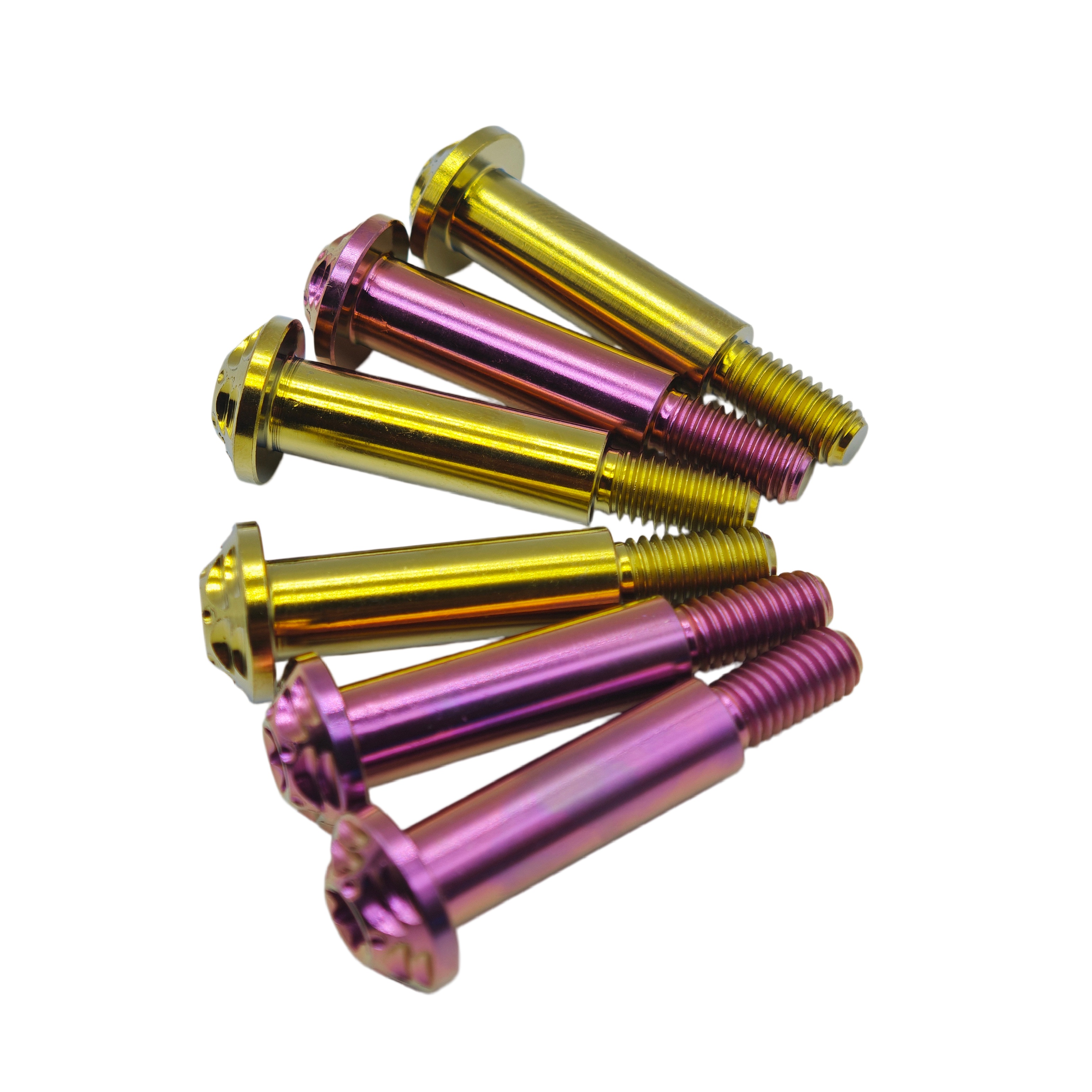
Factory Price GR5 Titanium Alloy Anodized Pan Head M6 Brake Lever Bolt Motorcycle Modification Special
Special modification hardware for master cylinder pivots. Mirror-polished and electrolytic anodized for maximum surface life.
Why Ti-6Al-4V Grade 5 Outperforms Steel in Exhaust Stud Engineering
A rigorous engineering comparison addressing thermal cycling, cyclic shear fatigue, galvanic incompatibility, and thermal expansion dynamics in Southeast Asian climates.
Thermal Expansion Compatibility
Aluminum cylinder heads (such as A356 or AC4B) have a thermal expansion coefficient around 23 × 10⁻⁶/K. Steel fasteners expand at only 11 × 10⁻⁶/K, creating massive thermal clamping shear during red-line throttle operations. Titanium Ti-6Al-4V (8.6 × 10⁻⁶/K) possesses a low elastic modulus (114 GPa vs. 210 GPa in steel), allowing it to stretch elastically and cushion thermal pulses without yielding or stripping softer aluminum casting threads.
Elimination of Seizure & Galling
Traditional steel exhaust studs rust through atmospheric moisture and exhaust condensates, physically fusing to the cast iron or alloy cylinder head. When a technician attempts extraction during an engine overhaul, steel studs shear flush with the port face, requiring risky EDM removal. Titanium formulates an instantaneous, chemically inert rutile (TiO₂) oxide barrier that prevents atmospheric fusion and maintains thread extraction integrity indefinitely.
Superior Strength-to-Weight Dynamics
Weighing only 4.43 g/cm³ compared to 7.85 g/cm³ for alloy steel, Gr5 titanium yields a 44% mass reduction across cylinder head hardware. With a minimum tensile yield strength exceeding 895 MPa (often reaching 950–1000 MPa in our cold-rolled threads), titanium fasteners achieve race-proven mechanical clamping with substantial reduction in unsprung and overall motor mass.
| Mechanical / Thermal Metric | Baoji Zunvo Gr5 (Ti-6Al-4V) | OEM Grade 8.8 Carbon Steel | AISI 304 (A2-70) Stainless | High-Nickel Inconel 625 |
|---|---|---|---|---|
| Density (g/cm³) | 4.43 (44% Lighter) | 7.85 | 7.93 | 8.44 |
| Tensile Strength (Yield, MPa) | ≥ 895 – 950 MPa | 640 MPa | 450 MPa | 460 – 550 MPa |
| Modulus of Elasticity (GPa) | 114 GPa (Superior Elastic Buffer) | 210 GPa | 193 GPa | 208 GPa |
| Max Service Temp (Intermittent) | 600°C – 650°C | 350°C (Oxidizes rapidly) | 500°C (Precipitates carbides) | 980°C |
| Thermal Expansion (10⁻⁶/K) | 8.6 (Gentle on Al heads) | 11.7 | 17.3 (High bolt relaxation) | 12.8 |
| Salt Spray Corrosion (ASTM B117) | > 2,000 Hours (Zero Rust) | Rusts in < 48 Hours | Pits in 240–480 Hours | > 2,000 Hours |
| Manufacturing Process | Cold-Formed & Rolled Threads | Extruded / Cut | Cut / Rolled | High-Cost Hot Forged |
Localized Application Scenarios in Indonesia's Vehicle Landscape
From high-displacement maxi-scooters weaving through Jakarta's gridlock to inter-island commercial outboards navigating Java Sea saltwater, our titanium studs are built for local operating realities.
Maxi-Scooter & Underbone Performance Tuning
Indonesia is one of the world's largest markets for scooters (Yamaha NMAX, Aerox 155, XMAX, Honda PCX, ADV160, and Vario). In Jakarta, Bandung, and Surabaya, custom workshops routinely install 180cc–200cc big-bore kits and free-flowing stainless/titanium header pipes. High-lift camshafts and lean AF ratios elevate exhaust port gas temperatures above 700°C. Standard M6 and M8 manifold studs continually loosen or warp under these vibrations. Zunvo titanium double-ended exhaust studs provide steady clamping force without heat-fatigue relaxation.
National Road Racing & Drag Championships
Competitive drag events (Kejurda, IDC 201m/402m, and OnePrix Championship circuits such as Sentul, Mandalika, and Mijen) require lightweight, highly durable engine assemblies. Multi-cylinder motorcycles such as Kawasaki Ninja ZX-25R, Honda CBR250RR, and Yamaha YZF-R25 operate at screaming 14,000–17,000 RPM ceilings. Rapid thermal expansion of lightweight aftermarket titanium race headers exerts severe axial pull on studs. Our hot-forged, rolled-thread Gr5 studs withstand these aggressive rev limits and allow rapid between-heat exhaust changes without galling.
Archipelagic Marine Outboard & Coastal Watercraft
Indonesia's maritime territory encompasses over 17,000 islands, relying extensively on twin and triple outboard fiberglass boats in Batam, Bali, North Sulawesi, and the Maluku Islands. Saltwater intake cooling systems create an aggressive chloride-rich mist that quickly degrades OEM marine manifold hardware. Carbon steel studs swell with ferrous oxide, cracking the outboard motor casing. Our grade 5 titanium studs provide lifetime resistance against crevice corrosion, brackish splash, and monsoonal saltwater oxidation.
Automotive Turbo Upgrades & Commercial Diesel Fleets
From heavily modified Toyota 2GD-FTV Innova/Fortuner common-rail diesel builds in Central Java pushing 300+ HP with aftermarket downpipes to turbo petrol track platforms (Honda Civic Type R, GR Yaris) in Pantai Indah Kapuk (PIK) car meets, exhaust hardware reliability is paramount. High manifold backpressures and sustained 850°C EGTs stretch ordinary steel studs. Zunvo M10×1.25 and M10×1.5 titanium stud kits ensure gas-tight turbo-to-manifold connections without gasket blowouts.
Emerging Trends Shaping Indonesia's Fastener Industry
Strategic market analysis of regulatory transitions, aesthetic customization demands, and manufacturing localization across Southeast Asia's powerhouse economy.
"Thailook" to High-End CNC Functionalism
The Indonesian motorcycle modification culture was previously dominated by lightweight aluminum parts imported without rigorous engineering verification. Over the past three years, the market has matured significantly toward "Functional Racing Modification" (Modifikasi Fungsional). Enthusiasts now demand fasteners that offer aesthetic appeal alongside verified tensile integrity, causing speed shops in Kelapa Gading, Kemang, and Surabaya to replace decorative alloy bolts with structural Grade 5 titanium studs.
Burnt Titanium & PVD Color Finish Dominance
Indonesian performance consumers heavily favor distinctive anodized finishes—notably "Burnt Blue" (Biru Pelangi), Violet Purple, and 24K Anodized Gold. Our vacuum PVD and precision voltage-controlled bath anodizing processes produce deep, uniform interference layers that withstand high exhaust surface temperatures without flaking, fading under intense equatorial UV radiation, or peeling during road salt and monsoonal cleaning washdowns.
B2B Private Label Brand Localization
Indonesian automotive parts retailers and racing brands (merek lokal) are transitioning from simple retail trading to branded white-label supply models. Leading domestic speed brands increasingly seek OEM direct supply contracts from certified Baoji factories like Zunvo. They require custom CNC head geometries, bespoke laser-etched brand trademarks, tailored packaging blister cards, and flexible production batches that conform to their regional distribution schedules.
Why Indonesia's Leading Importers Partner with Zunvo
Headquartered in Baoji, China's "Titanium Valley," Zunvo combines decades of metallurgical processing with dedicated direct B2B export channels to Southeast Asia.
Uncompromising Raw Material Traceability
Because Zunvo operates directly within Baoji's world-renowned titanium industrial cluster, our manufacturing team sources raw virgin sponge titanium melted into Grade 5 (Ti-6Al-4V) aerospace-certified billets. Unlike low-cost suppliers who incorporate unverified scrap recycling, every single production batch manufactured by Zunvo comes with fully traceable Mill Test Certificates (MTC) according to EN 10204 3.1 standards. We specify rigorous chemical boundaries: 5.5%–6.75% Aluminum, 3.5%–4.5% Vanadium, and interstitial element thresholds kept strictly under strict aerospace limits (O < 0.20%, Fe < 0.40%, H < 0.015%).
Thread-Rolling vs. Lathe-Cutting: The Fatigue Life Advantage
A critical engineering differentiator of Zunvo exhaust studs is our dedication to cold and warm thread-rolling processes rather than thread cutting. Thread cutting severs the continuous structural grain flow lines of the titanium alloy, creating micro-notches that serve as stress risers under repeated exhaust pulsing. In contrast, Zunvo's high-speed hydraulic thread rolling machines compress the material between precision ground dies. This work-hardens the thread roots and flanks, generating high compressive residual stress and increasing cyclic fatigue life by more than 300% compared to cut threads.
Custom OEM Solutions for Indonesian Distributors
We provide full drawing-to-part engineering support. Whether you require standard metric M6×1.0, M7×1.0, M8×1.25, or M10×1.25 dual-threaded studs with stepped shanks, integrated Allen hex drive broaching, or custom Torx sockets, our 101–200 member facility operates advanced multi-axis CNC turn-mill centers and high-speed automatic optical sorting lines to inspect 100% of finished lots before hermetic packaging.
Installation Guide for Indonesian Engine Builders & Mechanics
Standard operating procedures to eliminate thread stripping, inaccurate torque readings, and galling during performance exhaust installations.
Proper Thread Lubrication
Titanium threads interacting with aluminum cylinder heads require an anti-seize lubricant containing synthetic copper, nickel, or MoS₂ paste. Never install titanium studs dry into an aluminum casting. The anti-seize compound provides a consistent coefficient of friction (µ ≈ 0.11), preventing thread friction spikes that cause premature aluminum galling.
Stud Seating: Hand-Tight Only
When installing the stud shank into the cylinder head, run the stud bottom hand-tight or to a minimal 3–5 Nm torque setting. Exhaust studs are designed to act as locating dowels; the true tensile clamping load is generated solely by the outer flange nut against the exhaust header collar. Over-torquing the stud into the blind hole causes thread swelling at the port.
Calibrated Nut Torque Values
For standard M6 exhaust studs (found on 110cc–155cc engines), apply 9.5–11.0 Nm of torque on the titanium flange nut. For M8 studs (250cc twins and big single cylinder engines), tighten to 18.0–22.0 Nm. For M10 studs (automotive and heavy bike applications), apply 35.0–40.0 Nm. Always retorque fasteners after the initial thermal heat-cycle of a freshly assembled engine.
Frequently Asked Questions by Indonesian B2B Buyers
Clear, direct answers regarding customs clearance, shipping routes to Jakarta/Surabaya, minimum orders, and product technical specifications.
Q1: How do you handle shipping, customs, and import duties to Indonesia?
We routinely ship to Indonesian ports (Tanjung Priok, Jakarta; Tanjung Perak, Surabaya; and Soekarno-Hatta International Airport CGK). We provide comprehensive commercial invoices, packing lists with accurate HS codes (typically 8108.90 for titanium articles or 7318 for threaded fasteners), and Certificates of Origin. We also support DAP express via DHL, FedEx, UPS, and freight forwarders specializing in door-to-door air cargo to Jakarta with customs handling included.
Q2: Can an M8 Gr5 titanium stud withstand the thermal stress of big-bore drag engines?
Yes. Certified Ti-6Al-4V Grade 5 maintains its structural integrity and high yield strength at continuous temperatures up to 400°C–450°C and intermittent spikes to 650°C. Because the stud has a lower elastic modulus than high-tensile steel, it flexes elastically with head expansion without stretching past its yield limit, preventing the stud fractures common in modified drag bikes.
Q3: What are the Minimum Order Quantities (MOQ) for custom racing batches?
For standard sizes held in factory stock (such as M6×35, M8×40, M10×50 studs and matching hex flange open nuts), our MOQ starts at just 100 sets to allow speed shops and racing teams to validate fit and finish. For fully custom drawing-based designs with unique thread pitches, head broaching, or proprietary laser logos, production runs start at 500–1,000 pieces.
Q4: Will anodized titanium colors fade in Indonesia's humid, rainy climate?
No. Titanium anodization does not utilize pigments or organic dyes like aluminum anodizing. The vivid colors (burnt blue, gold, purple, green) are created by an electrochemically controlled, crystal-clear titanium dioxide (TiO₂) interference layer that refracts ambient light. It is chemically stable, immune to fuel or oil degradation, and will not peel or fade under equatorial sunlight or monsoon rainfall.
Q5: How do you prevent packaging oxidation and moisture damage during sea freight?
While titanium is completely rust-proof, we package every export consignment with meticulous care. Fasteners are cleaned via ultrasonic degreasing, packed into thick sealed polyethylene bags with vapor corrosion inhibitors (VCI) and desiccant packs, and placed inside heavy-duty corrugated export cartons strapped and wrapped on fumigated export pallets to ensure pristine arrival.
Q6: Do you provide private labeling, laser marking, and custom retail packaging?
Yes. Over 40% of our production volume is delivered under OEM and ODM private label agreements. We utilize high-resolution fiber laser marking stations to engrave your brand name, logo, or thread pitch indicators directly onto the stud ends or nut faces. We can also print custom retail blister cards or sliding zip pouches featuring your company's Indonesian branding.
