Featured Titanium Hollow & High-Tensile Hardware
Precision CNC machined from certified Grade 5 Ti-6Al-4V bar stock with rolled metric threads, bored inner chambers for fluid flow or rotary mass reduction, and specialized surface passivations.
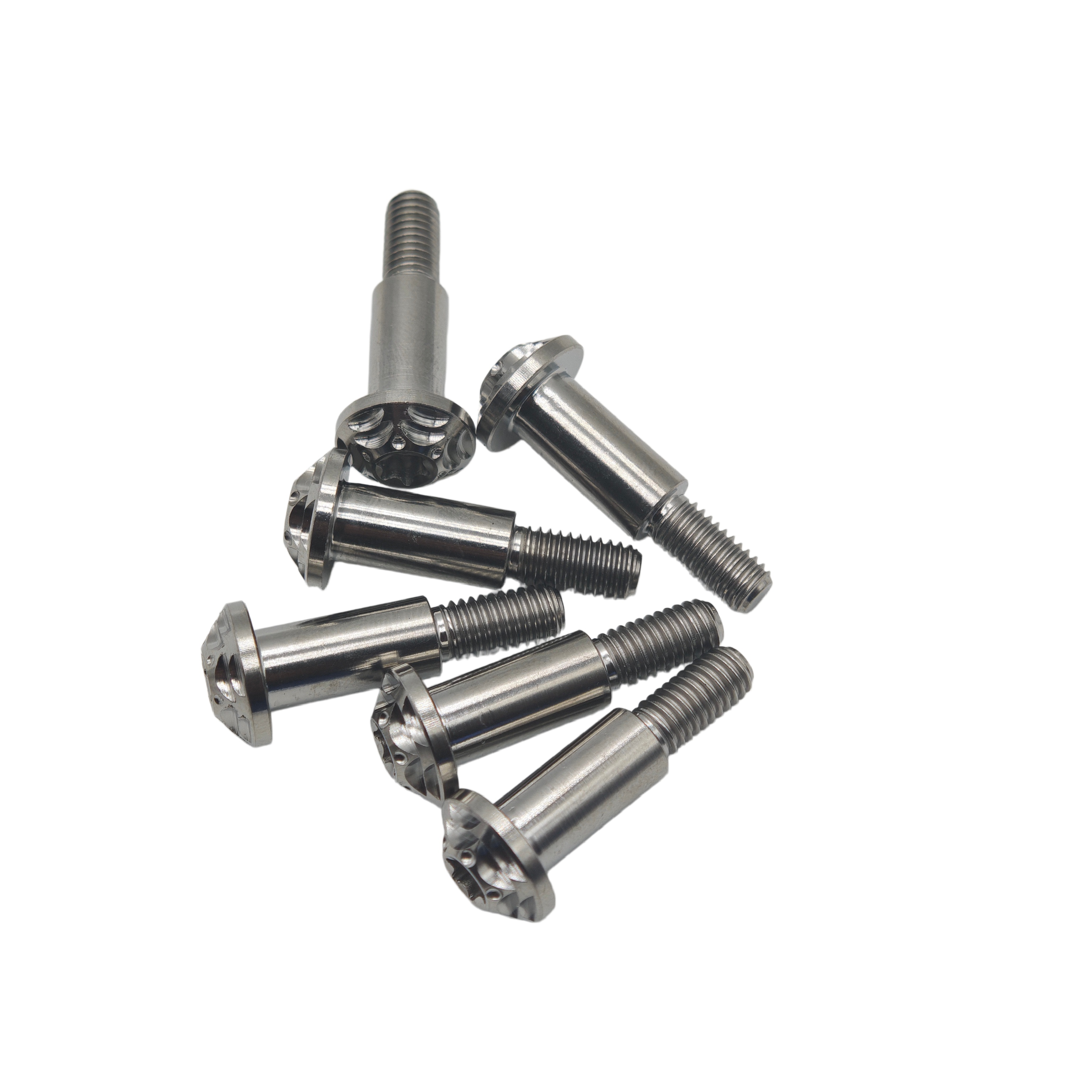
Custom Torx Shoulder Screw CNC Machined GR5 Titanium Socket Head Decorative Bolt
View Specifications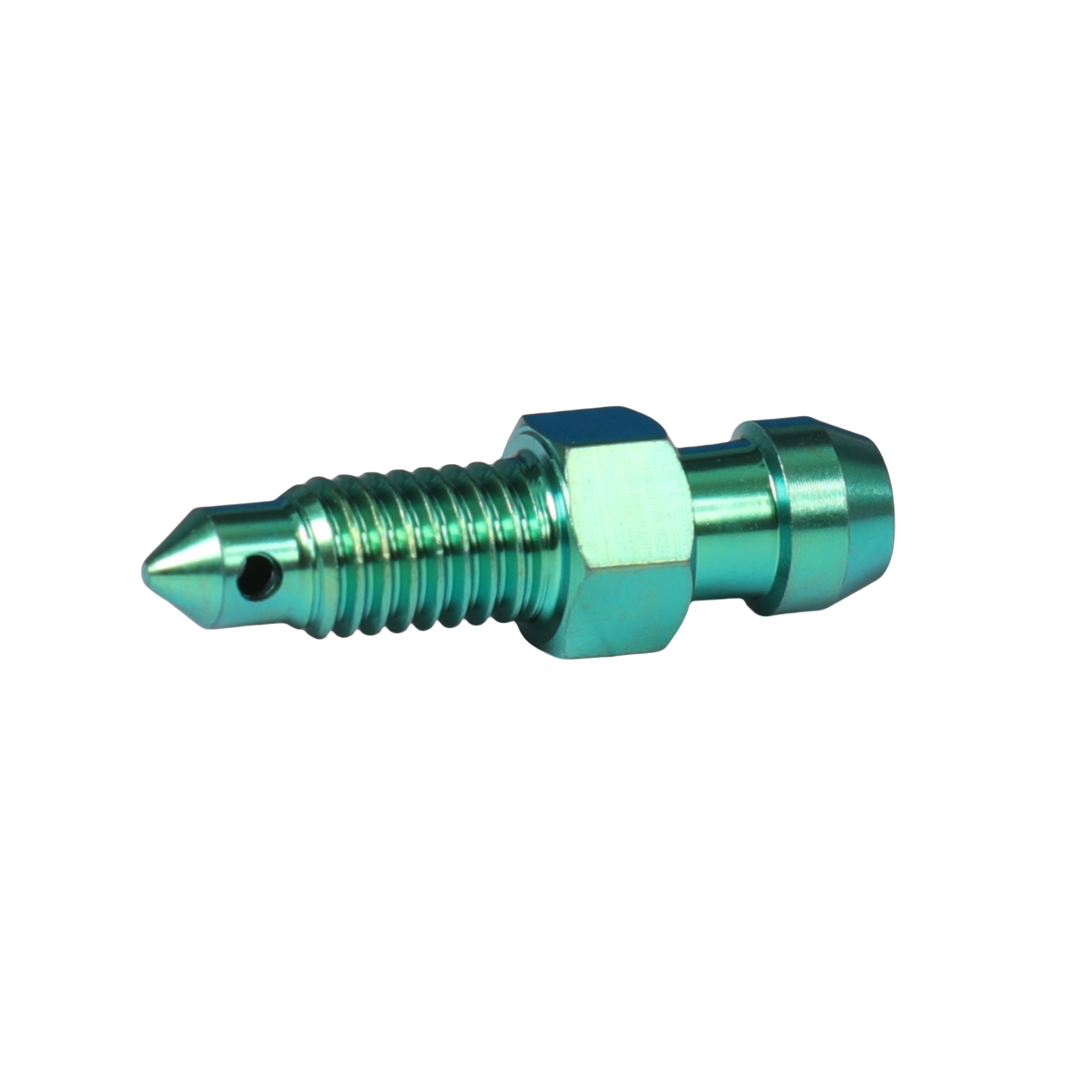
TKS M6 Anodized Gr5 Titanium Hex Motorcycle Caliper Oil Drain Bolt Screw Metric System
View Specifications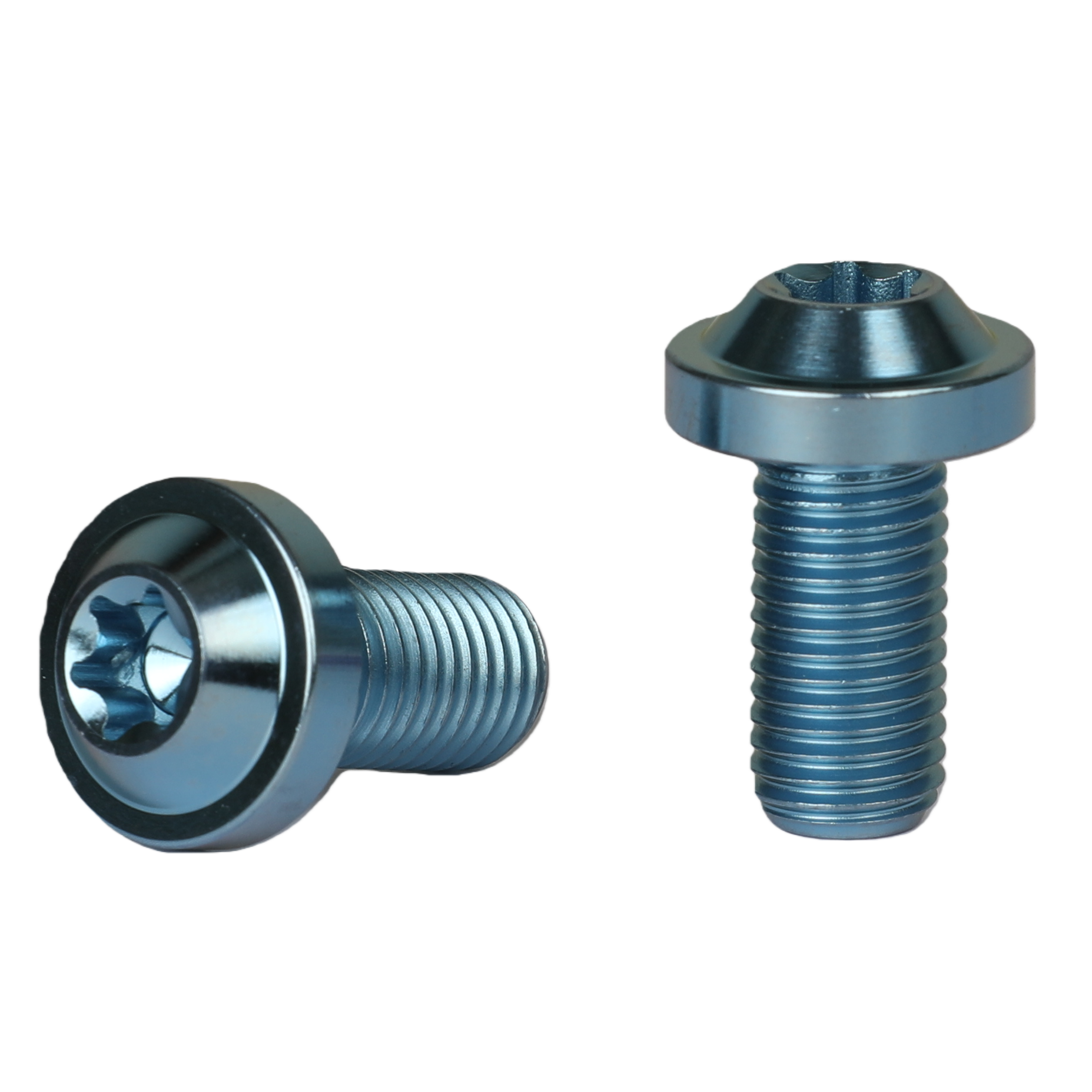
GRX Grade 5 Titanium Pan Head Brake Disc Screws for Race Motorcycle M6/M8/M10 DIN Thread
View Specifications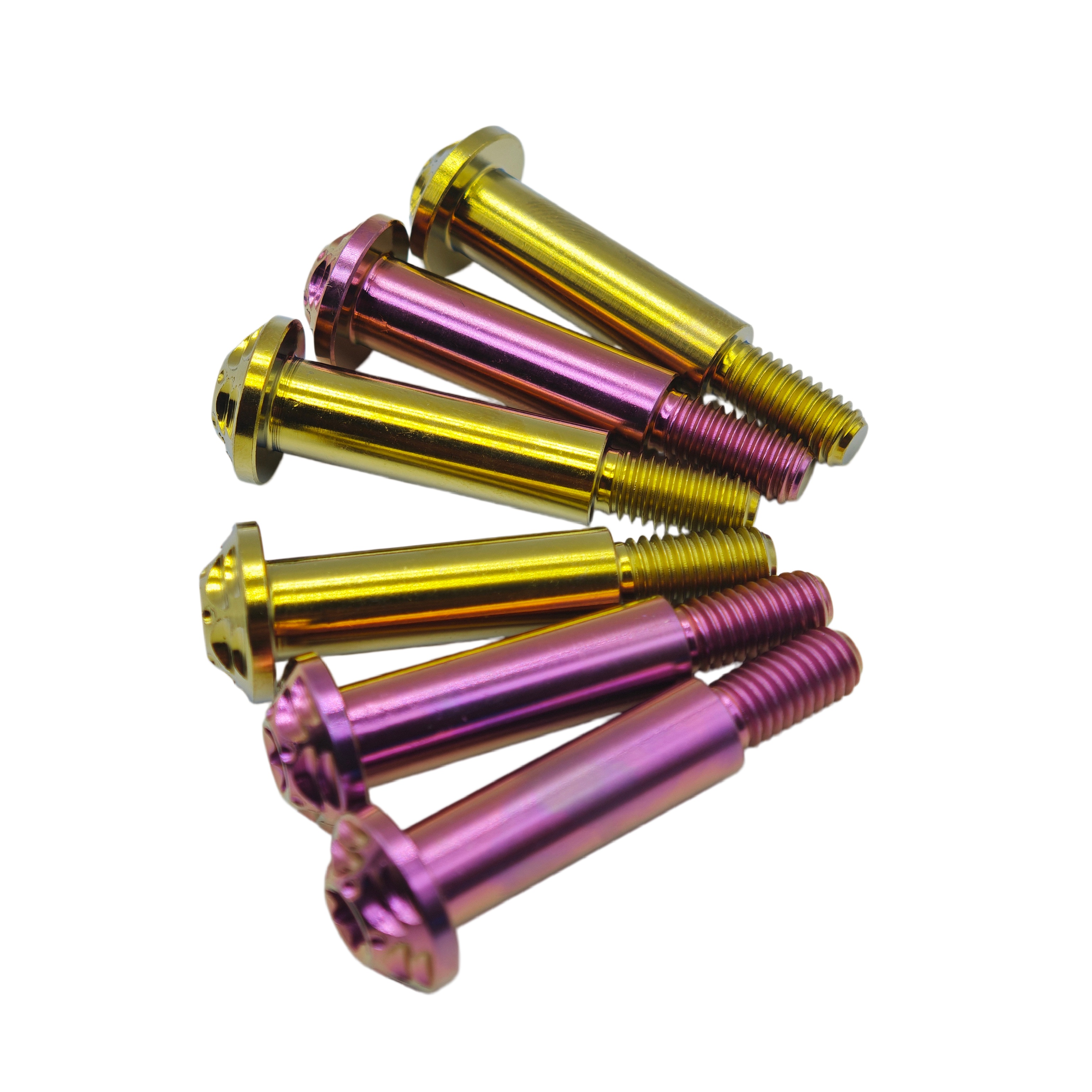
Factory Price GR5 Titanium Alloy Anodized Pan Head M6 Brake Lever Bolt Motorcycle Modification Special
View Specifications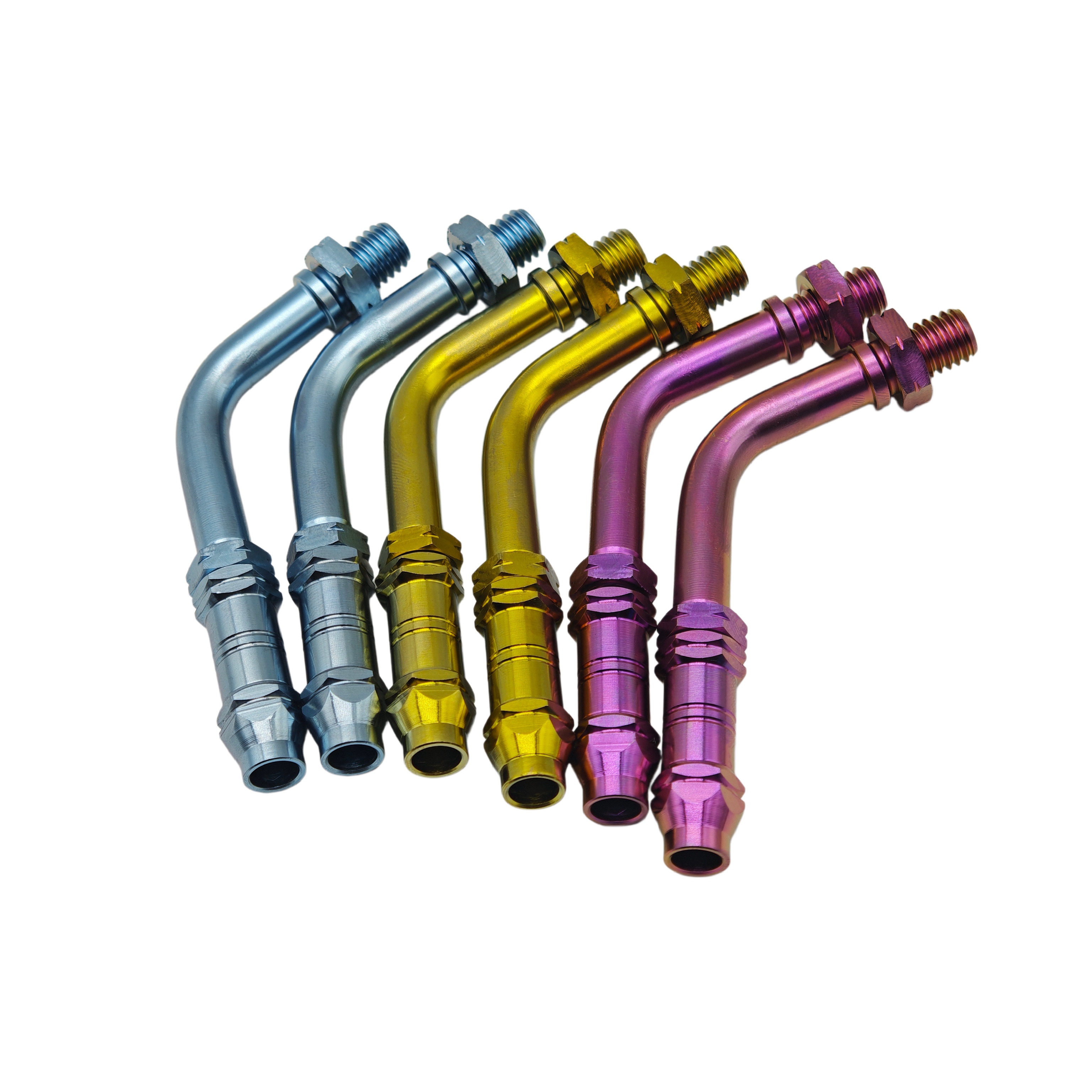
Factory M10 CNC 90-Degree Hex Flange Head GR5 Titanium Cable Adjuster Parts
View Specifications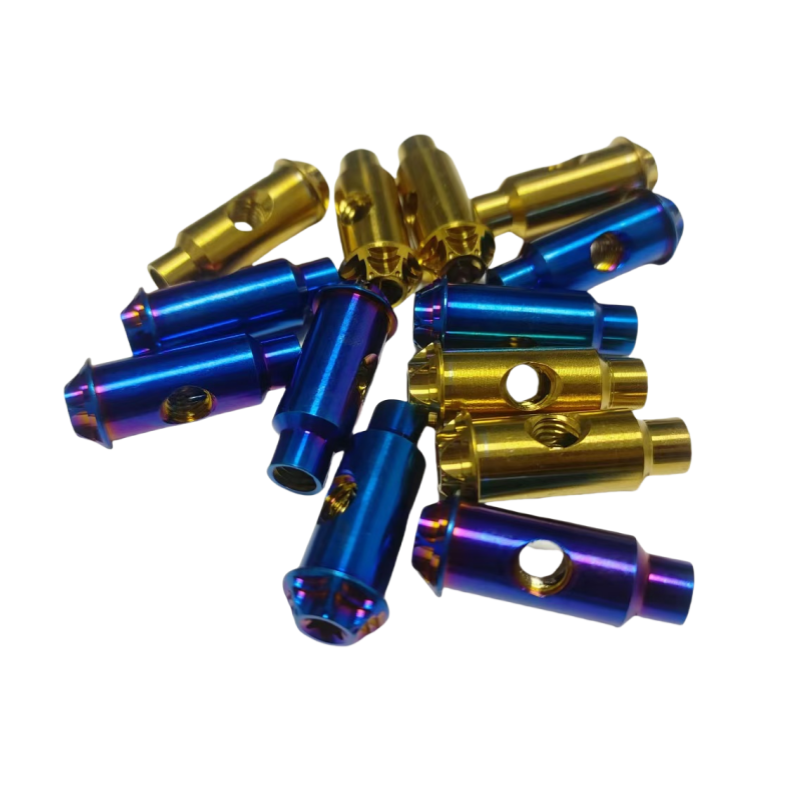
High Performance Gr5 Titanium Cross Dowel Nuts Titanium Adjusters Knobs Bolt
View Specifications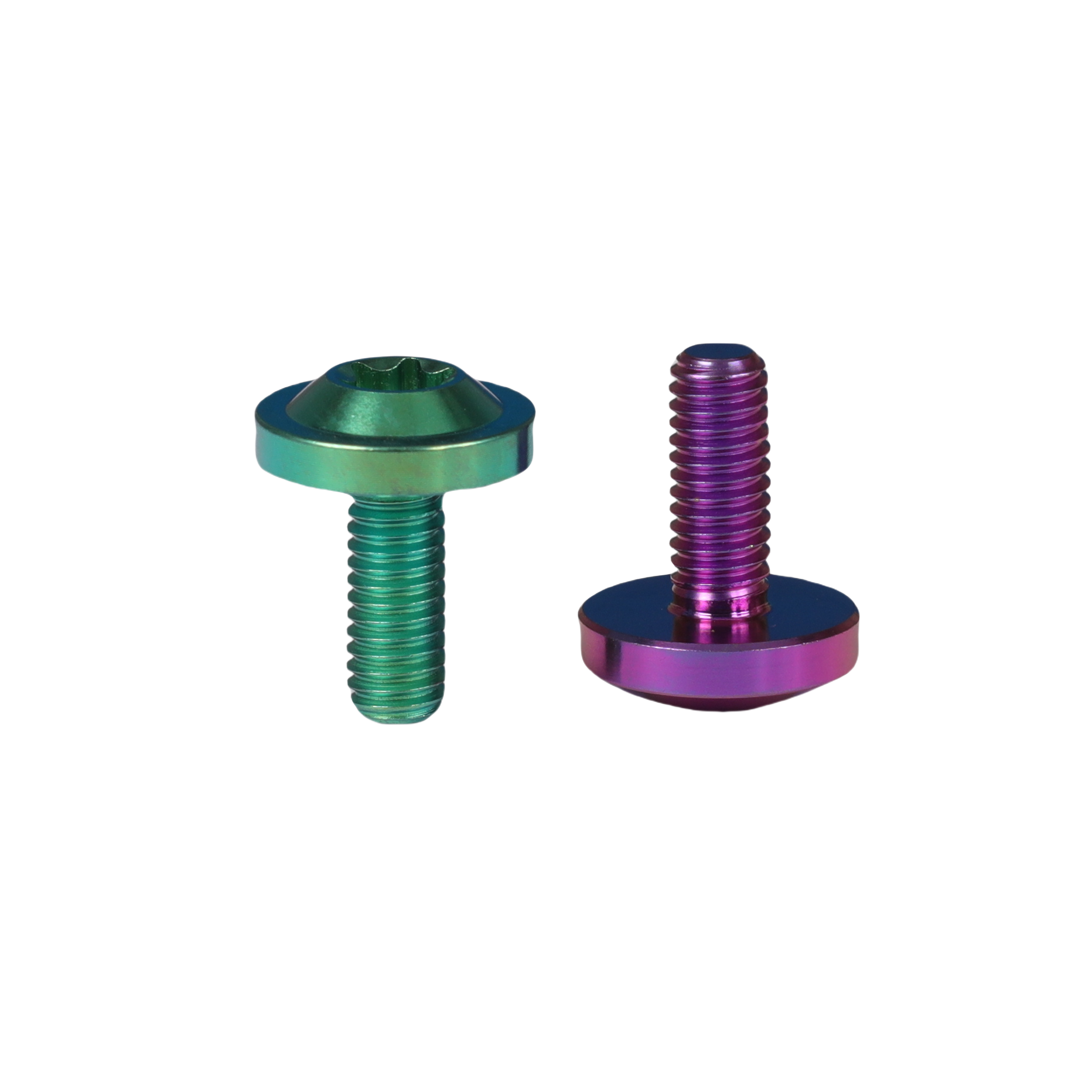
Corrosion-Resistant GR5 M6 Titanium Bolts Fasteners for Engine & Body Modification
View Specifications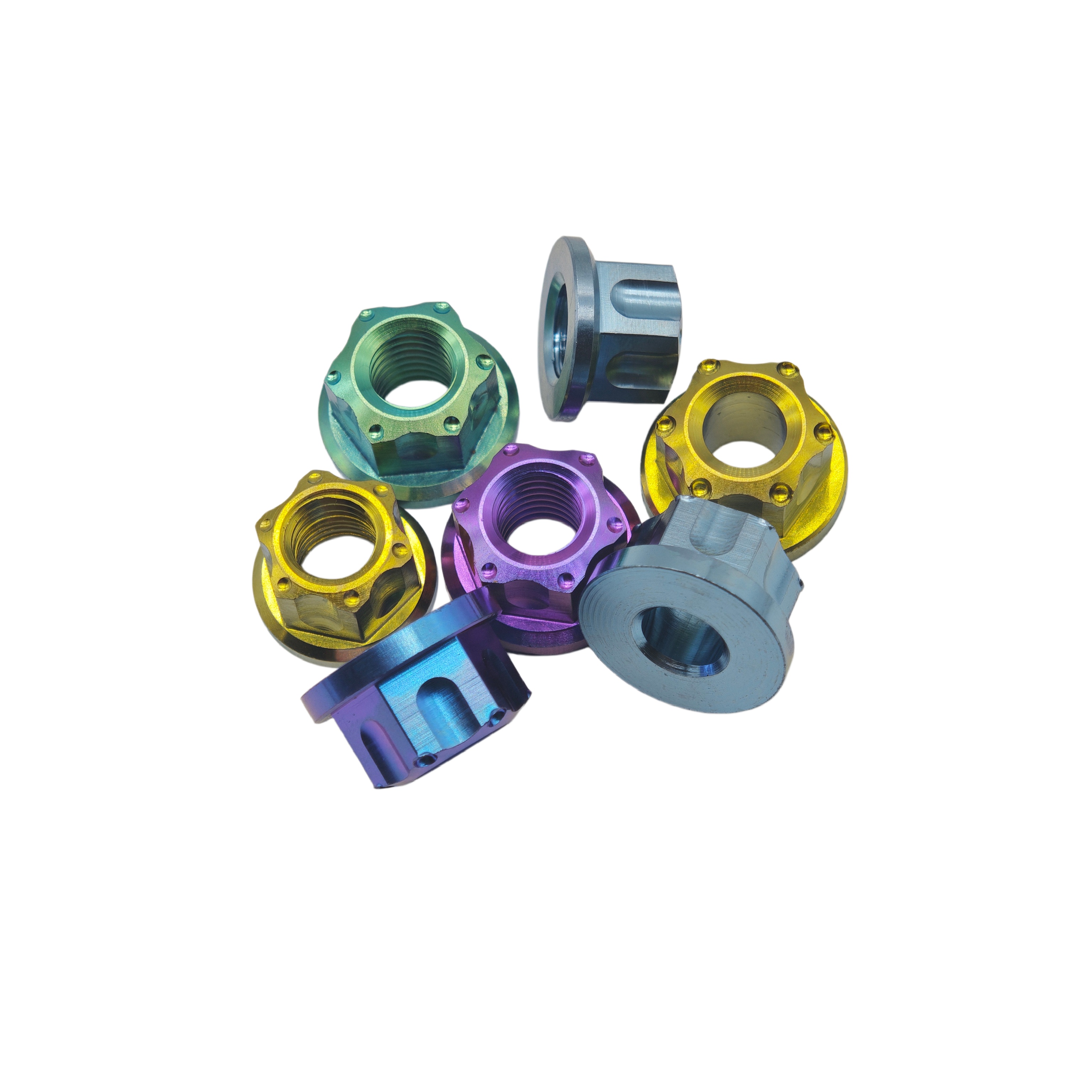
Factory Direct Sales Right Hand Thread Gr5 Hexagon Flange Titanium Open Nut M10/M8
View SpecificationsStructural Optimization & Fluidic Efficiency: Engineering Hollow Titanium Hardware
In precision mechanical engineering, unsprung mass reduction, rotary inertia elimination, and dual-purpose structural fluid routing represent the forefront of automotive and motorsport component design. Titanium hollow bolts—custom-drilled axially or designed with cross-drilled radial ports—offer a non-negotiable thermodynamic and mass-reduction advantage. When manufactured from certified aerospace-grade Ti-6Al-4V (Grade 5, UNS R56400), these fasteners retain over 90% of a solid bolt’s torsional rigidity and tensile integrity while slashing total fastener weight by an additional 18% to 28% beyond titanium’s inherent 44% density reduction over alloy steel.
Boring Kinetics, Neutral Axis Mechanics, and Shear Resistance
The mechanical engineering principle behind the hollow bolt relies on elementary beam theory and torsional shear distribution: the outermost fibers of a threaded cylinder withstand the maximum bending moments and torsional stresses ($\tau = T \cdot r / J$). The central cylindrical core contributes marginally to overall polar moment of inertia ($J = \pi(D^4 - d^4)/32$) yet contributes significantly to parasitic deadweight. By utilizing ultra-precision gun-drilling and deep-hole high-pressure coolant CNC boring to remove the central neutral axis, engineers realize a superior strength-to-weight ratio.
Rolled Threads vs. Cut Threads in Thin-Wall Hollow Fasteners
For hollow fasteners subjected to high preloads (such as brake banjos, caliper bridge bolts, and fuel distribution manifolds), thread cutting is strictly unacceptable. Cutting severs the continuous grain boundaries of the $\alpha+\beta$ titanium microstructure, exposing vulnerable grain terminations to micro-cracking during torquing. At Zunvo’s Baoji manufacturing facility, all exterior metric and UNF threads are produced via cold cylindrical die rolling. This compressive process cold-works the thread root, inducing beneficial residual compressive stresses that increase dynamic fatigue life by over 300% compared to cut threads, fully conforming to DIN 912, ISO 7380, and aerospace AS9523 specifications.
| Mechanical & Physical Property | Gr5 Ti-6Al-4V (Hollow) | Class 10.9 Steel (Solid) | Class 12.9 Alloy Steel | 7075-T6 Aluminum (Hollow) |
|---|---|---|---|---|
| Density ($\text{g/cm}^3$) | 4.43 | 7.85 | 7.85 | 2.81 |
| Ultimate Tensile Strength ($\text{MPa}$) | 950 – 1050 | 1040 | 1220 | 570 |
| Yield Strength ($R_{p0.2}, \text{MPa}$) | ≥ 895 | 940 | 1100 | 505 |
| Strength-to-Weight Ratio ($\text{kN}\cdot\text{m/kg}$) | 214.4 (Exceptional) | 132.5 | 155.4 | 202.8 (Low Shear) |
| Fluid Pressure Limit (Banjo Spec) | > 350 bar (DOT 4/5.1) | > 350 bar | > 400 bar | < 180 bar (Risk of Deform) |
| Corrosion in Road Brine / Hydrocarbons | Virtually Immune ($TiO_2$ Film) | Susceptible (Rusts) | Highly Susceptible | Galvanic Pitting Prone |
Serving Puebla’s Advanced Automotive, Tier-1 & Motorsport Ecosystem
The state of Puebla stands as one of the preeminent automotive manufacturing capitals in the Americas. Anchored by the sprawling Volkswagen de México plant in Cuautlancingo—one of the largest automotive assembly facilities outside Germany—and the Audi México smart plant in San José Chiapa producing luxury SUVs (Q5 line), Puebla has established a world-class manufacturing corridor alongside adjacent logistics corridors into Tlaxcala, Mexico City, and the port of Veracruz.
Automotive OEM & Tier-1 Supply Chains
Puebla’s Tier-1 and Tier-2 suppliers specializing in braking assemblies, turbocharger wastegates, and high-temperature manifolds require lightweight, non-corroding hollow hardware that conforms rigorously to DIN and ISO automotive tolerances.
EV & Powertrain Modernization
As Puebla transitions internal lines toward battery electric platforms (e-mobility), eliminating every gram of chassis and sprung mass directly extends kilowatt-hour efficiency. Hollow titanium bolts provide vital weight savings in thermal exchangers.
Motorsport & Precision Performance
With close proximity to the Autódromo Miguel E. Abed in Amozoc, regional performance engineering teams, custom superbike garages, and rally builders demand hollow titanium caliper banjo bolts, disc fasteners, and suspension linkage hardware.
Puebla Sourcing Logistics & Customs Integration (Mexico)
Procuring custom non-standard fasteners into Mexico’s industrial parks (Parque Industrial FINSA Puebla, Parque Industrial Chachapa, Puebla 2000) demands streamlined logistics and regulatory adherence. Shipments departing our manufacturing facility in Baoji, China are packaged according to stringent export-grade humidity and shock specifications, cleared under specific Mexican tariff classifications (Fracción Arancelaria 8108.90 for finished titanium articles), and dispatched directly via DHL Express, FedEx Priority, or air-freight into Mexico City (MEX / NLU) and Puebla Hermanos Serdán International Airport (PBC) with typical transit times of 4 to 6 business days.
Zunvo Titanium: Factory Direct Engineering from Baoji, China
Headquartered in the Shiling Road Industrial Park of Baoji—globally acknowledged as China’s "Titanium Valley"—Zunvo Titanium Products Co., Ltd. controls the complete manufacturing chain. Being situated at the epicenter of Chinese titanium smelting and forging allows direct access to Grade 5 sponge, vacuum arc remelting (VAR) ingots, and premium centerless-ground titanium rods. We eliminate intermediary trading markups, ensuring full heat-number metallurgical traceability from raw melt to final packaged fastener.
Chemical Traceability & MTRs
Every batch ships with Mill Test Certificates conforming to EN 10204 3.1, detailing exact mass percentages of Ti, Al, V, Fe, C, N, and ultra-low interstitial O and H to prevent hydrogen embrittlement.
100% Dimensional & Thread QC
Equipped with coordinate measuring machines (CMM), optical contour projectors, thread go/no-go plug/ring gauges (class 6g / 6H), and pneumatic bore pressure testers up to 350 bar for hollow parts.
Advanced Physical Passivation
In-house electro-chemical anodizing (Rainbow, Blue, Gold, Purple) and physical vapor deposition (PVD) DLC Black coatings that enhance surface Vickers hardness and eliminate galling risk during high-torque assembly.
Frequently Asked Questions for Sourcing Titanium Hollow Bolts in Puebla
Can Gr5 titanium hollow bolts replace solid high-tensile steel bolts in safety-critical vehicle assemblies?
How do Mexican automotive and motorsport firms prevent galvanic corrosion when joining titanium to aluminum or magnesium housings?
What are the import procedures, documentation, and lead times from Baoji to Puebla, Mexico?
What is the standard torque calculation formula for titanium hollow bolts versus standard steel?
What are your Minimum Order Quantities (MOQ) for custom hollow bolt drawings?
Connect Directly with Our Titanium Fastener Engineers
Send your CAD drawing, technical specifications, or sample requirements. Our team in Baoji provides detailed DFM analysis, chemical certifications, and factory-direct quotation within 7 hours.
