Precision Titanium Fasteners & Wheel Lug Systems
Thread-rolled and CNC-machined from certified Grade 5 aerospace billet stock. Direct factory sourcing with guaranteed mill certifications, calibrated torque profiles, and custom thread pitch configurations.
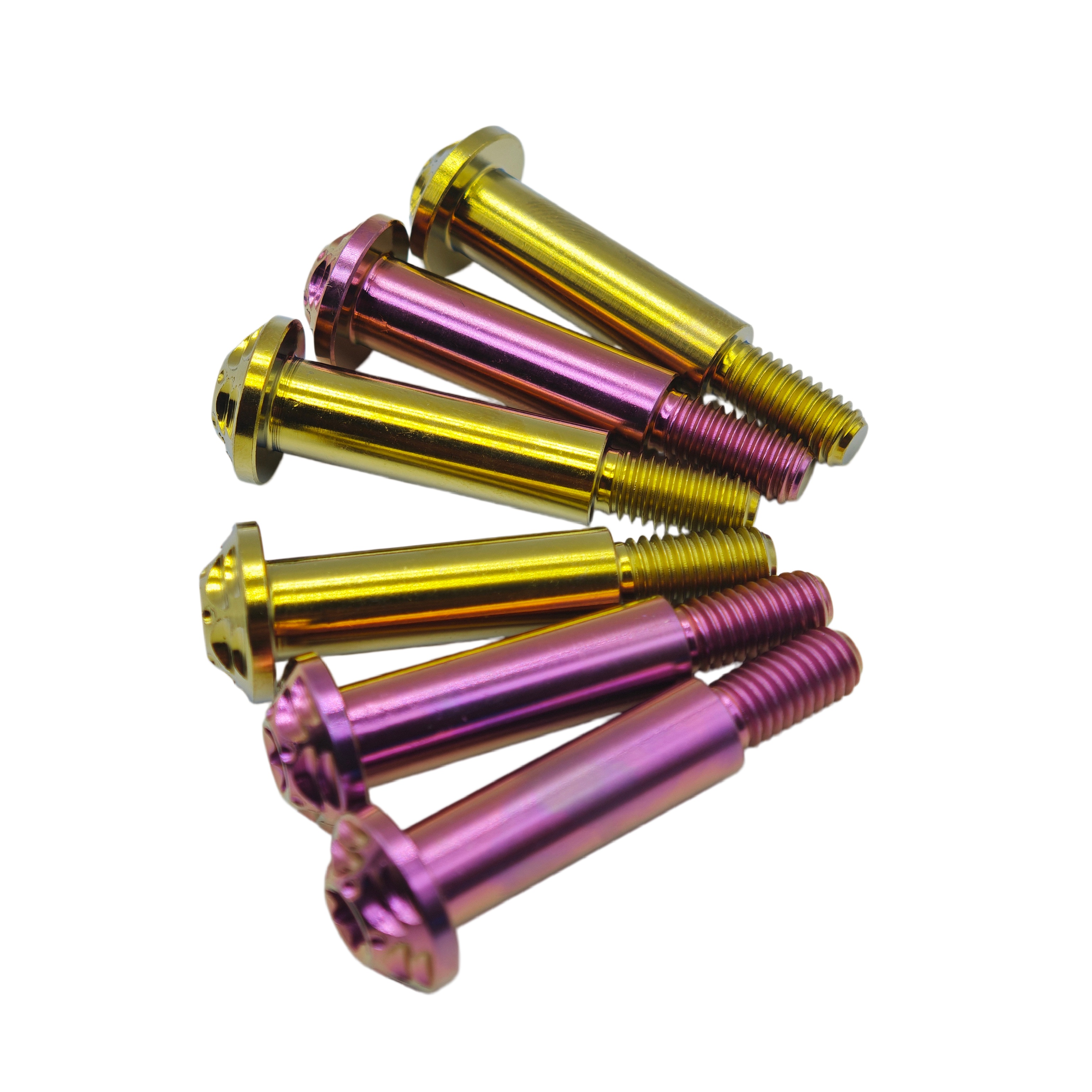
Factory Price GR5 Titanium Alloy Anodized Pan Head M6 Brake Lever Bolt Motorcycle Modification Special
- Grade 5 Aerospace Ti-6Al-4V
- Torx Drive / Anodized Surface
- High Shear Resistance
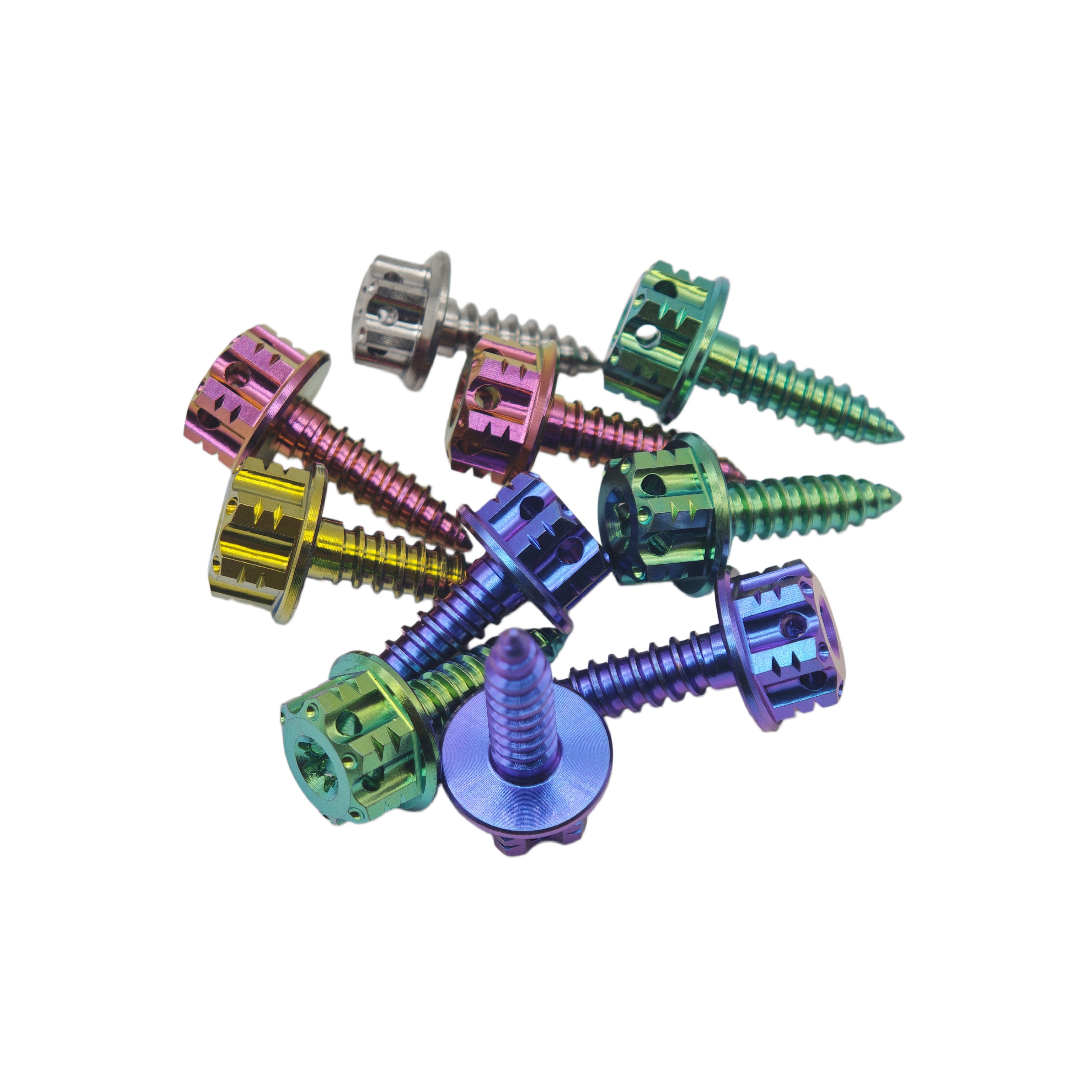
Factory Direct Sales of Metric M5*15 Grade 5 Titanium Alloy Flange Screws with Right Hand Thread for Mining
- Metric Precision Thread Class 6g
- Integral Load-Bearing Flange
- Corrosion Proof in Slush/Salt
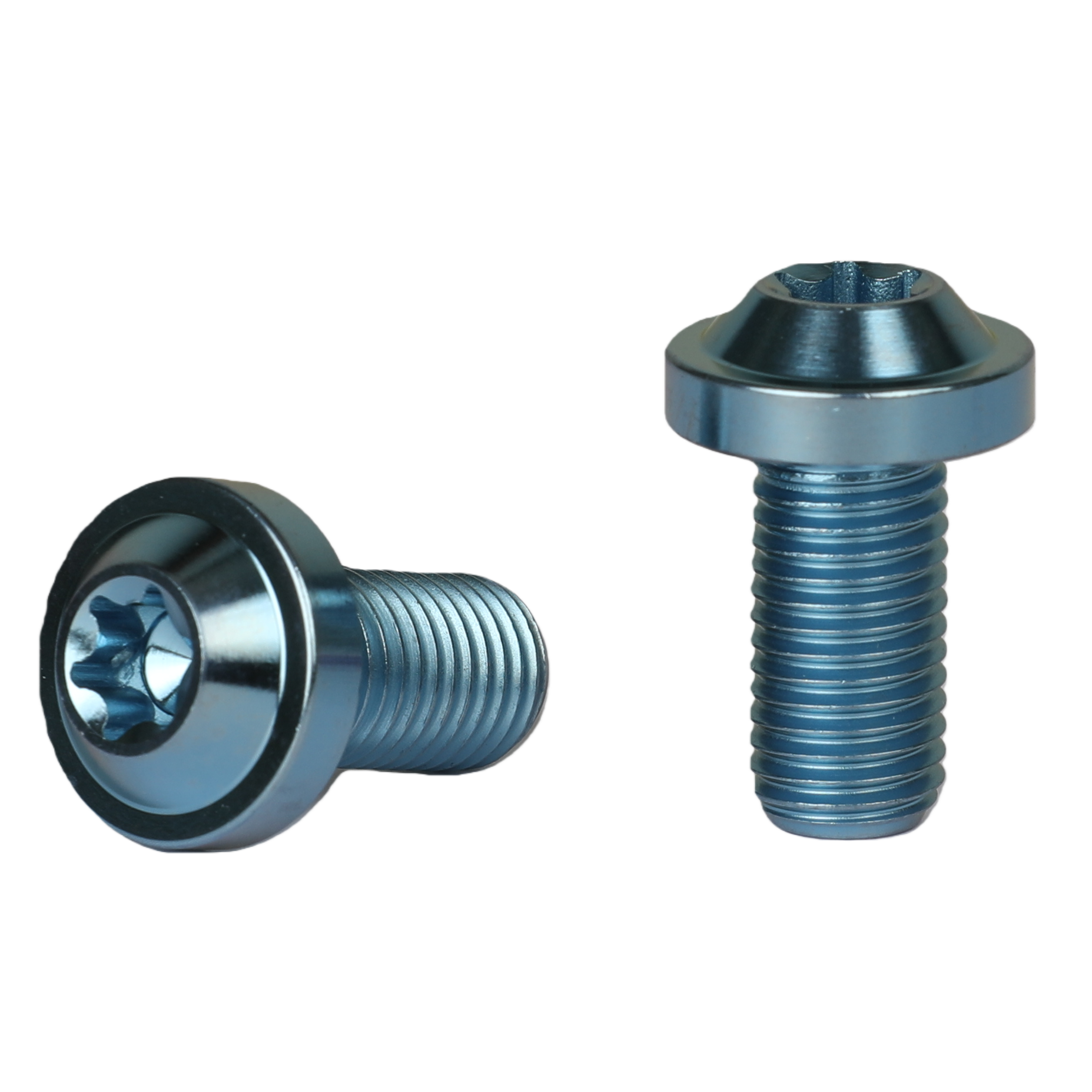
GRX Grade 5 Titanium Pan Head Brake Disc Screws for Race Motorcycle M6/M8/M10 DIN Thread
- M6 / M8 / M10 Rotor Interfaces
- Thermal Stability to 400°C
- Zero Thermal Galling Fatigue
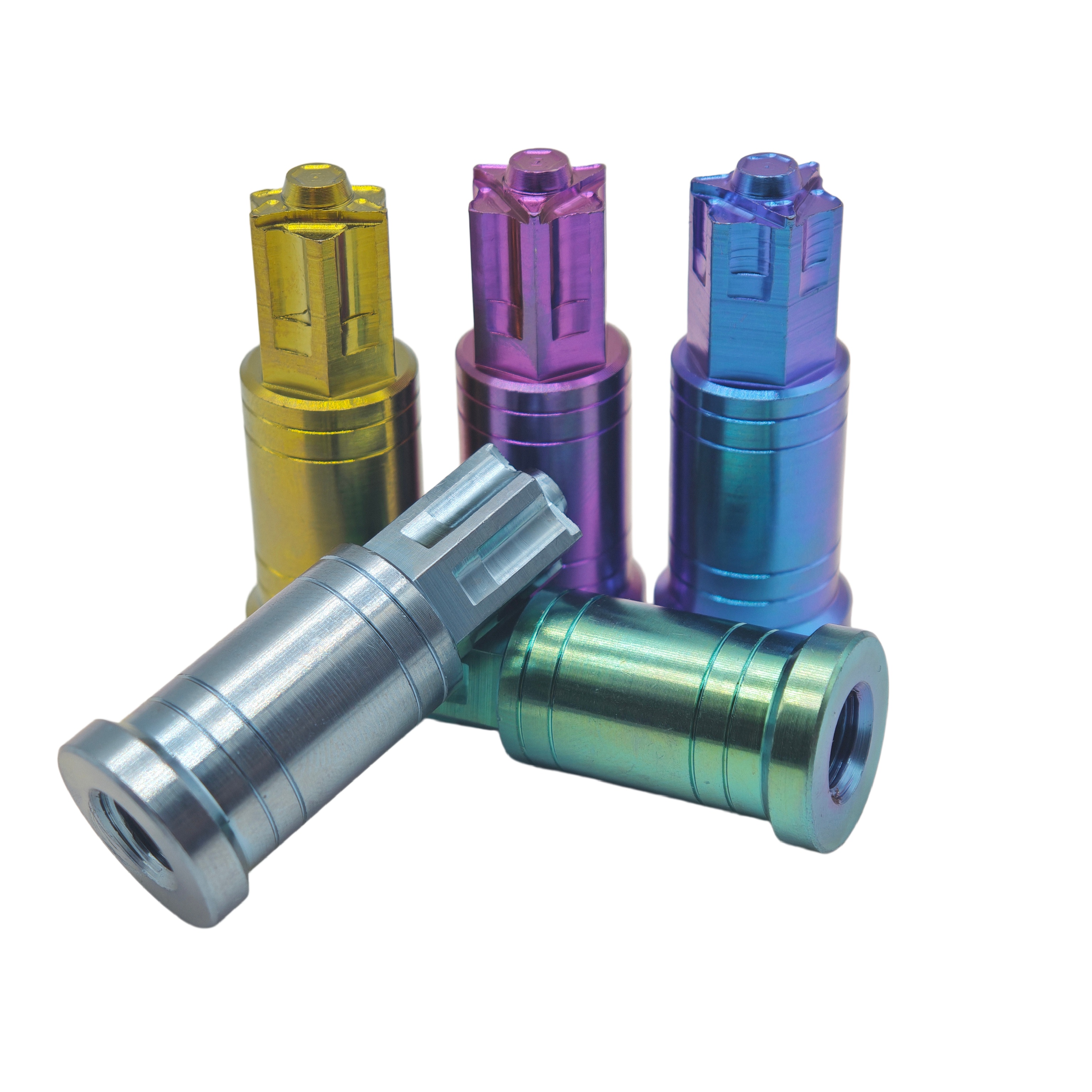
Factory Direct Sale GR5 Custom Titanium Spline Drive Sleeve Nuts Anodized/Plain Finish Flange Head Automotive Application Right
- Spline Drive Anti-Theft Profile
- Extended Flange Shank Seating
- 44% Mass Reduction vs Steel
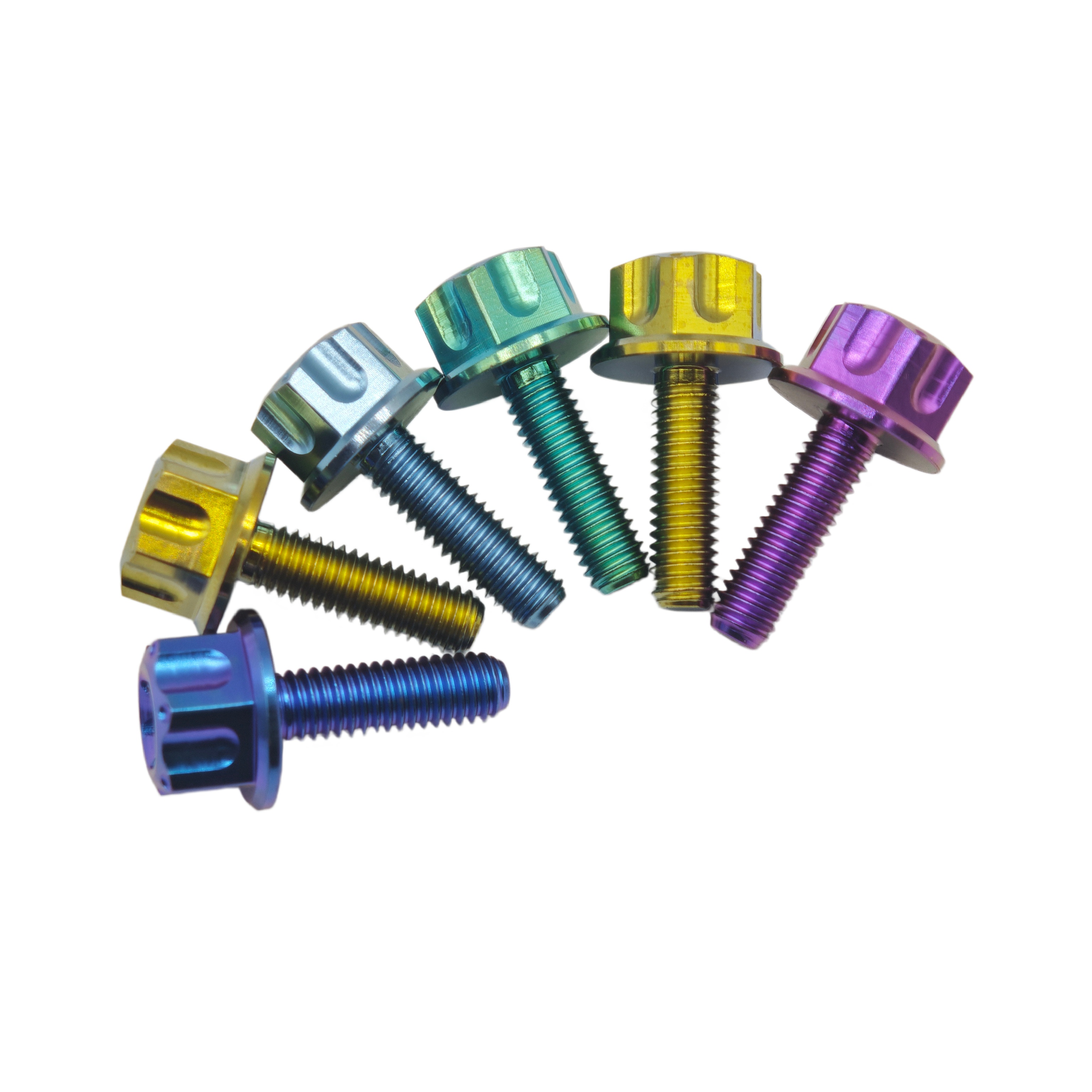
TECKSR Factory Price M4 Anodized GR5 Titanium Hex Flange Head Torx UNF Thread Class 5 Motorcycle Bolts
- Torx Recess Prevents Cam-Out
- Multi-Spectrum PVD / Anodized
- Ultra-High Tensile Baseline
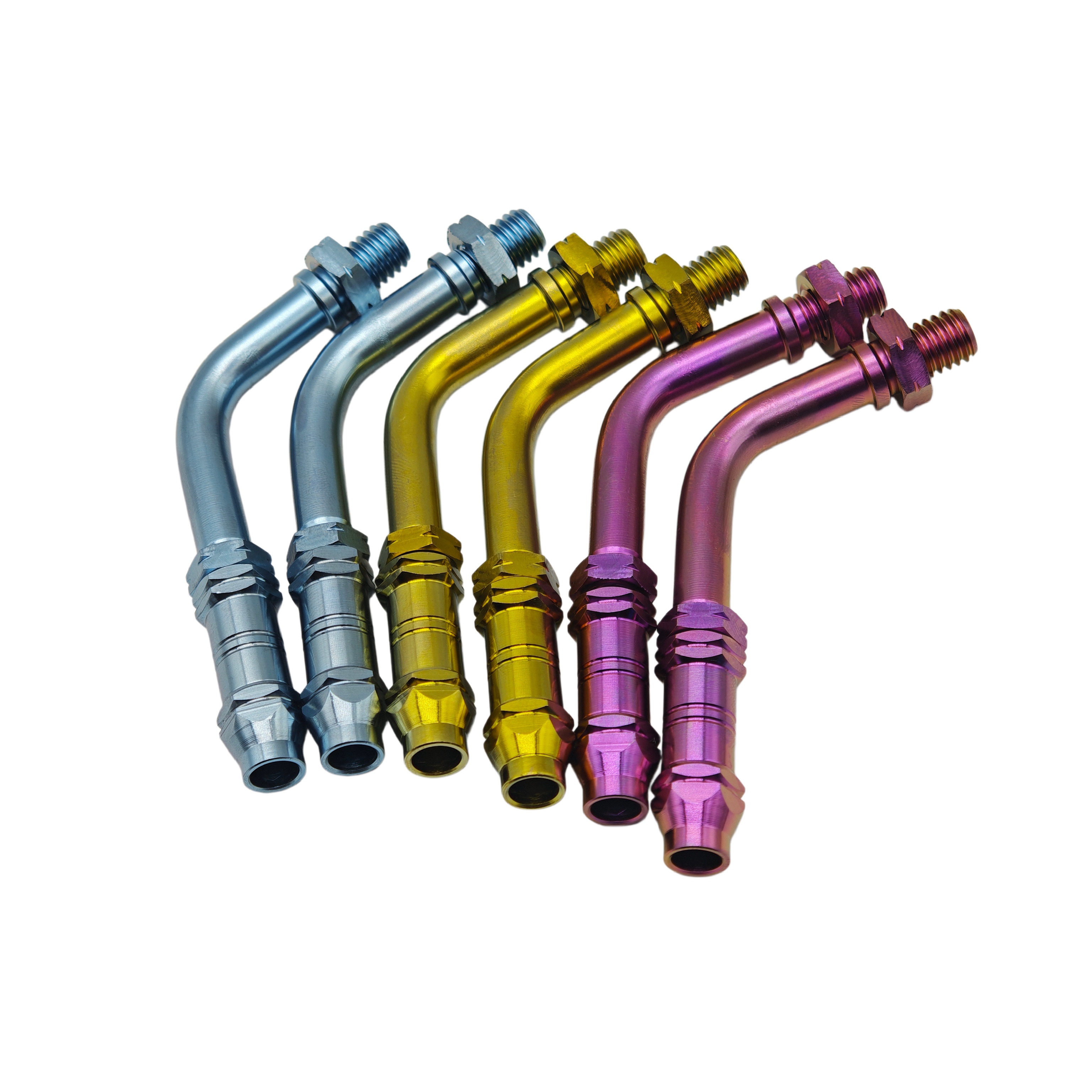
Factory M10 CNC 90-Degree Hex Flange Head GR5 Titanium Plain Throttle Brake Clutch Wire Cable Adjuster Parts for Motorcycle
- 5-Axis Precision Lathe Turning
- 90-Degree Ergonomic Cable Line
- Zero Chemical Oxidation
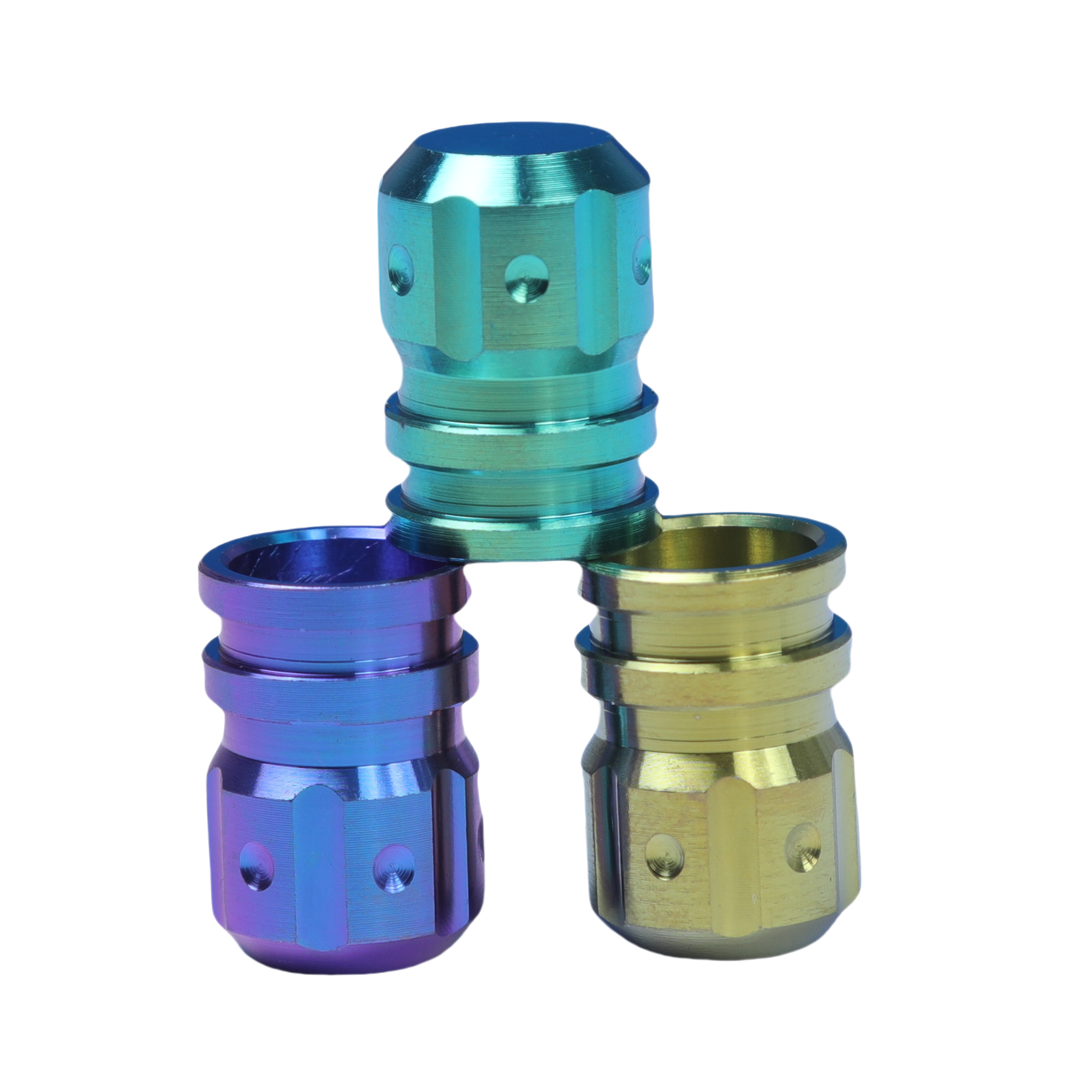
Universal Titanium Alloy Tire Valve Dust Cap Nuts Dust-proof CNC Parts for Automotive Motorcycle Bicycle Valve Caps Nut
- Hermetic Rubber O-Ring Core
- Knurled Grip Non-Slip Design
- Anodized Vivid Color Finishes
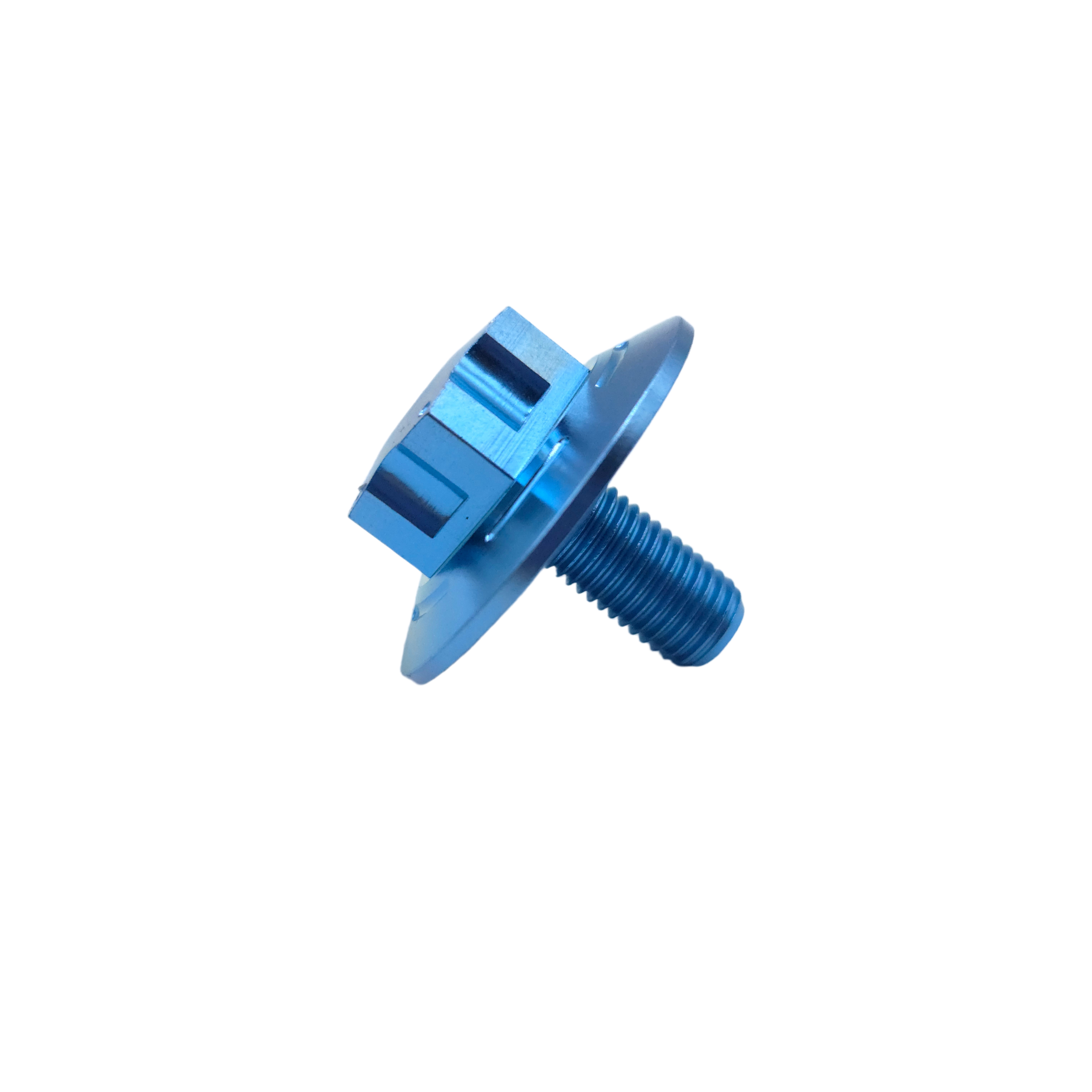
Factory Supply GR5 Titanium Hex Flange Head Bolt M10X20 DIN Thread Anodized Polish Finish Motorcycle Gasoline Cap
- Rolled Threads for Fatigue Life
- Broad Clamping Distribution Head
- Mirror Polish & Anodized Blue
Structural Dynamics of Grade 5 (Ti-6Al-4V) Wheel Retention Systems
Why Tier-1 automotive integrators, vintage restoration workshops, and competitive race engineering stables across the Île-de-France region choose cold-headed and CNC thread-rolled titanium fasteners.
In high-performance automotive platforms, wheel hardware constitutes a critical, safety-imperative junction subject to cyclic rotational shear, dynamic braking-induced thermal shock, and severe vibrational stress. Factory cast or forged steel lug nuts—while historically the standard—introduce significant unsprung rotational inertia that directly impairs damper response, turn-in transient authority, and acceleration harmonics.
Our engineered Grade 5 titanium alloy (standardized under ASTM B348, AMS 4928, and UNS R56400) consists of 90% pure titanium, 6% aluminum for alpha-phase stabilization, and 4% vanadium for beta-phase stabilization. This specific microstructural balance achieves an ultimate tensile strength exceeding 950 MPa with a yield strength baseline of 880 MPa, surpassing standard Grade 8.8 automotive steel and approaching high-tensile 10.9 fasteners while yielding a 44% weight reduction.
"Reducing unsprung mass at the wheel hub multiplies dynamic handling benefits by a factor of 1.5 to 2.0 when calculating angular momentum and gyroscopic precession during high-speed directional changes."
Unlike lower-tier cut-thread bolts that create microscopic root notches and stress concentrations, our manufacturing facility in Baoji enforces continuous grain-flow hot heading followed by precision die thread rolling. This preserves mechanical grain continuity along the helical root, enhancing fatigue limits under extreme lateral G-forces encountered on racing circuits.
Critical Joint Integrity in Paris Climates
Paris winters and surrounding regions (Yvelines, Seine-et-Marne, Essonne) regularly present heavy municipal applications of calcium chloride and magnesium chloride de-icing salts on thoroughfares such as the Boulevard Périphérique, A1, and A86. Mild steel, zinc-plated, and black-oxide lug nuts suffer accelerated galvanic degradation and thread seizure.
Grade 5 Titanium forms an instantaneous, self-healing passivated titanium dioxide (TiO₂) ceramic oxide layer upon air exposure. This delivers total immunity to chloride stress corrosion cracking, pit erosion, and road grime wash-off, safeguarding costly custom forged wheels from destructive electrolytic bonding.
Fastener Material Engineering Matrix: Ti-6Al-4V vs. Traditional Alloys
Parametric analysis demonstrating the definitive mechanical, thermodynamic, and corrosion-resistant superiority of Gr5 titanium over traditional automotive fastener materials.
| Mechanical / Physical Property | Zunvo Gr5 Ti-6Al-4V | Class 10.9 Carbon Steel | Class 12.9 Alloy Steel | 7075-T6 Billet Aluminum |
|---|---|---|---|---|
| Density (ρ [g/cm³]) | 4.43 | 7.85 | 7.85 | 2.81 |
| Yield Strength (R_p0.2 [MPa]) | 880 - 920 | 900 | 1,100 | 505 |
| Ultimate Tensile Strength (R_m [MPa]) | 950 - 1,050 | 1,040 | 1,220 | 570 |
| Strength-to-Weight Ratio (kN·m/kg) | 214.4 | 132.5 | 155.4 | 202.8 |
| Shear Fatigue Life Cycles (@ 500 MPa) | > 10,000,000 (Infinite) | 2,500,000 | 1,800,000 | Failure < 400,000 |
| Salt Fog Corrosion Resistance (ASTM B117) | No rust (>2,000 hrs) | Rust < 96 hrs | Rust < 48 hrs | Pitting < 240 hrs |
| Thermal Expansion (×10⁻⁶ / K) | 8.6 (Matches Carbon Rotors) | 11.5 | 12.0 | 23.4 (Extreme expansion) |
| Lug Seat Thread Stripping Resistance | Exceptional (Die-Rolled) | High | Very High | Prone to cross-threading |
Specialized Deployment Across Greater Paris & Île-de-France
Tailored supply chain execution matching the bespoke standards of Parisian luxury supercar ateliers, competitive racing paddocks, and vintage endurance restoration workshops.
Hypercar & Bespoke Tuning Ateliers
From high-end customization houses located near Neuilly-sur-Seine and the Golden Triangle (8th Arrondissement) to specialized workshops in Boulogne-Billancourt, our custom PVD-coated and burnt-rainbow spline-drive titanium lug nuts deliver both mechanical security and concours-level aesthetic prestige for Bugatti, Ferrari, Porsche, and McLaren owners.
Track Day Teams & Circuit de Linas-Montlhéry
French motorsport outfits and privateer track competitors operating at Circuit Carole, Circuit de Trappes, and the historic banked Autodrome de Linas-Montlhéry demand ultra-reliable wheel studs, open-ended lug nuts, and M8/M10 brake disc rotor bolts that maintain uniform pre-load tension despite brake hub temperatures exceeding 450°C during sustained heavy deceleration.
Historic Racing Restorations (Tour Auto & Le Mans)
In restoration ateliers across the Yvelines automotive cluster, specialists rebuilding Group C, FIA historic GTs, and historic Tour Auto racers utilize our custom drawing-based reproduction service. We reproduce obsolete imperial or metric thread pitches (such as specialized M14×1.25 French threads or conical 60°/ball-seat interfaces) in aerospace titanium to safeguard rare magnesium alloy vintage wheels.
Automotive Evolution Trends in the Paris Metropolitan Basin
How the green transition, low-emission urban frameworks, and engineering demands shape fastener procurement in France.
Electric Vehicle (EV) Range Optimization & Crit'Air Compliance
With the tightening of the Zone à Faibles Émissions (ZFE-m) restrictions within the Paris A86 ring, the regional vehicle park is pivoting aggressively toward battery-electric performance models (such as Porsche Taycan, Alpine EV concepts, and high-performance Tesla variants). High battery pack curb weights place severe continuous loads on wheel hubs.
Tier-1 suppliers and aftermarket tuners operating in the Île-de-France tech corridor are systematically stripping weight from rotating components. Transitioning from heavy carbon-steel OEM wheel bolts to Grade 5 titanium recovers critical rotating mass, improving regenerative braking efficiency, decreasing battery drain during stop-and-go Parisian commutes, and reducing high-frequency suspension resonance transmitted over historic cobblestone roads.
Direct-from-Source Industrial B2B Procurement
Historically, French racing teams and parts distributors depended on intermediaries based in the UK or Germany, introducing 35% to 50% distributor markups and protracted lead times. Today, Parisian automotive procurement directors increasingly contract directly with onsite-verified manufacturers like Zunvo in Baoji.
Leveraging direct air cargo links into Paris-Charles de Gaulle (CDG) and simplified customs transit via express carrier hubs (DHL Express CDG Hub, FedEx Paris-Nord), Parisian enterprises secure custom CNC-turned fasteners with complete EN 10204 3.1 mill test certificates within days, bypassing local inventory shortages.
Manufactured in Baoji, Delivered with Precision to Paris
Unmatched raw material traceability, comprehensive multi-axis turning, and rigorous quality certification from the center of global titanium production.
Raw Material Authority
Located in Baoji ("China Titanium Valley"), our plant sources high-purity sponge directly from nearby certified smelters. Every production batch of Ti-6Al-4V is tracked by heat number and accompanied by physical and chemical inspection certificates.
3-Day Drawing Turnaround
Send CAD files (STEP, IGES, DXF) or physical sample parts. Our engineering department verifies thread clearances, shear stress capacities, and tool paths within 24 hours, shipping production prototypes to Paris in as few as 3 business days.
Optical & Go/No-Go Gauges
Every batch undergoes rigorous quality assurance: thread-pitch micrometer verification, optical profile projection, CMM dimensional checks down to ±0.005 mm, and hardness verification to guarantee absolute concentricity and torque stability.
Frequently Asked Questions by Paris Automotive Buyers
Technical guidance addressing customs, torque values, anti-galling lubrication, and homologation standards for Île-de-France imports.
Are Zunvo Grade 5 Titanium Lug Nuts compliant with French UTAC / European TÜV standards?
Yes. Our Grade 5 (Ti-6Al-4V) wheel fasteners are manufactured strictly from certified aerospace-grade raw bar stock that meets ASTM B348, AMS 4928, and ISO 5832-3 standards. For French automotive engineers and workshops requiring compliance with UTAC (Union Technique de l'Automobile, du Motocycle et du Cycle) or European road homologation guidelines, we provide complete EN 10204 3.1 mill test certificates documenting yield strength, ultimate tensile strength, elongation, and chemical spectrometry with every production run.
How should torque specifications be adjusted when installing titanium wheel nuts?
Titanium exhibits an elastic modulus of approximately 110 GPa—roughly half that of carbon steel (210 GPa)—which translates to a broader elasticity window under tension. To guarantee proper clamp load and prevent galling, always use high-temperature anti-seize paste (such as copper paste, nickel paste, or moly-based assembly lubricant) on threads and seat faces. As an engineering baseline, apply 85% to 90% of the vehicle manufacturer’s dry steel torque specification when torquing lubricated titanium lug nuts, using a calibrated manual torque wrench. Never use pneumatic impact guns for final torquing.
What is the typical shipping lead time and customs process for delivery to Paris?
Standard catalog items ship from our facility within 24 hours. For custom CNC manufacturing based on your CAD drawings, prototype samples require only 3 days, with batch volume production completing in 7 to 15 working days. Shipments to Greater Paris (including hubs in Roissy-en-France, Orly, and central Paris depots) are dispatched via door-to-door express air carriers (DHL Express, FedEx Priority, UPS Air) with a transit time of 3 to 5 business days. Full export documentation, HS code categorization (HS 8108.90), and commercial declarations are provided to streamline clearance through French Douane (DGDDI).
How do titanium lug nuts behave when mated with carbon-ceramic brake hats and forged alloy wheels?
Titanium has a thermal expansion coefficient of approximately 8.6 × 10⁻⁶/K, which aligns far closer to the thermal behavior of carbon-ceramic composite brake disc bells than structural carbon steel (12.0 × 10⁻⁶/K). Under intensive braking cycles (such as track sessions at Circuit Carole or Le Mans Bugatti Circuit), the thermal compatibility prevents excessive thermal joint tension or loosening. Furthermore, unlike aluminum lug nuts, Grade 5 titanium does not experience galvanic bonding or thread galling against alloy wheel seats when properly lubricated with ceramic anti-seize paste.
Can you manufacture non-standard seat profiles such as 60-degree conical, radius/ball seat, and flat mag shanks?
Absolutely. Automotive wheels feature distinct mating seat geometries: 60-degree conical tapered seats (standard on aftermarket Japanese and American tuners), spherical ball radius seats (R12, R13, R14 commonly specified on Porsche, Audi, and Mercedes-Benz platforms), and flat shank sleeve configurations with captive titanium washers (standard on older Peugeot/Citroën sport models and vintage motorsport wheels). We machine all seat profiles to exact drawing tolerances with precision 5-axis CNC equipment.
What surface finishes are best suited for driving in Paris winter salt and wet conditions?
Natural micro-polished titanium and physical vapor deposition (PVD) finishes offer the greatest resistance to abrasion and environmental attack. PVD treatments (such as PVD Deep Black or PVD Carbon Grey) deposit an ultra-hard titanium nitride or carbon-nitride barrier that will not chip or peel under tool contact. Micro-anodizing provides brilliant visual spectrums (burnt rainbow, royal blue, gold, violet), though we recommend PVD coatings for commercial automotive wheel lugs subjected to repeated tire changes and road gravel exposure along French motorways.
